

Dry skin vs damaged skin barrier is one of the most important distinctions in skincare that almost no one makes correctly. The two conditions look similar on the surface, share several visible symptoms, and are frequently treated as the same problem. But they have different causes, different biological mechanisms, and critically, different solutions. Treating a damaged skin barrier as though it were simply dry skin is one of the most common reasons skincare routines fail to produce the improvement people expect from them.
This guide explains the difference between dry skin vs damaged skin barrier, how to identify which one you are actually dealing with, what each condition requires from a routine, and five products that address both effectively.
What Dry Skin Actually Is
Dry skin is a skin type, not a skin condition. It is determined largely by genetics and describes skin that produces insufficient sebum from the sebaceous glands to adequately lubricate and protect the skin surface. Without adequate natural oil, the skin lacks the emollient layer that softens surface texture, slows moisture evaporation, and keeps the skin feeling comfortable.
Dry skin has always been dry. It was dry before you started your current skincare routine. It is dry in comfortable environments as much as in harsh ones. The dryness is a baseline condition of your skin’s biology rather than a response to something that has happened to it.
When discussing dry skin vs damaged skin barrier, it is important to note that dry skin does not inherently mean a damaged barrier. A person with dry skin can have a perfectly functional skin barrier that retains moisture well and reacts minimally to environmental triggers. Their skin produces less natural oil, which requires external emollient support, but the structural barrier itself is intact.
What a Damaged Skin Barrier Actually Is
A damaged skin barrier is a skin condition, not a skin type. It is acquired rather than inherited, and it can affect any skin type including oily skin. The skin barrier, the stratum corneum, is the outermost layer of the skin composed of skin cells bonded by a lipid matrix of ceramides, cholesterol, and fatty acids. When this structure is intact, it prevents transepidermal water loss (TEWL), blocks the entry of irritants and bacteria, and keeps the skin calm and resilient.
When the barrier is damaged, the lipid matrix is depleted. Water evaporates freely through the gaps. Irritants and bacteria enter the skin more easily. The skin becomes reactive, sensitised, and inflamed in ways that a dry skin type without barrier damage does not experience.
In the dry skin vs damaged skin barrier comparison, this is the critical distinction: dry skin is a deficiency in oil production. A damaged barrier is a structural failure of the outer protective layer. The first needs emollient oil replenishment. The second needs ceramide and lipid matrix reconstruction.
How to Tell the Difference Between Dry Skin and Damaged Skin Barrier
The clearest framework for dry skin vs damaged skin barrier identification comes from asking which category of symptoms your skin shows.
Dry skin typically shows:
- Consistent tightness and discomfort that improves with moisturiser application
- Flaking and roughness, particularly on the cheeks and around the mouth
- Dullness from inadequate natural oil to reflect light evenly
- Comfortable behaviour in familiar environments and with familiar products
- No unusual reactivity to products previously tolerated well
Damaged skin barrier typically shows:
- Sudden reactivity to products that previously caused no reaction
- Burning or stinging from toners, serums, or even water
- Tightness that persists despite moisturiser application
- Redness and inflammation that appears without obvious cause
- Increased breakouts in skin that was previously clear
- A shiny or waxy appearance to the skin surface that looks abnormal
- Prolonged recovery time from minor skin disruptions like a small scratch or a pimple
The most reliable single indicator in the dry skin vs damaged skin barrier distinction is product reactivity. If your skin is suddenly reacting to products it previously tolerated, your barrier has been compromised. Dry skin does not become reactive without a new environmental or product trigger.
What Causes a Damaged Skin Barrier
Understanding the causes of barrier damage is the first step in the dry skin vs damaged skin barrier identification process, because many people damage their barrier through their skincare routine without realising it.
Over-exfoliation is the most common cause. Combining multiple exfoliating actives, using AHAs or BHAs too frequently, or introducing high-concentration retinoids without adequate barrier support all accelerate the cell turnover that temporarily depletes the lipid matrix faster than it can regenerate.
Harsh cleansers are the second most common cause. Sulphate-heavy formulas strip the skin’s natural ceramide and lipid content with every wash, gradually depleting the barrier matrix over weeks of daily use.
UV damage degrades the ceramide content of the barrier directly, making inadequate daily SPF use a sustained, cumulative cause of the structural damage that defines the damaged end of the dry skin vs damaged skin barrier spectrum.
Environmental stress including harmattan’s low humidity, air conditioning, and urban pollution all accelerate TEWL and contribute to the barrier depletion that produces damage symptoms.
10 Signs You Have a Damaged Barrier, Not Just Dry Skin
- Products that previously felt fine now sting or burn on application. This is the single most reliable indicator in the dry skin vs damaged skin barrier distinction.
- Your moisturiser stops working. Dry skin responds to moisturiser. Damaged barrier skin does not retain moisture effectively regardless of what is applied, because the barrier through which moisture escapes is compromised.
- Your skin is simultaneously oily and reactive. Oily skin should not be reactive. Reactivity on oily skin almost always indicates barrier damage rather than dry skin.
- You have unexplained breakouts in areas that are not usually prone to breakouts. Increased barrier permeability allows bacteria to enter the skin more easily, producing breakouts in atypical locations.
- Your skin looks shiny in a flat, plastic way rather than dewy. The specific shiny appearance of barrier-damaged skin is distinctive and different from the natural glow of healthy skin.
- Redness appears without any obvious trigger. Inflammation from barrier permeability can be spontaneous rather than tied to a specific product or environmental exposure.
- Minor skin disruptions take an unusually long time to heal. A compromised barrier reduces the skin’s natural repair capacity.
- Your skin feels tight immediately after cleansing and remains tight. Dry skin feels tight after cleansing but recovers with moisturiser. Barrier-damaged skin remains tight despite moisturiser.
- You have recently introduced multiple new actives simultaneously. If your symptoms appeared after escalating your routine, barrier damage from over-exfoliation is the most likely cause.
- Climate change, such as the onset of harmattan, has worsened your skin dramatically. Barrier-damaged skin responds much more severely to environmental changes than dry skin because it lacks the protective resilience to buffer against them.
The 5 Best Products for Dry Skin and Damaged Skin Barrier
1. Urban Skin RX Even Tone Gentle Gel Cleanser — Best Cleanser for Dry Skin and Damaged Skin Barrier
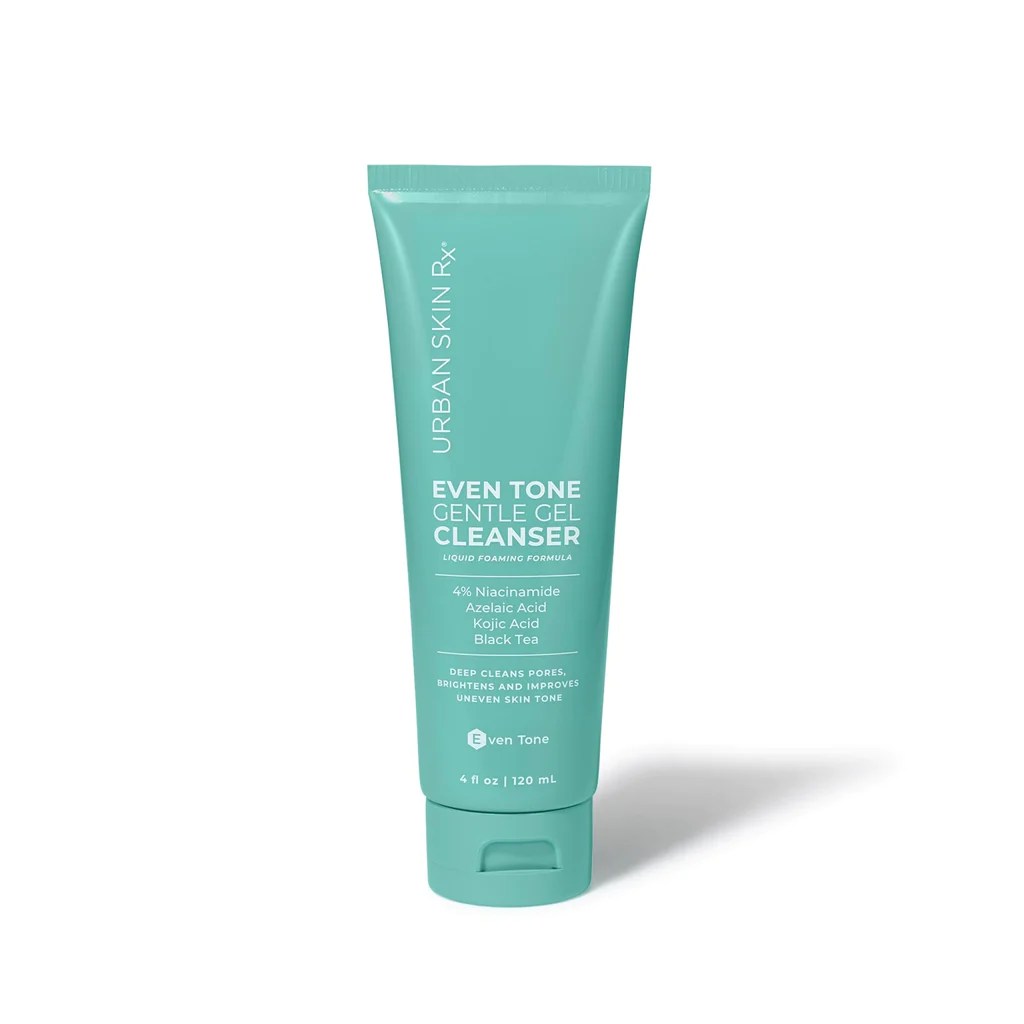
The cleanser is the most consequential product in the dry skin vs damaged skin barrier management routine because it is the step that either preserves or further damages whatever barrier integrity remains. For both conditions, the wrong cleanser compounds the problem faster than any treatment product can reverse it.
The Urban Skin RX Even Tone Gentle Gel Cleanser addresses the cleansing requirement for both conditions simultaneously. Its gentle formulation removes surface impurities without the sulphate stripping that depletes the barrier’s natural ceramide and lipid content. The even-tone function provides a secondary benefit relevant to both dry skin and damaged barrier skin, where the dullness and uneven tone that accompany both conditions are addressed alongside the cleanse.
For anyone distinguishing between dry skin vs damaged skin barrier, the cleansing step must be fragrance-free, sulphate-minimal, and formulated to maintain rather than strip. This cleanser meets all three requirements while adding brightening benefit for skin that has accumulated dullness from either condition.
Pros:
- Gentle gel formula removes impurities without stripping the barrier lipids depleted in both dry skin and damaged barrier
- Even-tone function addresses the dullness and pigmentation that accompany both skin conditions
- Appropriate for daily use without the cumulative stripping that worsens the dry skin vs damaged skin barrier cycle
- Suitable for all skin types including sensitive and barrier-compromised skin
Cons:
- Gel texture may feel lighter than preferred by very dry skin types seeking a richer cleansing experience
- Even-tone benefits develop progressively with consistent use rather than being immediately visible
2. Tonymoly Wonder Ceramide Mochi Ampoule — Best Ampoule for Damaged Skin Barrier Repair
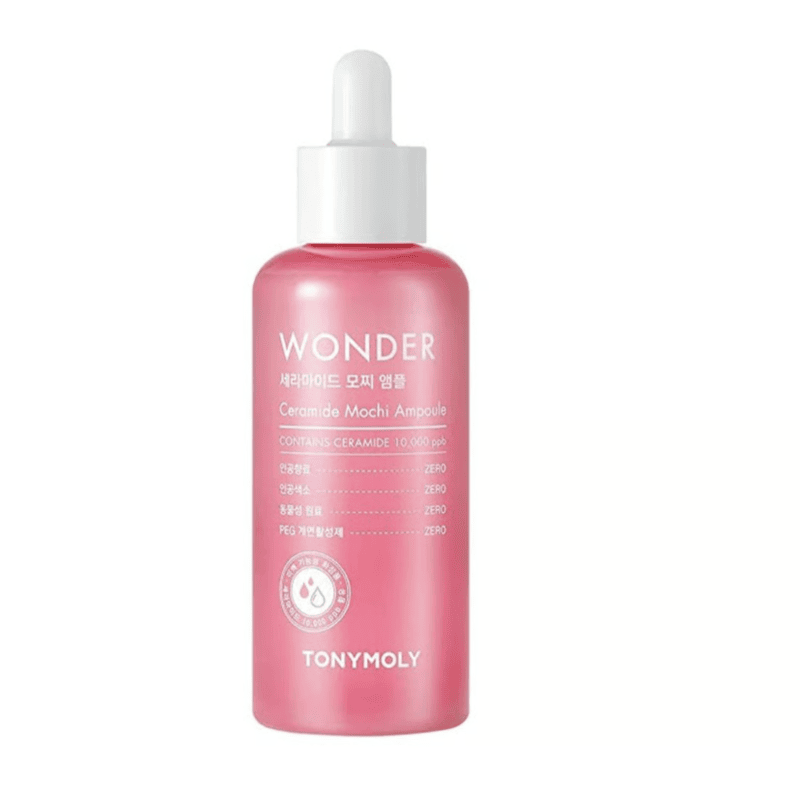
In the dry skin vs damaged skin barrier treatment hierarchy, ceramide delivery is the most structurally important intervention for damaged barrier skin. The barrier’s lipid matrix is approximately 50 percent ceramides, and when this content is depleted through over-exfoliation, harsh cleansing, or environmental stress, ceramide replenishment is the most direct treatment available.
The Tonymoly Wonder Ceramide Mochi Ampoule (100ml) delivers concentrated ceramide content in a lightweight ampoule format that penetrates efficiently before heavier moisturiser products seal it in. Applied after cleansing and before moisturiser, it delivers the barrier-building lipids most needed for damaged barrier recovery directly to the stratum corneum.
For the dry skin vs damaged skin barrier distinction, this ampoule addresses the structural repair need of damaged barrier skin more directly than moisturisers containing ceramides as secondary ingredients. The lightweight texture also makes it appropriate for any skin type dealing with barrier compromise, including oily skin where a richer ceramide cream would feel too heavy.
Pros:
- Concentrated ceramide delivery directly addresses the lipid matrix depletion of damaged skin barrier
- Lightweight ampoule format absorbs efficiently and suits all skin types including oily barrier-compromised skin
- Replenishes moisture and improves dry, rough, and dehydrated appearance for both conditions
- 100ml size supports consistent daily use through a full barrier recovery period
Cons:
- Focused primarily on ceramide delivery without the additional active ingredients of more comprehensive barrier serums
- Most effective when used alongside a dedicated barrier cream rather than as a standalone treatment
3. Anua Azelaic Acid 10% Plus Hyaluronic Acid Redness Soothing Serum — Best Active Serum for Compromised Skin
The inflammatory redness that distinguishes a damaged barrier from simple dry skin in the dry skin vs damaged skin barrier comparison needs targeted anti-inflammatory treatment alongside barrier repair. The Anua Azelaic Acid 10% Plus Hyaluronic Acid Redness Soothing Serum addresses this specific need, combining azelaic acid’s anti-inflammatory and tone-correcting properties with hyaluronic acid’s humectant hydration.
Azelaic acid is one of the few actives that is actually appropriate for barrier-compromised skin because it is anti-inflammatory rather than exfoliating at concentrations below 15%. At 10%, it reduces the redness, blemishes, and post-inflammatory marks that appear when barrier permeability allows bacteria and irritants to penetrate, without the additional exfoliation that would worsen the barrier disruption already present.
For dry skin without barrier damage in the dry skin vs damaged skin barrier spectrum, this serum also provides relevant benefits through its hyaluronic acid hydration and tone-correcting properties.
Pros:
- 10% Azelaic Acid reduces the redness and inflammation that characterise damaged skin barrier rather than dry skin
- Anti-inflammatory mechanism is appropriate for barrier-compromised skin without additional exfoliation stress
- Hyaluronic Acid delivers lightweight hydration alongside the soothing and tone-correcting benefits
- Addresses post-inflammatory marks and blemishes that appear from barrier permeability issues
Cons:
- 10% Azelaic Acid may cause mild initial tingling during the first week of use in sensitised skin
- Should be introduced gradually for very reactive or actively compromised barrier skin
4. Anua 3 Ceramide Panthenol Moisture Barrier Cream — Best Moisturiser for Dry Skin and Damaged Skin Barrier
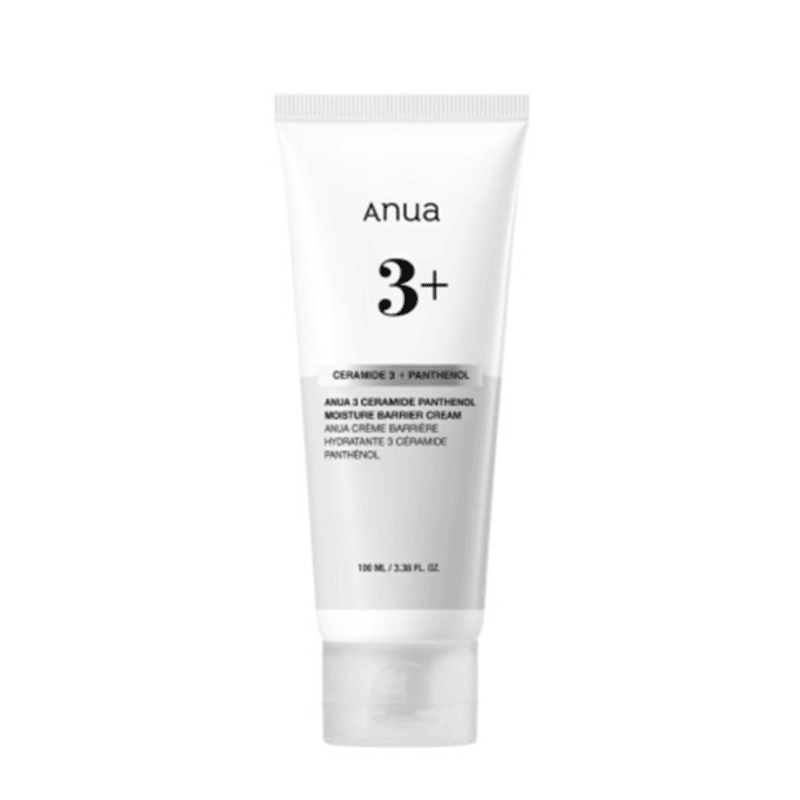
The moisturiser step is where the dry skin vs damaged skin barrier distinction produces the most meaningfully different product requirements. Dry skin primarily needs emollient oil replenishment to replace the sebum it does not produce adequately. Damaged barrier skin primarily needs ceramide reconstruction to rebuild the lipid matrix that moisture is escaping through.
The Anua 3 Ceramide Panthenol Moisture Barrier Cream meets both requirements in a single product, making it one of the most versatile moisturisers available regardless of which side of the dry skin vs damaged skin barrier spectrum a person falls on. Three ceramide types directly replenish the lipid matrix of the barrier. Panthenol accelerates barrier cell repair and provides deep, lasting hydration. The combined effect is a moisturiser that addresses the structural repair need of damaged barrier skin while simultaneously providing the hydration and softening that dry skin requires.
The non-greasy finish is an important practical detail for Nigeria’s climate, where heavier barrier creams feel uncomfortable and often end up skipped, undermining the consistent use that barrier repair requires.
Pros:
- Three ceramide types rebuild the lipid matrix for damaged skin barrier while providing dry skin the emollient support it needs
- Panthenol accelerates barrier cell repair and delivers lasting hydration for both conditions
- Non-greasy finish makes consistent daily use practical in Nigeria’s warm and humid climate
- Soothes irritation and protects against the dryness and sensitivity of both conditions simultaneously
Cons:
- May feel lighter than severely dry skin types prefer as a sole nighttime moisturiser in dry harmattan conditions
- Ceramide-focused formula works most effectively when layered with the Tonymoly Ceramide Ampoule for barrier damage
5. Dr. Althea 147 Barrier Cream — Best Comprehensive Barrier Cream for Both Conditions
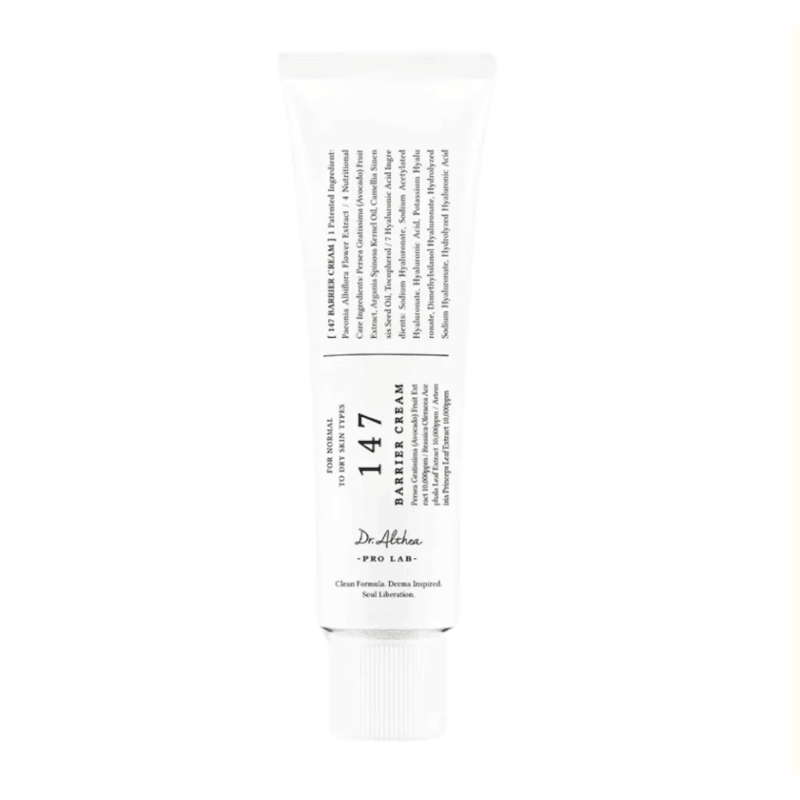
The Dr. Althea 147 Barrier Cream is the most comprehensively formulated product on this list for the full dry skin vs damaged skin barrier spectrum, combining ceramides, seven types of hyaluronic acid, azulene, ectoin, niacinamide, and botanical extracts in a 50ml barrier repair cream that addresses structural repair, multi-depth hydration, inflammation reduction, and skin tone support simultaneously.
Seven types of hyaluronic acid is the most specific formulation detail in the context of dry skin vs damaged skin barrier treatment, as different molecular weights address hydration at different skin depths. High molecular weight HA creates a hydrating film at the surface that reduces TEWL, medium weights penetrate to the mid-epidermal level, and low molecular weights reach the deeper epidermis where structural hydration matters most for barrier integrity.
Ectoin forms a protective water shell around skin cells that stabilises their membrane structure, which is particularly relevant for barrier-compromised skin in Nigeria’s climate where environmental stressors accelerate the barrier depletion that creates the damage in the dry skin vs damaged skin barrier scenario. Niacinamide strengthens ceramide production within the barrier and reduces the inflammatory response that distinguishes damaged barrier skin from simply dry skin.
Pros:
- Ceramides and seven HA types address both structural barrier repair and multi-depth hydration comprehensively
- Azulene and botanical extracts reduce the redness and irritation of damaged skin barrier
- Ectoin provides environmental stress protection relevant to Nigeria’s climate and harmattan conditions
- Niacinamide strengthens ceramide production for sustained barrier improvement beyond the cream’s immediate effects
Cons:
- Premium comprehensive formulation sits at a higher price point than simpler alternatives
- 50ml size requires regular repurchasing for consistent daily use through a full barrier recovery cycle
How to Build a Routine Based on Your Dry Skin vs Damaged Skin Barrier Diagnosis
If you have dry skin without barrier damage: Your routine needs emollient and occlusive support. Urban Skin RX Gentle Gel Cleanser, The Ordinary HA 2% for hydration, Anua 3 Ceramide Panthenol Barrier Cream or Dr. Althea 147 Barrier Cream as your moisturiser, and daily SPF. Focus on hydration and emollient sealing rather than barrier reconstruction.
If you have a damaged skin barrier: Pause all exfoliating actives including AHAs, BHAs, and retinol immediately. Simplify your routine to three steps: Urban Skin RX Cleanser, Tonymoly Ceramide Ampoule, Anua 3 Ceramide Panthenol Cream or Dr. Althea 147 Barrier Cream. Allow two to four weeks of simplified barrier repair before reintroducing actives one at a time. Add the Anua Azelaic Acid serum once initial redness and reactivity have subsided.
At Perona Beauty, all five products in this dry skin vs damaged skin barrier guide are available in store. Visit us at 120 Ogudu Road, Opposite Debonairs Pizza, Ogudu, Lagos, or at 42 Ademolu House, Ita Eko, Abeokuta. Our team will help you identify which condition your skin is dealing with and build the appropriate routine for it.
Getting the Diagnosis Right Changes Everything
The entire premise of dry skin vs damaged skin barrier as a clinical distinction is that the correct treatment approach depends entirely on which condition is present. Treating damaged barrier skin as dry skin, with emollient-heavy creams but no ceramide reconstruction, provides temporary comfort without addressing the structural cause of the problem. The barrier remains compromised and the reactivity, sensitivity, and moisture loss continue.
Getting this distinction right is the most foundational step in building a skincare routine that produces real improvement. The five products in this guide address both conditions comprehensively: Urban Skin RX Gentle Cleanser for barrier-preserving cleansing, Tonymoly Ceramide Ampoule for structural lipid replenishment, Anua Azelaic Acid for redness and tone alongside hydration, Anua 3 Ceramide Panthenol Barrier Cream for complete moisturiser-level barrier support, and Dr. Althea 147 Barrier Cream for the most comprehensive barrier and hydration treatment available.
Identify your condition correctly, build the right routine for it, and give it the time that biology requires.
Frequently Asked Questions About Dry Skin vs Damaged Skin Barrier
Can you have both dry skin and a damaged skin barrier at the same time?
Yes, and this is one of the more challenging combinations in the dry skin vs damaged skin barrier spectrum. Dry skin has less natural lipid protection to begin with, making it more susceptible to barrier damage from harsh products or environmental stress. When someone with inherently dry skin also damages their barrier, both the emollient deficiency of dry skin and the structural repair need of a damaged barrier must be addressed simultaneously.
How long does barrier repair take?
For mild dry skin vs damaged skin barrier cases, barrier repair with appropriate ceramide-rich products takes two to four weeks of consistent use. Moderate damage takes four to eight weeks. Severe or chronic barrier compromise can take three to six months of simplified, supportive routines before the barrier is sufficiently reconstructed to tolerate active ingredients again.
Can oily skin have a damaged barrier?
Yes, and this is one of the most important nuances in the dry skin vs damaged skin barrier discussion. Oily skin produces excess sebum but can have a severely damaged barrier through over-exfoliation or harsh cleansing. The excess oil does not compensate for ceramide depletion in the stratum corneum. Oily skin with a damaged barrier is simultaneously greasy and reactive, which is one of the more confusing presentations this distinction produces.
Should I stop using all actives if my barrier is damaged?
Yes, temporarily. In the dry skin vs damaged skin barrier management protocol for damaged barrier skin, all exfoliating actives, retinoids, and high-concentration vitamin C should be paused for two to four weeks while ceramide repair is prioritised. Azelaic acid, which is anti-inflammatory rather than exfoliating at 10%, is one of the few actives appropriate during this repair period.