

Acne scars are one of the most frustrating skin concerns to deal with because they linger long after the breakout itself has cleared. You address the acne, the inflammation settles, and then you are left with a reminder in the form of dark marks, uneven texture, or depressed skin that no concealer fully hides. If you have been trying to them with basic moisturisers or inconsistent routines, the results will always be limited. Healing acne scars requires specific ingredients that target the mechanisms behind scar formation, applied consistently over time.
What Acne Scars Are and Why They Are Difficult to Treat
Not all marks left by acne are the same, and understanding the difference shapes how you approach treating them.
Post-inflammatory hyperpigmentation (PIH) is the flat, dark discolouration left after an inflamed spot heals. It is more common in deeper skin tones and is caused by excess melanin production triggered by the inflammation of the original breakout. PIH is not a true scar in the structural sense. It sits at the surface level and responds well to consistent brightening and exfoliating treatment. This is the most common type of acne scars experienced by people with melanin-rich skin.
Post-inflammatory erythema is the flat pink or red mark left after a breakout, more visible in lighter skin tones. Like PIH, it is a discolouration rather than a structural scar.
Atrophic scars are depressed scars that form when the skin loses tissue during the healing process. Ice pick, boxcar, and rolling scars all fall into this category. They are more difficult to address through topical skincare alone because they involve a loss of structural skin tissue rather than just surface pigmentation.
To heal acne scars effectively through a topical routine, the most realistic and achievable goal is significant improvement in post-inflammatory hyperpigmentation and surface texture, alongside support for collagen production that gradually improves the appearance of shallower atrophic scarring over time.
The Ingredients That Heal Acne Scars
Retinoids including Retinol and Retinal are the most evidence-backed ingredients for acne scars. They work by accelerating cell turnover, pushing pigmented and damaged surface cells aside more quickly and encouraging the formation of new, healthier skin. They also stimulate collagen production, which progressively improves the texture of atrophic acne scars over time. Retinal is more potent than retinol, converting to active Vitamin A in a single step rather than two.
Azelaic Acid is one of the most effective ingredients for the post-inflammatory hyperpigmentation component of acne scars. It inhibits the enzyme responsible for excess melanin production and has anti-inflammatory properties that reduce the likelihood of existing breakouts leaving new marks. It is gentler than AHAs and suitable for daily use, making it a practical inclusion in any routine targeting acne scars.
Salicylic Acid (BHA) keeps pores clear, prevents new breakouts from forming, and gently exfoliates the surface to improve skin texture and speed the fading of dark marks. It is particularly useful for acne scars on skin that is still experiencing active breakouts, as it addresses both the existing marks and the prevention of new ones simultaneously.
Ceramides repair and maintain the skin barrier, which is essential when using active ingredients like retinoids and acids that can temporarily disrupt barrier integrity. A compromised barrier heals acne scars less efficiently and is more prone to inflammation that worsens pigmentation.
5 Best Products to Heal Acne Scars
1. The Ordinary Retinal 0.2% Emulsion
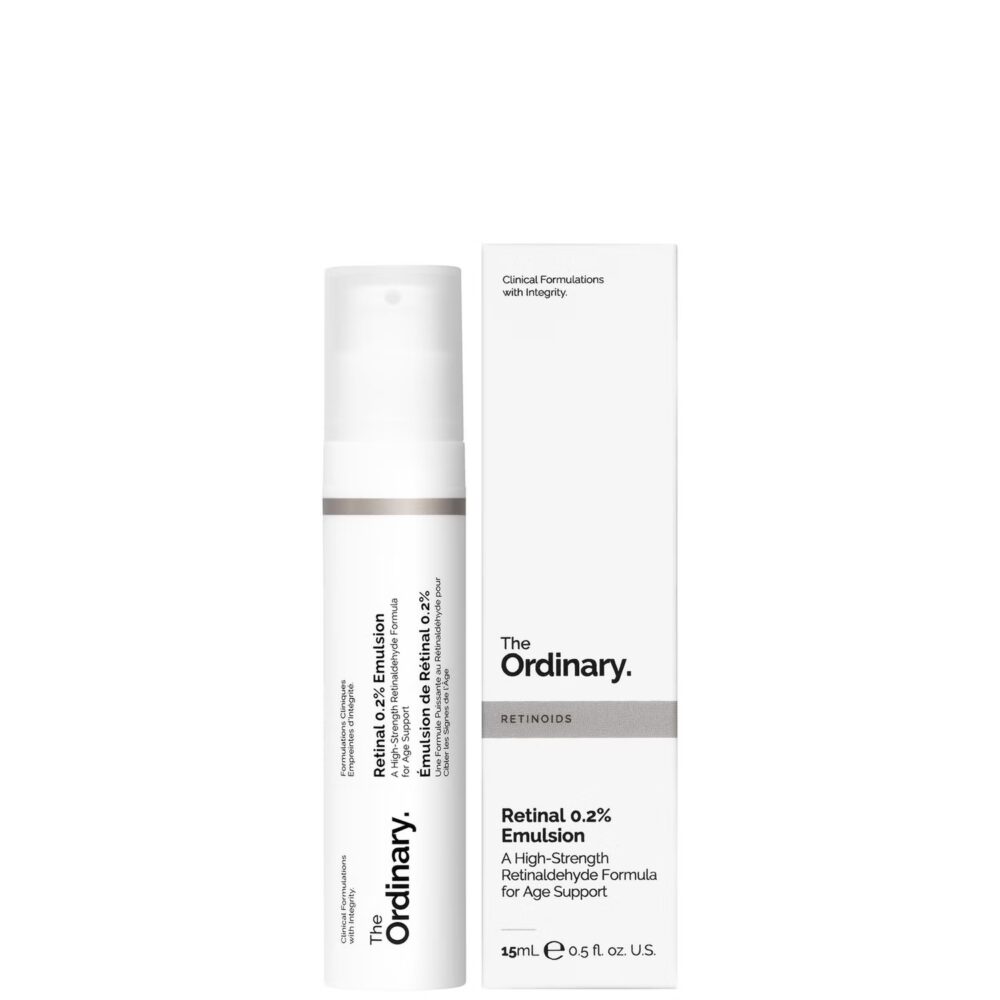
The Ordinary Retinal 0.2% Emulsion is one of the most accessible entry points into retinal-based treatment for acne scars. Retinal is a more potent form of Vitamin A than retinol, converting to active retinoic acid in a single metabolic step compared to retinol’s two, which means it produces visible results faster and with greater efficiency.
At 0.2%, this emulsion is formulated specifically for beginners, delivering the cell turnover acceleration and collagen stimulation that make retinal effective against acne scars without the significant irritation risk that higher concentrations carry. With consistent use, skin texture improves, post-inflammatory hyperpigmentation fades more quickly, and the overall complexion becomes brighter and more even as healthier skin cells replace damaged surface ones.
The emulsion format is lightweight and comfortable, making it practical for nightly use. For anyone who has not yet used a retinoid in their routine and wants to begin addressing acne scars at the cellular level, this is one of the most sensible and well-priced starting points available.
Pros:
- Retinal is more potent than retinol and produces faster visible improvement in acne scars
- 0.2% concentration is appropriate for beginners entering retinal-based treatment
- Accelerates cell turnover to push pigmented cells aside and reveal fresher skin
- Stimulates collagen production for gradual texture improvement alongside pigmentation fading
Cons:
- Results from retinal develop over six to ten weeks of consistent nightly use
- Should be introduced gradually, beginning two to three nights per week
2. Dr Althea 0.1% Gentle Retinol Serum
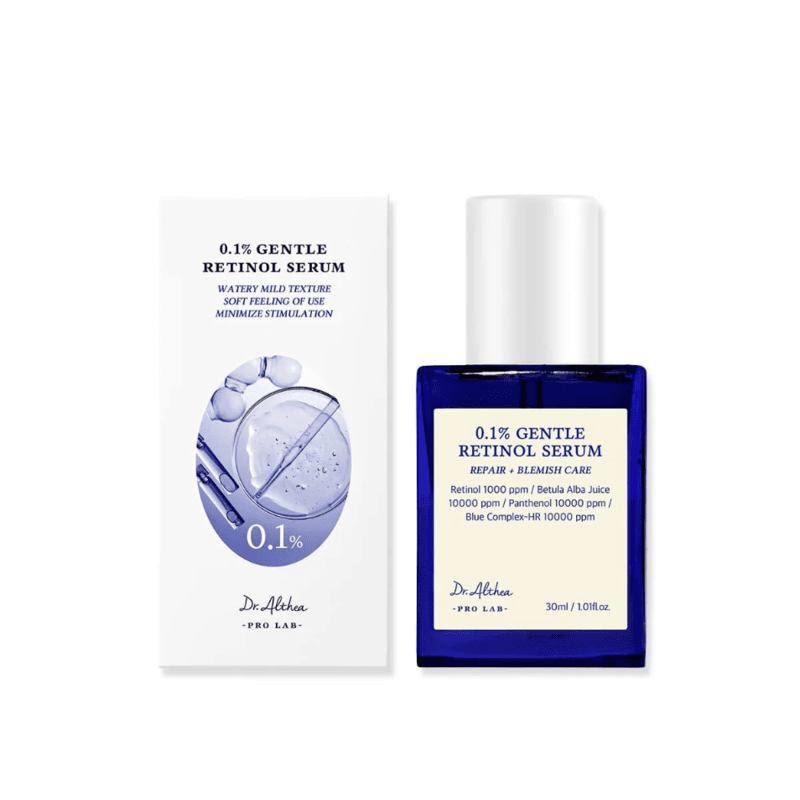
For skin that is dealing with acne scars but is also sensitive or reactive to standard retinol, the Dr Althea 0.1% Gentle Retinol Serum offers one of the most thoughtfully balanced formulations available. It combines 0.1% pure retinol with bakuchiol, a plant-derived ingredient that mirrors retinol’s skin renewal benefits with a significantly lower irritation profile.
Retinol drives the core mechanism for healing acne scars: accelerated cell turnover and collagen stimulation. Bakuchiol complements this by providing its own retinol-like activity through a different molecular pathway, which means the two ingredients together produce a more comprehensive skin renewal effect than retinol alone while the bakuchiol’s calming properties help offset the sensitivity that retinol can cause in reactive skin.
For someone whose skin has previously reacted poorly to retinol products, this dual approach makes consistent nightly use more sustainable, which is ultimately what produces results when healing acne scars over time. The serum also addresses pore elasticity, making it useful for skin dealing with both acne scars and enlarged pores from past breakouts.
Pros:
- Retinol and bakuchiol combination delivers enhanced skin renewal with reduced irritation risk
- Suitable for sensitive skin types that have previously reacted to standard retinol formulations
- Bakuchiol’s pore elasticity benefit addresses enlarged pores alongside acne scar treatment
- Low-irritation formula supports consistent nightly use, which is essential for healing acne scars
Cons:
- 0.1% retinol concentration produces gradual results and suits those prioritising gentleness over speed
- Those with resilient, non-sensitive skin may see faster results from a higher retinol concentration
3. Celimax Retinol Shot Tightening Serum
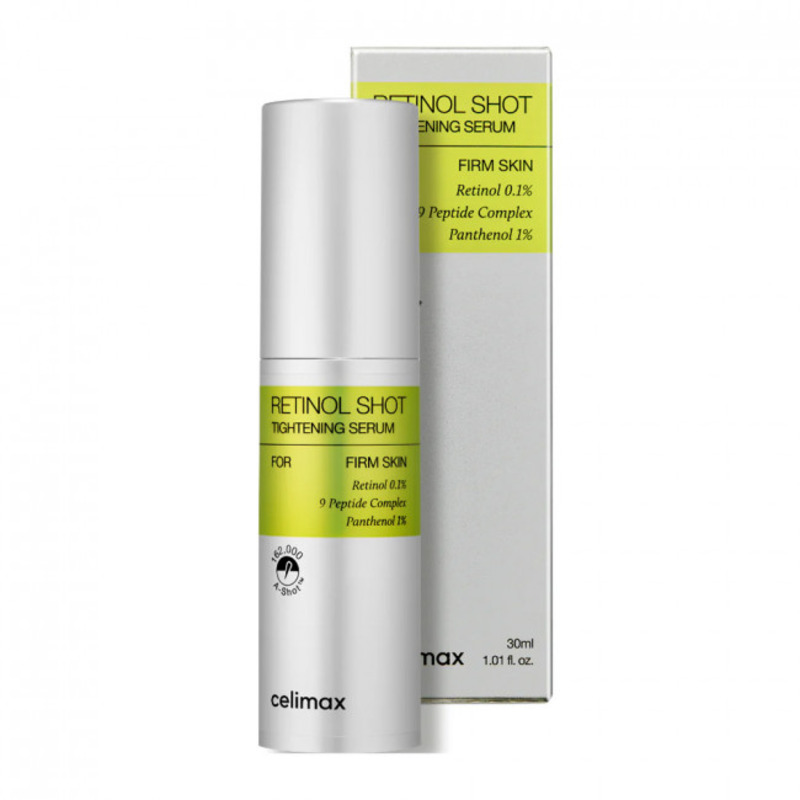
The Celimax Vita-A Retinol Shot Tightening Serum (30ml) takes a more targeted approach to retinol delivery than standard serums, using 0.1% pure retinol alongside its proprietary A-Shot technology. The A-Shot ingredient consists of 162,000 fine particles designed to directly penetrate pores and enhance retinol absorption into deeper skin layers, rather than working primarily at the surface.
This delivery mechanism is particularly relevant for healing acne scars because deeper retinol penetration means more effective collagen stimulation in the layers where atrophic scars have the most impact. For acne scars with a textural component, whether from enlarged pores, uneven skin surface, or shallow atrophic marks, the tightening and smoothing action of this serum produces a more comprehensive improvement than surface-level exfoliation alone.
The formula brightens dark spots, smooths wrinkles, improves skin texture, and tightens pores alongside its scar-fading benefits. The concentrated yellow formulation delivers moisture without stickiness and restores a natural radiance to skin that acne scars have left looking dull and uneven. It is one of the more technically distinctive retinol options on this list for anyone whose acne scars include both pigmentation and texture concerns.
Pros:
- A-Shot delivery technology enhances retinol penetration for more effective treatment of textural acne scars
- Addresses dark spots, enlarged pores, skin texture, and acne scars in a single product
- Pure retinol at 0.1% rather than a derivative, offering more direct active efficacy
- Moisturising formula delivers radiance without stickiness
Cons:
- A-Shot particles may cause a mild tingling sensation during initial use
- Best for those who have used retinol before rather than complete beginners
4. The Ordinary Azelaic Acid Suspension 10%
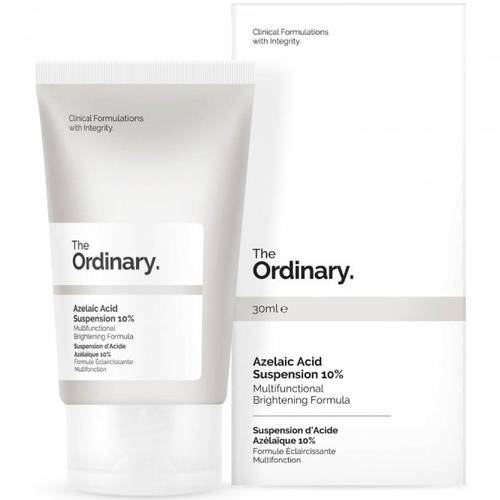
The Ordinary Azelaic Acid Suspension 10% is one of the most effective and accessible products for the dark mark component of acne scars, specifically the post-inflammatory hyperpigmentation that remains after breakouts heal. At 10% concentration, it works at a clinically meaningful level to inhibit excess melanin production, visibly fade existing dark marks, and prevent new inflammation from leaving additional pigmentation behind.
Azelaic acid is particularly well suited for acne scars on deeper skin tones where PIH is more pronounced and where more aggressive brightening acids carry a risk of causing further discolouration if the skin reacts. Its gentler mechanism of action makes it one of the few ingredients that can address the pigmentation component of acne scars daily without significantly increasing irritation or sensitivity.
The cream-like suspension texture applies easily and absorbs well, making it practical as both a morning and evening step in a routine targeting acne scars. Used consistently, it delivers progressive brightening that visibly reduces the contrast between scarred areas and the surrounding skin, creating a more even overall complexion over time.
Pros:
- 10% azelaic acid directly targets the melanin overproduction responsible for post-inflammatory hyperpigmentation
- Gentler than AHAs, making it suitable for daily use on skin healing from acne scars
- Anti-inflammatory properties reduce the risk of new breakouts leaving additional dark marks
- Works well for all skin tones including deeper skin prone to more severe PIH from acne scars
Cons:
- Cream-like suspension texture may feel slightly heavy under makeup for daytime use
- Visible brightening from acne scar pigmentation develops progressively over four to eight weeks
5. CeraVe Skin Renewing Nightly Exfoliating Treatment
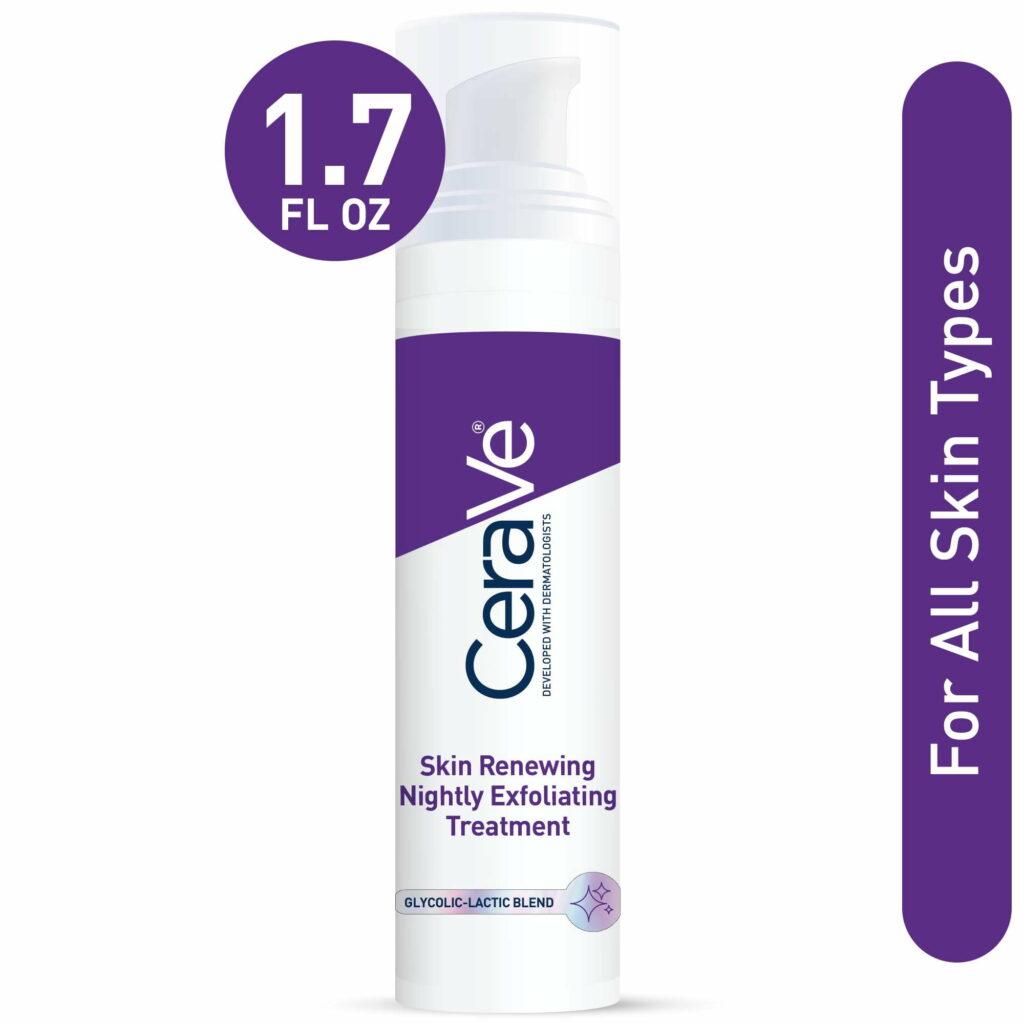
The CeraVe Skin Renewing Nightly Exfoliating Treatment is one of the most barrier-intelligent exfoliating products for acne scars because it combines active exfoliation with the ceramide repair that makes overnight treatment both effective and sustainable. Infused with salicylic acid and ceramides, it renews and refines skin texture while protecting the barrier that is essential for the skin’s natural healing of acne scars during sleep.
Salicylic acid gently exfoliates the surface, clearing dead cells that obscure the improvement happening beneath and accelerating the fading of the dark marks that characterise post-inflammatory acne scars. It also prevents the pore congestion that causes new breakouts, which would leave fresh acne scars on top of the ones already being treated. Ceramides simultaneously rebuild the moisture barrier, ensuring that the exfoliation does not compromise the skin’s structural integrity.
The overnight format is deliberate and smart. Applied before sleep, the salicylic acid works during the skin’s natural repair window when cell turnover is most active and the results of exfoliation on acne scars are amplified by the skin’s own renewal processes. For skin dealing with both texture irregularities and persistent dark marks from acne scars, this is one of the most complete and skin-supportive overnight treatments available.
Pros:
- Salicylic acid exfoliates and fades acne scar pigmentation while preventing new breakouts
- Ceramides repair and protect the skin barrier during active exfoliation overnight
- Overnight application leverages the skin’s peak repair window for more effective acne scar treatment
- Improves both skin tone and texture simultaneously
Cons:
- Salicylic acid increases UV sensitivity, making morning SPF use essential when treating acne scars
- Best used as an evening treatment only and not suitable for daytime application
How to Build a Routine to Heal Acne Scars
An effective routine layers products that address different mechanisms without overwhelming the skin. In the morning, cleanse gently, apply The Ordinary Azelaic Acid Suspension to target PIH, follow with a moisturiser, and always finish with SPF. UV exposure worsens post-inflammatory hyperpigmentation directly and is one of the primary reasons acne scars take longer to fade than they should.
In the evening, cleanse and apply either the CeraVe Nightly Exfoliating Treatment or your chosen retinoid, alternating between the two on different nights rather than using both simultaneously. Begin retinoid use two to three evenings per week and build to nightly use as your skin adjusts. Always follow with a moisturiser containing ceramides to support the barrier.
At Perona Beauty, our approach focuses on building routines that are consistent and sustainable rather than intensive and short-lived. Based on our experience, the clients who see the most significant improvement in acne scars are those who commit to a well-structured routine over three to six months rather than cycling through products every few weeks. You can find all five products featured in this article in store. Visit us at 120 Ogudu Road, Opposite Debonairs Pizza, Ogudu, Lagos, or at 42 Ademolu House, Ita Eko, Abeokuta. Walk in and our team will help you build the right routine for your skin.
What Consistent Treatment Actually Delivers for Acne Scars
The most important truth about healing acne scars is that no single product works in isolation, and no routine works without consistency. Acne scars form over months of repeated inflammation. Reversing their appearance requires months of targeted, sustained treatment that addresses both the pigmentation and the texture components of scarring simultaneously.
The five products on this list cover every layer of that approach. The Ordinary Retinal 0.2% Emulsion for accessible retinal-based renewal. Dr Althea Gentle Retinol Serum for sensitive skin needing a lower-irritation retinoid approach. Celimax Retinol Shot Tightening Serum for deeper retinol delivery targeting texture and pores. The Ordinary Azelaic Acid for post-inflammatory hyperpigmentation. CeraVe Nightly Exfoliating Treatment for barrier-supported overnight renewal.
Build the right routine, use it consistently, protect your skin with SPF every morning, and give it the time it needs. Acne scars that have taken months to form will not disappear in weeks, but with the right approach, they will fade in ways that are visible, meaningful, and lasting.
Frequently Asked Questions About Healing Acne Scars
How long does it take to heal acne scars? Post-inflammatory hyperpigmentation from acne scars begins to visibly fade within four to eight weeks of consistent treatment with the right ingredients. Significant improvement in darker or more established acne scars typically develops over three to six months. Atrophic scars with a textural component take longer and may require six to twelve months of retinoid use before meaningful structural improvement is visible.
Does SPF help heal acne scars? SPF does not directly fade acne scars, but it is one of the most important steps in any scar-healing routine. UV exposure stimulates melanin production, which directly darkens existing acne scars and significantly slows their fading. Daily SPF use preserves the brightening work your treatment products are doing and prevents the dark marks from worsening during the healing process.
Can I use retinol and azelaic acid together for acne scars? Yes, and the combination is particularly effective for acne scars because the two ingredients address different mechanisms. Retinol accelerates cell turnover and stimulates collagen. Azelaic acid inhibits melanin production and reduces inflammation. Apply azelaic acid in the morning and retinol in the evening to get the full benefit of both without layering them in the same step.
Are acne scars permanent? Post-inflammatory hyperpigmentation from acne scars is not permanent and responds well to consistent topical treatment. Atrophic acne scars with significant depth are more challenging to address through topical products alone and may require professional treatments for full correction. However, consistent use of retinoids and exfoliants produces meaningful visible improvement in shallower atrophic acne scars over time.
Which product is best for dark acne scars on deeper skin tones? The Ordinary Azelaic Acid Suspension 10% is the most appropriate first step for dark post-inflammatory marks from acne scars on deeper skin tones because it fades pigmentation gently without the irritation risk that can cause further discolouration in melanin-rich skin. Combined with a gentle retinoid like the Dr Althea Gentle Retinol Serum for cell turnover, this pairing addresses acne scars comprehensively with a low likelihood of triggering additional reactive pigmentation.