

It is a question that comes up constantly in skincare: can you use two serums at once? With so many serums targeting brightening, anti-ageing, hydration, and repair, layering multiple products feels logical. More actives should mean faster results, right?
The honest answer is no, and understanding why will change how effectively you approach your skincare routine entirely.
Can You Use Two Serums at Once? The Real Answer
Technically, applying two serums back to back is possible. Whether it is actually beneficial is a different question entirely. In most cases, using two active serums simultaneously either reduces the effectiveness of both or increases the risk of irritation and barrier damage.
The first problem is ingredient conflict. Many effective serum actives are pH-dependent and only work within a specific pH range. When two actives with different requirements are applied together, they compete rather than complement, and neither ingredient performs at its best.
The second problem is absorption. Skin can only absorb so much at once. Applying a second serum before the first is fully absorbed means both compete for the same receptor sites, diluting the effect of each. You use more product to achieve less.
The third problem is irritation. Combining two strong actives, such as Vitamin C with an acid, or retinol with a BHA, creates a compounded irritation load the skin barrier may not tolerate. Even if neither product causes irritation alone, together they can trigger redness, dryness, and sensitivity that worsens the concerns you are trying to treat.
So can you use two serums at once? In most cases, no. The smarter approach is splitting your serums strategically between a morning and evening routine so each active gets the full absorption, contact time, and skin environment it needs to actually work.
Why Morning and Evening Routines Outperform Layering
The skin has fundamentally different needs at different times of day. In the morning, it faces UV exposure, pollution, and oxidative stress. Morning serums should focus on antioxidant protection, brightening, and preparation for SPF. In the evening, the skin shifts into repair mode with increased cell turnover. Evening serums should focus on renewal, exfoliation, and structural repair.
When serums are divided between these two windows, each one gets the environment it needs. No conflicts, no diluted efficacy, no compounded irritation. Rather than asking can you use two serums at once, the better question is which serums belong in the morning and which belong at night.
The Best Day Serums for Your Morning Routine
1. Medicube PDRN Pink Peptide Serum
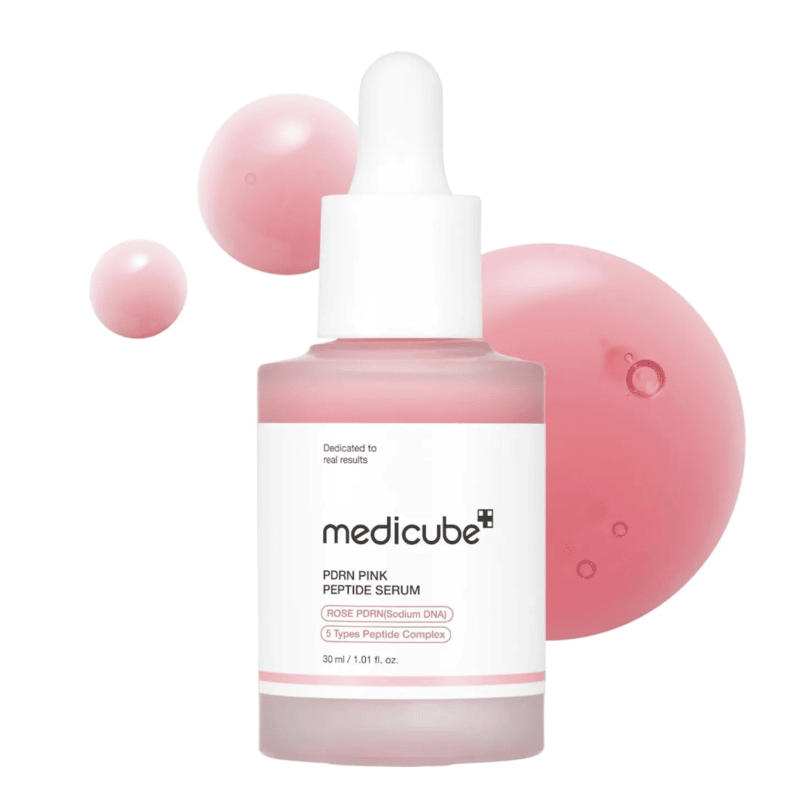
The Medicube PDRN Pink Peptide Serum belongs in the morning because its brightening and firming benefits are most valuable when the skin faces daily UV and environmental exposure. PDRN promotes cell repair and renewal while peptides support collagen and elastin production, addressing uneven tone and loss of elasticity with consistent daily use. Applied before moisturiser and SPF, it creates a more resilient, evenly toned surface that responds better to the rest of the routine.
Pros:
- PDRN stimulates cell repair for a visibly clearer, more radiant complexion
- Peptides support collagen and elastin for improved skin firmness
- Addresses uneven tone and blemishes progressively with daily morning use
- Pairs effectively with SPF for a complete protective morning routine
Cons:
- Results build gradually over several weeks of consistent use
- Works best as a single standalone morning serum rather than layered with other actives
2. Purito Wonder Releaf Centella Serum Unscented
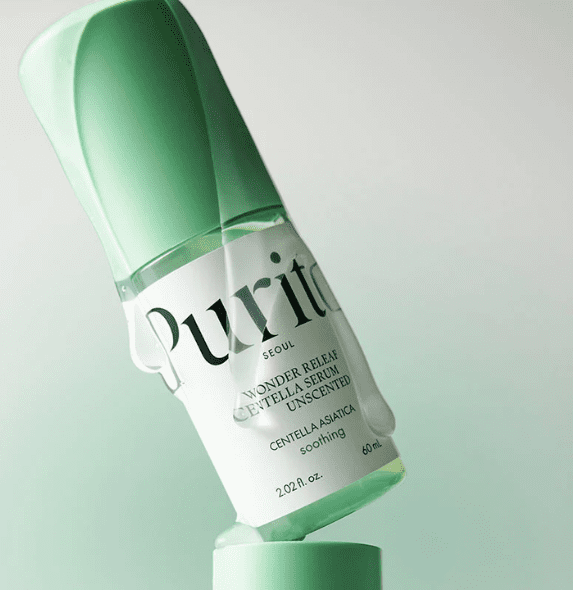
For sensitive or reactive skin, the Purito Wonder Releaf Centella Serum Unscented is one of the most practical morning serums available. Centella Asiatica provides immediate soothing and barrier-strengthening benefits, allantoin calms irritation, and peptides support skin revitalisation throughout the day. The fragrance-free, clinically tested formulation makes it safe for daily morning use on all skin types, stabilising reactive skin before environmental exposure begins.
Pros:
- Centella Asiatica provides immediate soothing and barrier support
- Fragrance-free and clinically tested for all skin types including sensitive
- Allantoin and peptides calm irritation and revitalise skin throughout the day
- Practical daily morning serum that prepares reactive skin for environmental stressors
Cons:
- Primarily a soothing serum rather than a targeted brightening or anti-ageing treatment
- Those seeking brightening in the morning may need an SPF with additional active benefits
3. La Roche-Posay Pure Vitamin C 12 Serum
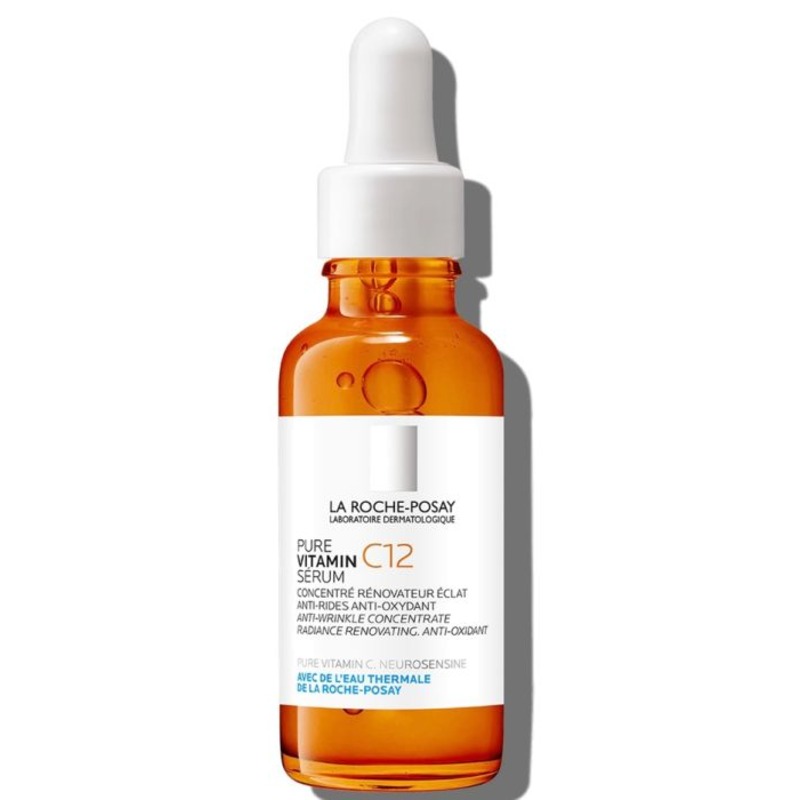
Vitamin C is significantly more effective in the morning because its antioxidant function works in real time against the free radicals generated by UV and pollution. The La Roche-Posay Pure Vitamin C 12 Serum delivers 10% pure ascorbic acid alongside salicylic acid and Neurosensine, a soothing peptide, in a stable, dermatologist-developed formula gentle enough for sensitive skin. The UV-filtering packaging protects the Vitamin C from degradation, ensuring potency throughout use.
Pros:
- 10% pure Vitamin C provides antioxidant protection and brightening during daytime hours
- Salicylic acid adds gentle exfoliation and pore refinement alongside Vitamin C
- UV-filtering packaging maintains formula stability and efficacy
- Dermatologist-tested and developed for sensitive skin tolerance
Cons:
- Requires consistent morning SPF use to prevent oxidised Vitamin C from causing discolouration
- Subtle medicinal scent from the active formula may not suit all preferences
4. Uncover I Am Radiant Baobab Glow C Serum
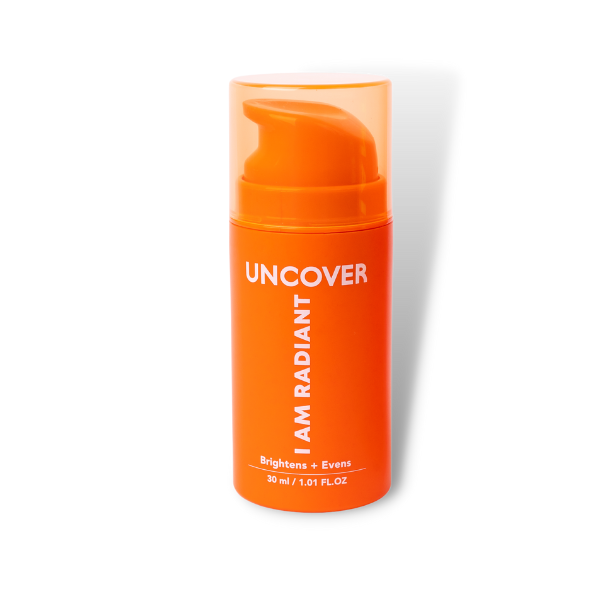
The Uncover Baobab Glow C Serum combines 8% Vitamin C with baobab extract and African botanicals for a brightening and protective morning serum rooted in locally relevant skincare. Baobab nourishes the skin barrier alongside the Vitamin C’s antioxidant activity, addressing both protective and corrective needs in a single morning step. For skin dealing with daily UV-induced pigmentation in Nigeria’s climate, this is one of the most relevant accessible morning choices available.
Pros:
- 8% Vitamin C provides effective daily antioxidant protection and brightening
- Baobab and African botanicals nourish the barrier alongside the brightening benefit
- Formulated with locally relevant ingredients for Nigerian skin and climate
- Accessible and practical for consistent daily morning use
Cons:
- 8% Vitamin C produces slightly more gradual brightening than higher concentrations
- Should always be followed by SPF to preserve the Vitamin C’s antioxidant benefits fully
5. Urban Skin Rx YouthHero AM Serum
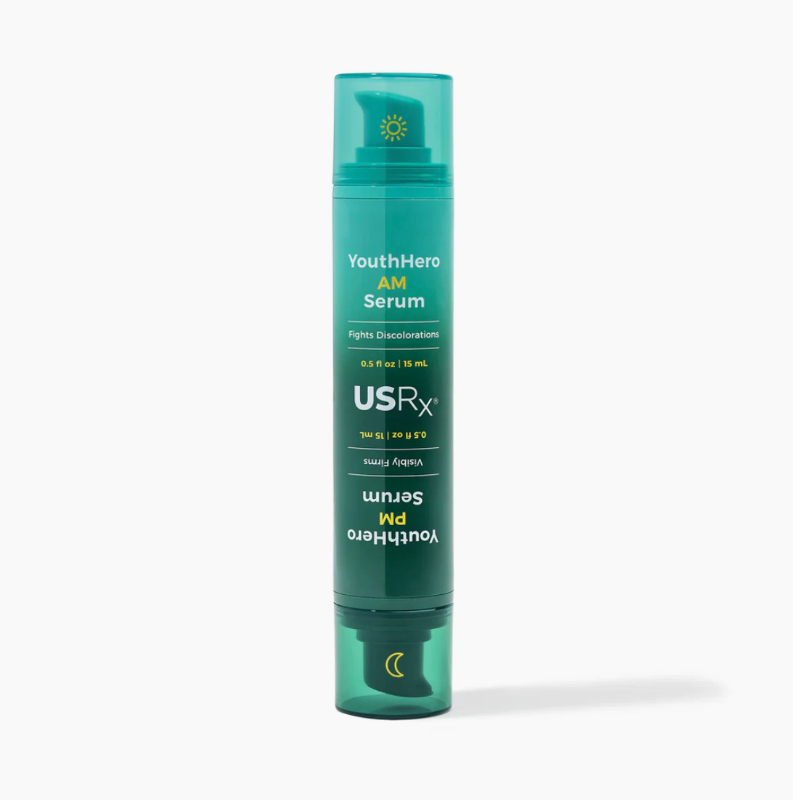
The Urban Skin Rx YouthHero AM Serum is one half of a dedicated morning and evening split system, making it one of the most intentionally positioned products on this list for anyone asking can you use two serums at once and wanting a solution already structured correctly. The AM formula uses a triple-brightening blend to target dark marks, discolouration, and sun damage during the day, when UV exposure would otherwise worsen these concerns. Its fast-absorbing texture sits comfortably under moisturiser and SPF.
Pros:
- Triple-brightening blend specifically designed for daytime dark mark correction
- Fast-absorbing, comfortable texture under SPF and moisturiser
- Designed as part of a split AM/PM system that naturally addresses serum timing
- Addresses sun damage, texture, and uneven tone with consistent use
Cons:
- Subtle medicinal scent may not appeal to all users
- Full visible results develop progressively over several weeks
The Best Night Serums for Your Evening Routine
1. IsisPharma Unitone 4 Depigmenting Serum
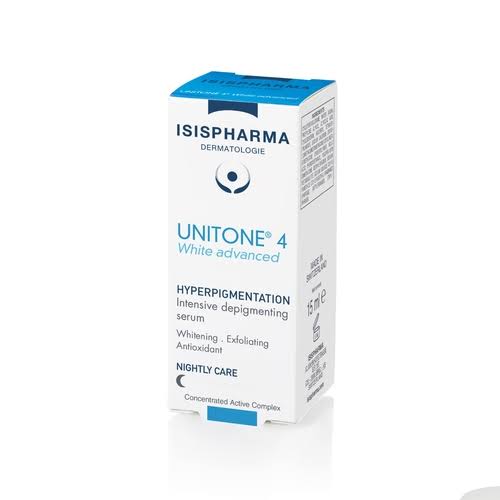
The IsisPharma Unitone 4 Depigmenting Serum is a dermatologically tested formula designed for evening use to fade dark spots and even skin tone. Applying a depigmenting treatment at night aligns with the skin’s elevated cell renewal activity during sleep, giving actives the biological support they need to correct pigmentation more efficiently than daytime application allows.
Pros:
- Dermatologically tested formula targets hyperpigmentation and uneven tone
- Evening use aligns with peak cell renewal for more effective pigmentation correction
- Works alongside daytime Vitamin C serums for a comprehensive two-window approach
- Visible brightening of dark spots with consistent nightly use
Cons:
- Should not be used simultaneously with strong acids in the same evening step
- Results require consistent nightly use over several weeks to become clearly visible
2. Garden of Wisdom Alpha Arbutin 2% and Kojic Acid 1% Serum
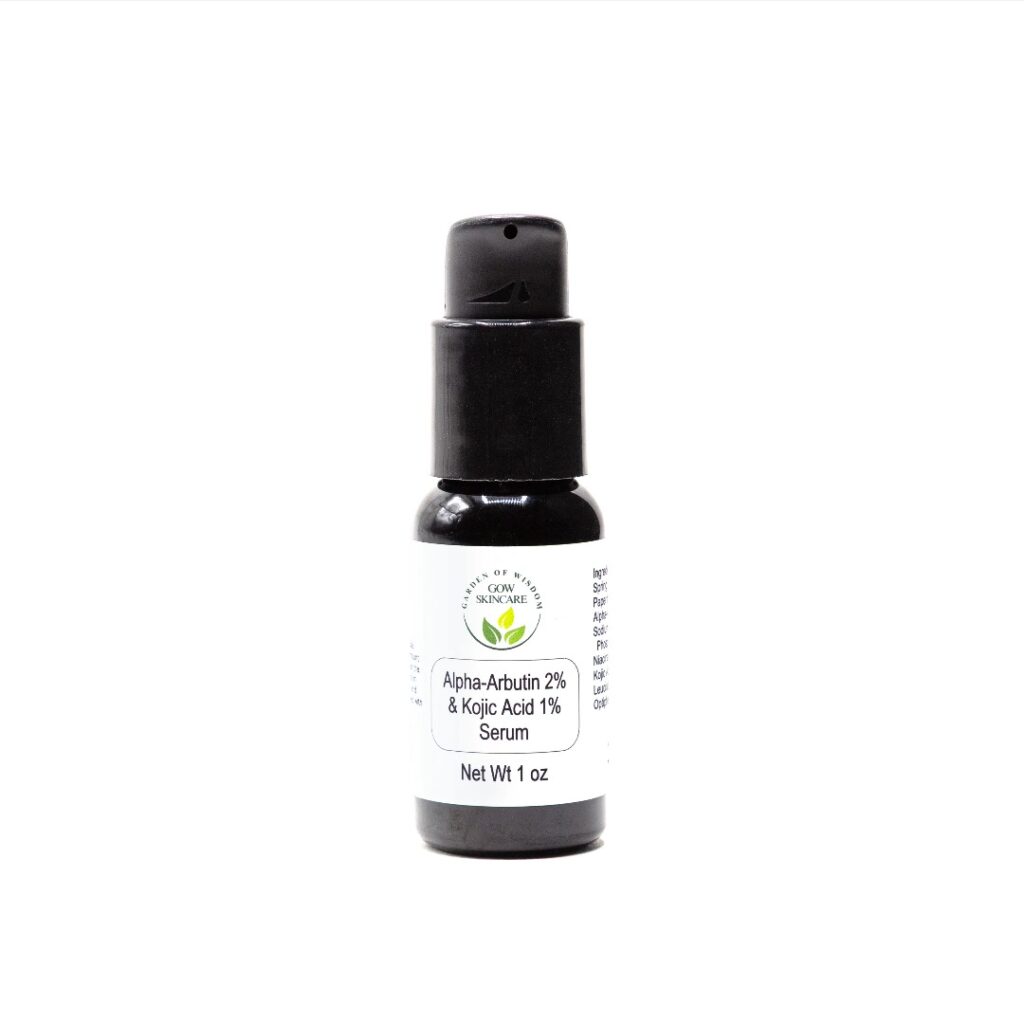
The Garden of Wisdom Alpha Arbutin 2% and Kojic Acid 1% Serum addresses hyperpigmentation from two complementary directions. Alpha arbutin inhibits melanin production by blocking tyrosinase. Kojic acid works through a compatible but different mechanism, making the combined formula more effective for stubborn discolouration, melasma, and post-inflammatory marks than either active alone. Niacinamide and Paper Mulberry provide additional tone-correcting and barrier-supporting benefits.
Pros:
- Dual alpha arbutin and kojic acid provide two-pathway melanin inhibition
- Niacinamide adds barrier support and additional tone correction
- Evening use avoids photosensitivity concerns associated with kojic acid
- Addresses melasma, hyperpigmentation, age spots, and post-inflammatory marks
Cons:
- Best used as a standalone active rather than layered with other strong brightening actives on the same night
- Progressive results require consistent four to eight weeks of nightly use
3. Medix 5.5 10% Glycolic and Lactic Acid Overnight Serum
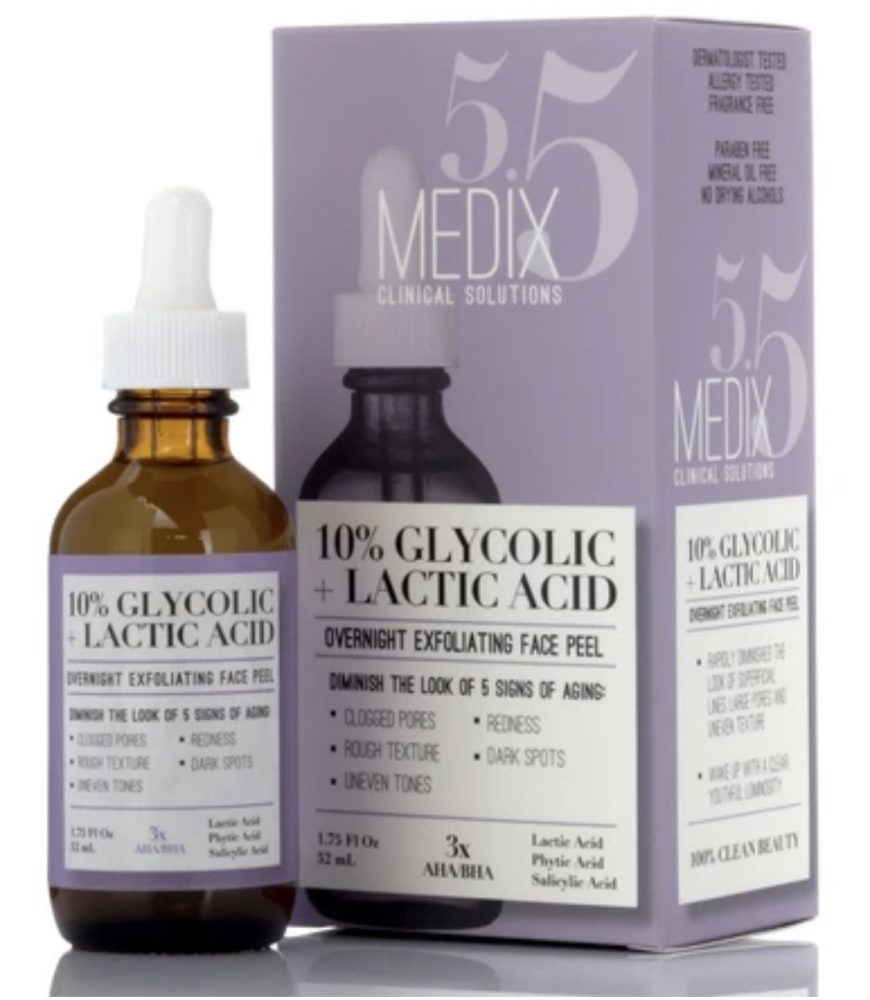
This serum belongs exclusively in the evening because its 10% AHA concentration significantly increases UV sensitivity, making daytime use a direct risk for the pigmentation you are trying to address. Applied overnight, the combined glycolic and lactic acid formula exfoliates, brightens, and renews the skin surface during the skin’s natural repair cycle, producing refined texture and improved radiance by morning.
Pros:
- 10% AHA exfoliation produces meaningful texture improvement and radiance overnight
- Glycolic and lactic acids exfoliate and hydrate simultaneously
- Overnight application maximises results while avoiding UV sensitivity risk
- pH-balanced formula delivers effective exfoliation without excessive irritation
Cons:
- Makes morning SPF absolutely non-negotiable the following day
- Should not be used on the same night as retinol to avoid over-exfoliation
4. OOTD Wrinkle Lift Retinol Serum
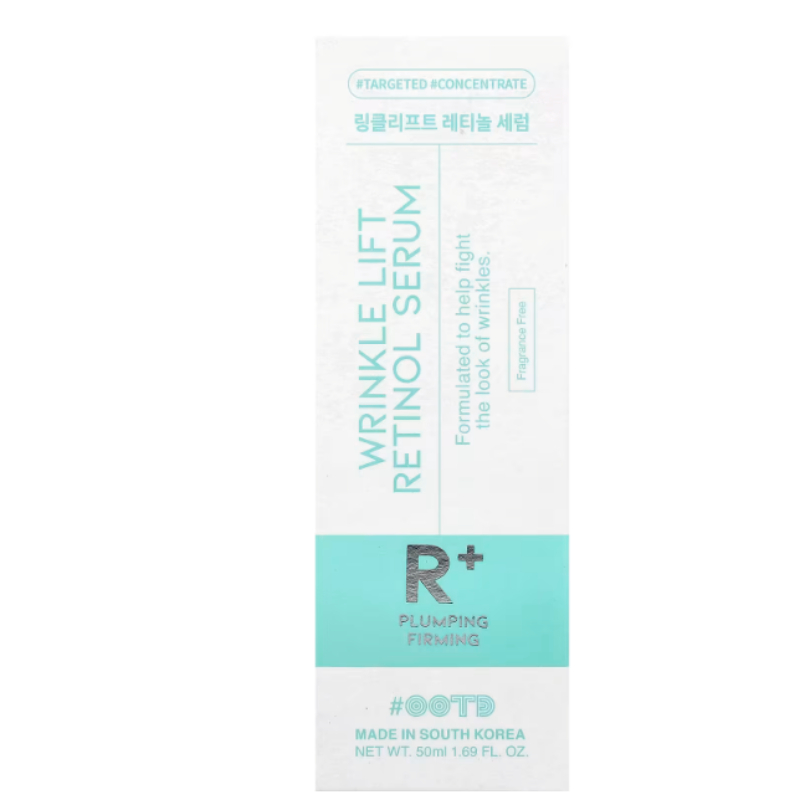
The OOTD Wrinkle Lift Retinol Serum is a lightweight, accessible evening treatment for skin dealing with fine lines and early signs of ageing. Using Retinyl Palmitate, a gentler ester form of retinol, it delivers progressive collagen-stimulating and cell turnover benefits without significant irritation risk. Applied in a pea-sized amount to areas of concern in the evening, it is a practical and affordable entry into retinol-based anti-ageing treatment for all skin types.
Pros:
- Retinyl Palmitate delivers retinol benefits with a gentler profile for all skin types
- Lightweight, non-sticky formula comfortable for nightly use
- Accessible starting point for retinol-based anti-ageing evening treatment
- Fast-absorbing and integrates easily into any existing evening routine
Cons:
- Gentler retinol ester produces more gradual results than pure retinol or retinal
- Better suited as a starting point than a long-term high-performance treatment
5. Some By Mi Retinol Intense Reactivating Serum
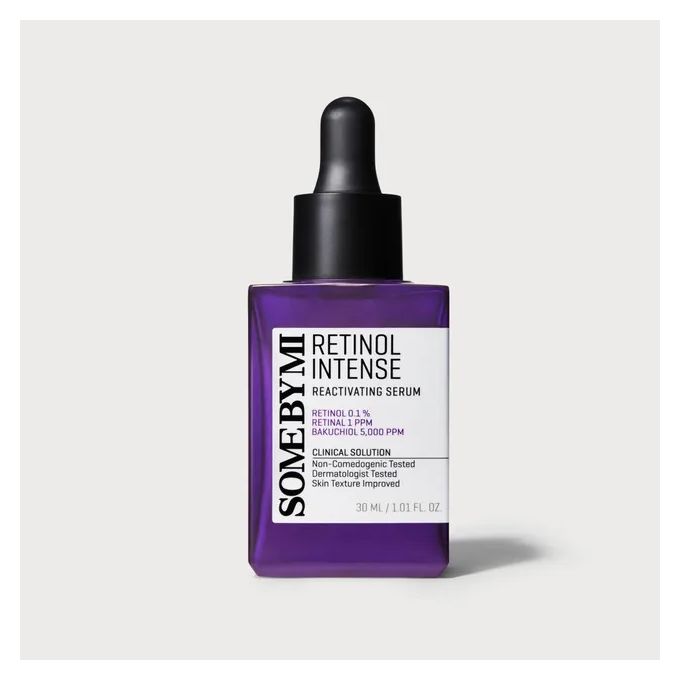
The Some By Mi Retinol Intense Reactivating Serum combines retinol, retinal, and bakuchiol with patented elastic-liposome technology for comprehensive anti-ageing evening treatment. Retinal converts to active Vitamin A in a single step for faster, more efficient results. The liposome delivery releases actives gradually for enhanced penetration and reduced irritation. Bakuchiol adds complementary renewal and elasticity benefits through a plant-based pathway, making this effective even for sensitive skin.
Pros:
- Retinol, retinal, and bakuchiol provide three-pathway collagen stimulation and renewal
- Liposome technology improves penetration and reduces irritation significantly
- Suitable for sensitive skin wanting effective retinoid-based evening treatment
- Deep hydration alongside potent anti-ageing activity for comfortable nightly use
Cons:
- Full results require consistent nightly use over several weeks
- Should not be used on the same night as AHA exfoliants
How to Structure Your Routine
Morning: Cleanse, apply one day serum, moisturise, SPF. Evening: Cleanse, apply one night serum, moisturise. Alternate between your exfoliating serum and retinol on different nights rather than using both in the same session.
This structure ensures every serum gets the timing and absorption it needs. No conflicts, no diluted efficacy, no unnecessary irritation.
At Perona Beauty, our approach focuses on routines that are strategic rather than simply comprehensive. The most visible skin improvements come from using the right product at the right time consistently, not from using more products simultaneously. Every serum featured in this article is available across our stores. Visit us at 120 Ogudu Road, Opposite Debonairs Pizza, Ogudu, Lagos, or at 42 Ademolu House, Ita Eko, Abeokuta, and our team will help you identify which morning and evening serums are right for your specific skin concerns.
The Bottom Line
Can you use two serums at once? You can, but splitting them between a morning routine focused on protection and brightening and an evening routine focused on renewal and repair is the better system. It respects ingredient chemistry, the skin’s biological rhythms, and the absorption limitations that make layering actives inefficient.
One serum per window. Consistent use. Better skin.
Frequently Asked Questions About Using Two Serums at Once
Can you use two serums at once if they are compatible ingredients? Even compatible serums perform better when split across morning and evening rather than applied simultaneously. The absorption limitation means the second serum never performs at its best when the first has not been fully absorbed. The answer to can you use two serums at once remains the same regardless of compatibility.
What happens if you layer Vitamin C and retinol together? Vitamin C is most effective in the morning for antioxidant protection. Retinol is a night-only active due to UV sensitivity. Applying them together also risks pH conflict and compounded irritation. The morning and evening split is the correct and most effective approach for these two ingredients specifically.
Can you use two serums at once if one is purely hydrating? A hydrating serum containing only humectants like hyaluronic acid can generally be layered under one active serum without significant conflict. However, if both serums contain actives, split them across your morning and evening routines rather than applying them simultaneously.
How long before I see results from splitting serums into a two-window routine? Most active serums require four to eight weeks of consistent use before meaningful visible improvement develops. Splitting serums correctly and using each one consistently is the most reliable path to visible results. Inconsistency and incorrect layering are the two most common reasons people feel their serums are not working.
Can you use two serums at once for anti-ageing specifically? Anti-ageing serums are among the actives most affected by incorrect layering. Retinol belongs at night. Vitamin C belongs in the morning. Using both simultaneously reduces the efficacy of each and increases irritation risk. The split routine is the correct approach for anti-ageing treatment specifically and produces significantly better results over time.