
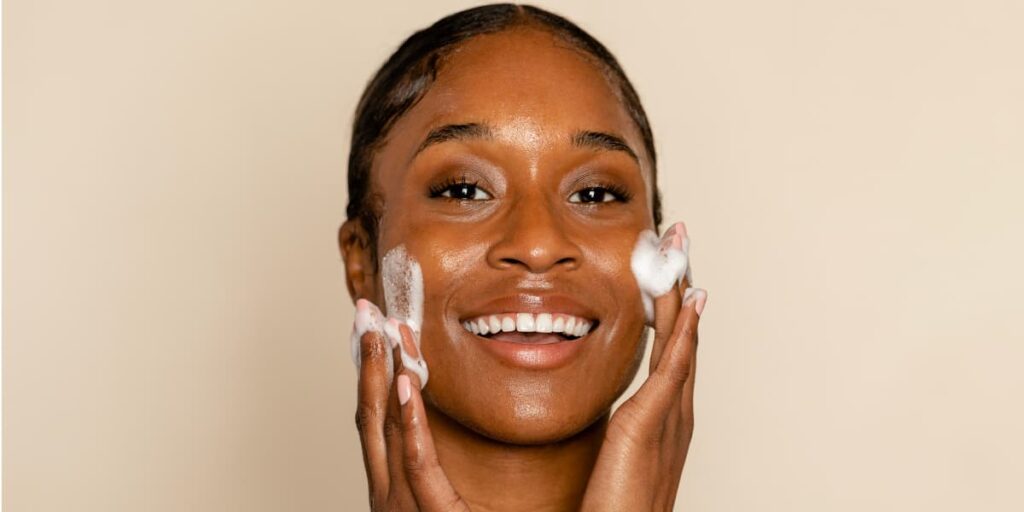
Most people spend years treating their skin as either oily or dry, building routines around one extreme and wondering why the other extreme keeps showing up uninvited. The T-zone is shiny by midday, the cheeks feel tight by evening, and no single product seems to satisfy both at once. If this sounds familiar, the answer is almost certainly combination skin, and recognising it changes everything about how you build a routine.
Combination skin is the most common skin type globally, yet it remains the most misdiagnosed because its defining characteristic is contradiction. Understanding what it actually is, why it behaves the way it does, and which products genuinely serve its competing needs is what this guide is designed to provide.
How to Tell If You Have Combination Skin
This is the question most people have been asking in the wrong direction. Rather than asking whether their skin is oily or dry, the more useful question is whether their skin is both at once in different areas. It is defined by this coexistence of different skin behaviours across different facial zones, not by a single consistent skin state.
The classic pattern of involves an oily T-zone, the forehead, nose, and chin, which tend to produce excess sebum, appear shiny, and develop blackheads and congestion. The cheeks, temples, and areas around the eyes simultaneously feel normal to dry, may appear dull or slightly flaky, and react to certain products with tightness or irritation.
But combination skin does not always follow a textbook T-zone pattern. Some people experience oiliness only on the nose and chin while the forehead and cheeks are dry. Others find that oiliness shifts seasonally, with humid conditions making the oily zones more pronounced and harmattan drying the drier zones more dramatically. The defining feature is not the specific pattern but the presence of meaningfully different skin behaviours across the face simultaneously.
What Causes Combination Skin?
Combination skin is driven by an uneven distribution of sebaceous glands across the face. The T-zone contains a significantly higher concentration of sebaceous glands than the cheeks and outer facial areas, which is why sebum production is naturally higher in these zones even in people who do not have oily skin types overall.
When these naturally oil-rich zones produce sebum at a higher rate than the surrounding skin, the result is a face that cannot be accurately described as uniformly oily, uniformly dry, or uniformly normal because it is genuinely all three simultaneously in different locations.
Hormonal fluctuations amplify this uneven sebum distribution significantly. The increase in androgen activity during puberty, the menstrual cycle, pregnancy, and perimenopause all affect sebaceous gland activity, which is why it is often becomes more pronounced or shifts in its pattern during hormonally active periods.
Climate also plays a meaningful role. Nigeria’s warm, humid climate activates sebaceous gland activity and makes the oily zones of combination skin more prominent. Harmattan reverses this for the dry zones, making the contrast between oily and dry areas on combination skin more extreme during this season than at other times of year.
The Most Common Signs of Combination Skin
Combination skin presents through a recognisable set of signs that, taken together, distinguish it clearly from purely oily or purely dry skin. The challenge is that people often notice individual signs in isolation rather than reading the full picture.
Persistent midday oiliness that is concentrated specifically on the T-zone while the rest of the face remains comfortable or dry is the most diagnostic sign of combination skin. Truly oily skin produces shine across the entire face. it produces shine in specific zones only.
Blackheads and visible pores concentrated on the nose, chin, and inner forehead alongside clear, relatively pore-free skin on the cheeks is another reliable indicator. Pore visibility correlates with sebum production, so uneven pore appearance across the face signals uneven sebum distribution.
The experience of needing two different products to satisfy different parts of the face, a richer moisturiser on the cheeks and a lighter one on the T-zone, is a practical daily experience that strongly suggests combination skin.
Seasonal fluctuation that makes the skin’s condition noticeably worse in both directions, oilier in humidity and drier during harmattan, reflects the amplification of combination skin’s contradictions by environmental changes.
8 Signs You Have Combination Skin
- Your T-zone is visibly shiny by midday but your cheeks feel normal or tight at the same time.
- You develop blackheads primarily on your nose and chin, not evenly across your face.
- Lightweight moisturisers leave your cheeks feeling dry while your T-zone looks greasy.
- Rich moisturisers satisfy your cheeks but cause breakouts or excess shine on your forehead and nose.
- Your pores are noticeably larger on your nose and inner T-zone than on your cheeks and temples.
- You experience dryness or flakiness on your cheeks during harmattan while your T-zone remains oily.
- Foundation wears off unevenly, sliding on the T-zone while appearing patchy on the cheeks.
- You have been told you have oily skin and dry skin by different people who were both partially correct.
Why Routines Designed for One Skin Type Fail on Combination Skin
The most persistent problem with combination skin is that it falls through the gap between product categories. Oily skin routines use lightweight, mattifying, oil-controlling products that satisfy the T-zone but strip the dry zones. Dry skin routines use rich, nourishing products that satisfy the cheeks but worsen congestion on the oily zones.
The approach that works is zone-aware rather than uniform. Lightweight, non-comedogenic formulas cover the base needs of the full face without over-feeding the oily zones. Where additional hydration is needed, it is applied specifically to the drier areas. Where oil control or brightening actives are needed, they are concentrated on the T-zone.
Multi-functional products with balanced formulas that are neither too rich nor too stripping are the most practical choice for combination skin because they provide adequate care across all zones without requiring an entirely different product for each area of the face.
The 6 Best Products for Combination Skin
1. Anua Heartleaf Quercetinol Deep Cleansing Foam
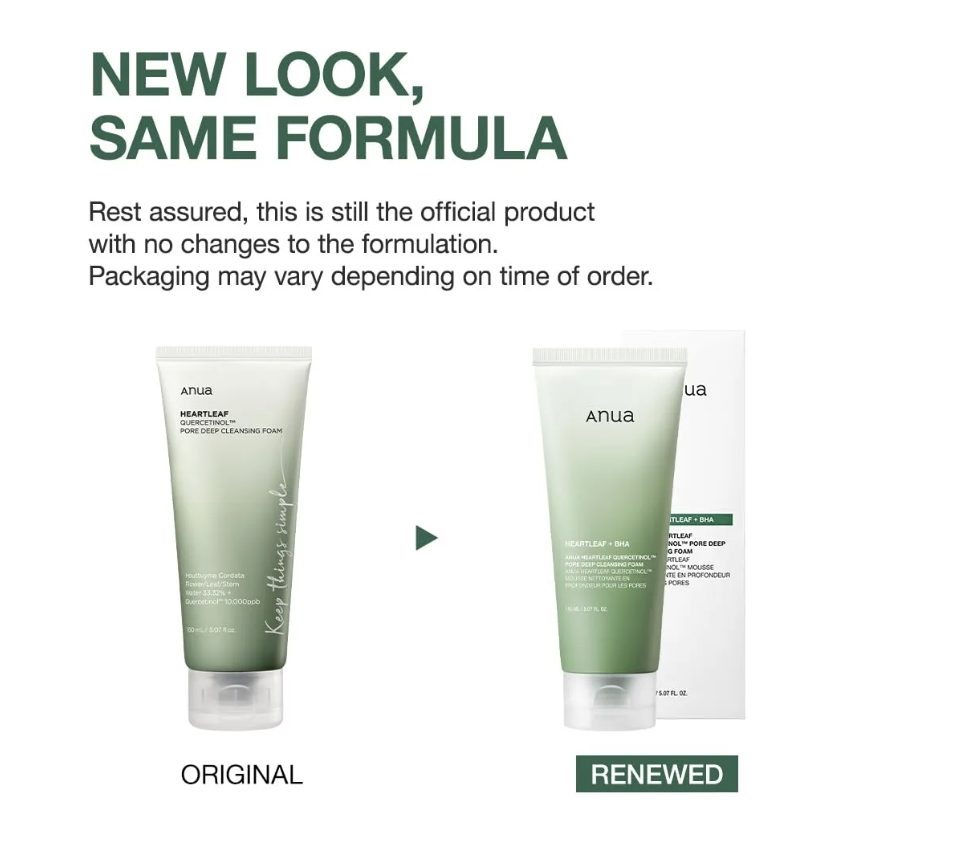
The cleanser step is particularly consequential for combination skin because over-cleansing the T-zone to manage oiliness consistently strips the drier zones and worsens their dehydration. The Anua Heartleaf Quercetinol Deep Cleansing Foam addresses this challenge through a low-pH, gentle formulation that cleanses effectively without stripping moisture from any zone of the face.
Heartleaf extract provides anti-inflammatory and sebum-calming properties that address the oily zone concerns of combination skin without disrupting the moisture balance of the drier areas. Quercetinol, a plant-derived antioxidant, provides oxidative protection that is particularly relevant for skin dealing with the environmental stress of Nigerian urban conditions. The foam cleanses deeply enough to address the congestion and excess sebum of an oily T-zone while remaining gentle enough to leave the cheeks comfortable rather than tight.
Pros:
- Low-pH gentle formula cleanses effectively without stripping any zone of combination skin
- Heartleaf extract calms inflammation and sebum production in the oily T-zone
- Leaves the full face clean and comfortable without post-cleanse tightness on drier areas
- Suitable for sensitive and acne-prone skin alongside combination skin concerns
Cons:
- Foam texture may feel less substantial than cream cleansers for very dry cheek areas
- Low-pH formula may require adjustment for those accustomed to standard alkaline cleansers
2. Medicube PDRN Pink Niacinamide Milky Toner
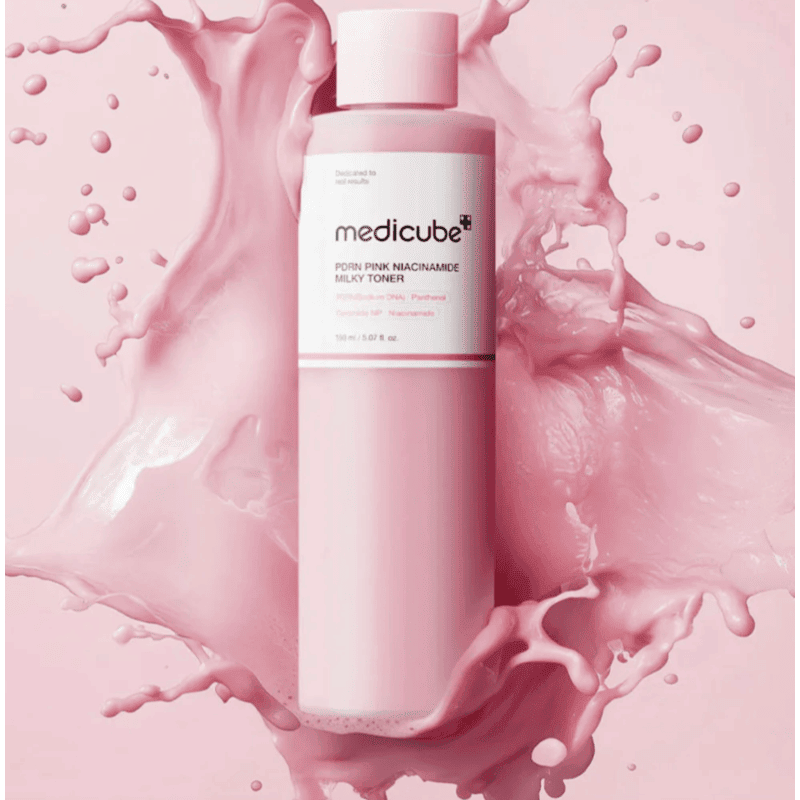
The toner step is where combination skin routines often make their most impactful product choice. Astringent, alcohol-containing toners tighten and mattify the T-zone but damage the dry zones. Heavy, occlusive toners satisfy dry areas but worsen congestion on oily zones. The Medicube PDRN Pink Niacinamide Milky Toner navigates this with a milky, balancing formula that addresses both zones simultaneously.
PDRN (Polydeoxyribonucleotide) supports skin repair and cell renewal across all zones while niacinamide works on tone correction, sebum regulation, and barrier strengthening simultaneously. These combined properties make this toner one of the most practically suited to combination skin because niacinamide’s sebum-balancing effect is valuable on the T-zone while its barrier-strengthening benefit supports the drier zones. The milky texture hydrates without congesting, which is the ideal toner behaviour for a skin type with competing zone needs.
Pros:
- Niacinamide addresses sebum control and barrier strengthening for all zones of combination skin
- PDRN supports skin repair and cell renewal for improved overall skin quality
- Milky texture hydrates without congesting, serving both oily and dry zones appropriately
- Brightening benefits improve the overall radiance of combination skin with consistent use
Cons:
- Milky texture may feel slightly richer than very oily skin types prefer on the T-zone
- Full brightening results develop progressively over several weeks of consistent use
3. Medicube Niacinamide 15% Plus TXA Serum
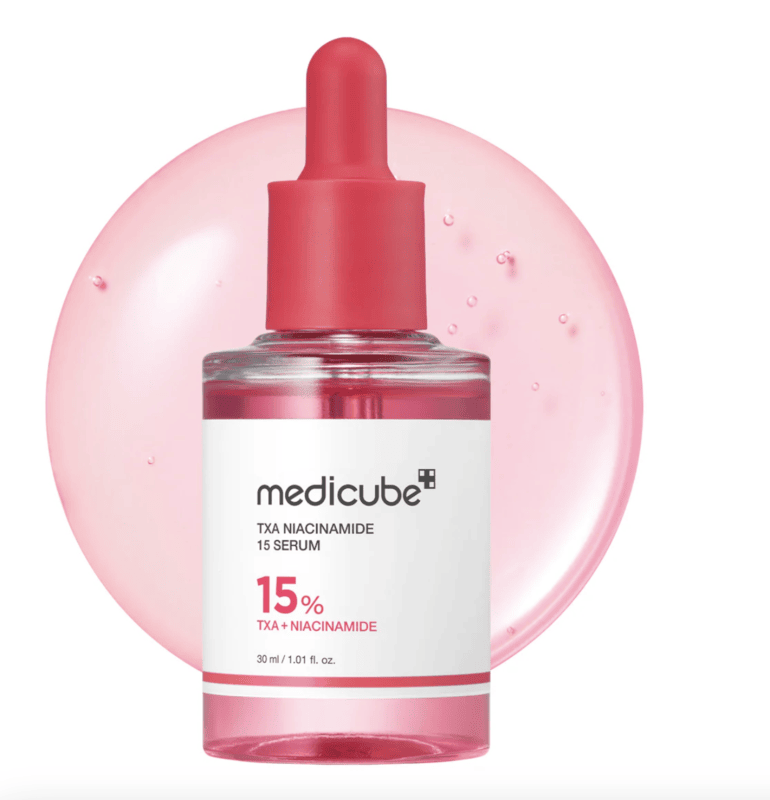
The dark spot concerns that come with combination skin are often more complex than those of purely oily or purely dry skin. Post-inflammatory marks from T-zone breakouts sit alongside the general dullness that the drier zones develop, requiring a serum that addresses both pigmentation and overall radiance simultaneously. The Medicube Niacinamide 15% Plus TXA Serum is formulated for exactly this dual requirement.
At 15% Niacinamide combined with Tranexamic Acid (TXA) and hyaluronic acid, this serum targets dark spots and post-acne marks through two complementary brightening mechanisms while simultaneously strengthening the barrier and delivering hydration to both the oily and dry zones of combination skin. Hyaluronic acid addresses the dehydration component that the dry zones of combination skin frequently experience, while the high niacinamide concentration manages both tone and sebum production across the face.
Pros:
- 15% Niacinamide and TXA address dark spots and post-acne marks through two separate brightening mechanisms
- Hyaluronic acid provides hydration to the drier zones of combination skin within a single serum
- Lightweight, fast-absorbing formula does not congest pores on oily T-zone areas
- Strengthens the skin barrier for improved resilience across all zones of combination skin
Cons:
- 15% Niacinamide is a high concentration that should be introduced gradually for reactive skin
- Best used in the evening for those pairing with a Vitamin C product in the morning
4. Arencia PDRN Booster Shot
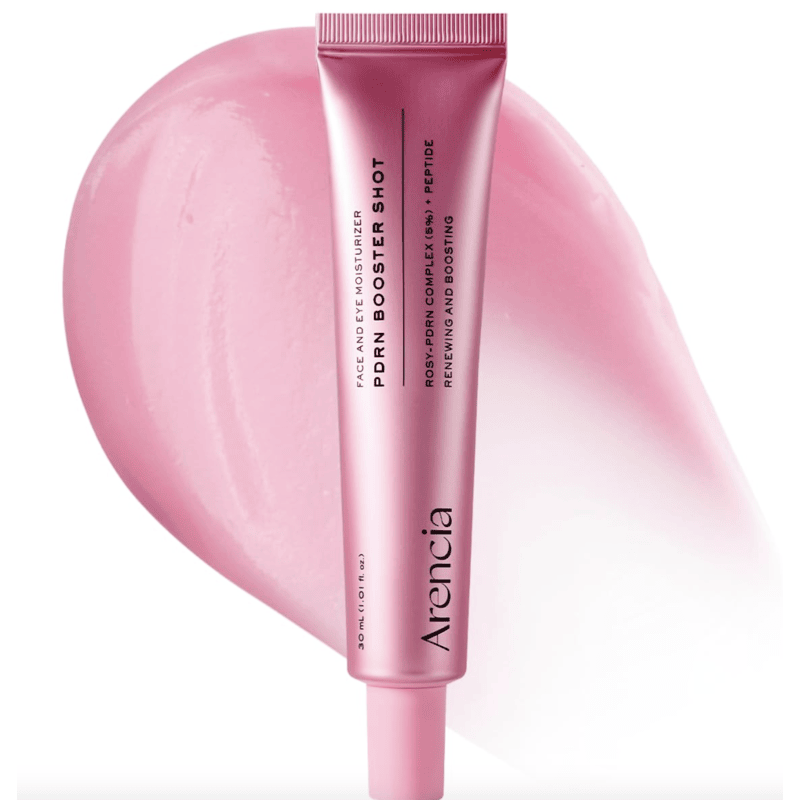
Combination skin is frequently dehydrated despite its oily T-zone, a paradox that confuses many people into thinking they cannot have a hydration deficit if they have shine. The Arencia PDRN Booster Shot addresses this directly with salmon-derived and rose-derived PDRN, multiple molecular weights of hyaluronic acid, ceramides, peptides, and niacinamide in a single booster serum designed for exactly this kind of stressed, dehydrated, barrier-compromised skin.
PDRN promotes cellular repair and regeneration, which is particularly valuable, dealing with the post-breakout healing needs of an active T-zone alongside the structural barrier needs of drier zones. Multiple hyaluronic acids deliver hydration at different skin depths, ceramides rebuild the barrier structure, and peptides support collagen production for improved firmness and elasticity across all areas.
Pros:
- Multiple hyaluronic acids deliver layered hydration at different depths for all zones of combination skin
- Ceramides rebuild the barrier structure that dehydrated combination skin needs strengthened
- PDRN supports cellular repair and regeneration for post-breakout healing in the T-zone
- Peptides improve firmness and elasticity alongside hydration for comprehensive skin improvement
Cons:
- Dense active formula is more comprehensive than simple maintenance dehydration requires
- Best introduced gradually for skin new to PDRN or multi-active formulations
5. Arencia Vitamin C Booster Shot
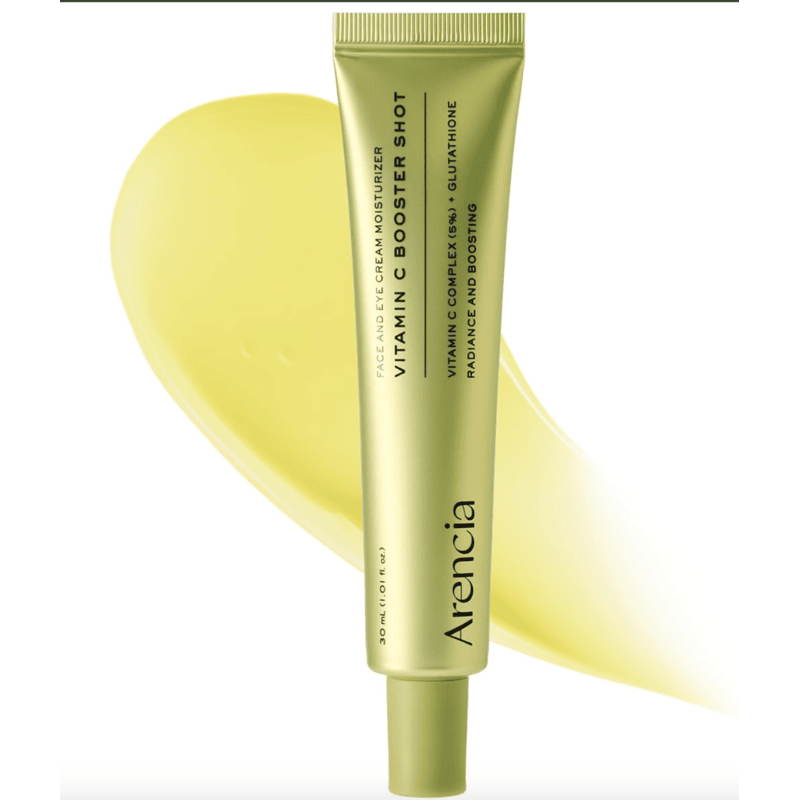
Combination skin accumulates environmental oxidative damage differently across its zones. The oily T-zone oxidises sebum on the skin surface, which contributes to blackhead formation and inflammation. The drier zones are more vulnerable to UV-driven collagen breakdown and pigmentation. The Arencia Vitamin C Booster Shot addresses oxidative damage across both types of zone concern through its combination of pure Vitamin C, stable Vitamin C derivatives, niacinamide, and glutathione.
Vitamin C applied in the morning protects the skin from the UV and pollution-driven free radicals generated during daily exposure, which is the most relevant application timing for combination skin dealing with Lagos urban environmental stress. Glutathione adds a complementary brightening mechanism, while niacinamide brings the sebum-balancing and barrier-supporting benefits that make this serum relevant for both the oily and dry zones of combination skin simultaneously.
Pros:
- Pure Vitamin C and stable derivatives provide comprehensive antioxidant protection for all zones of combination skin
- Niacinamide adds sebum control and barrier support alongside brightening activity
- Glutathione contributes complementary brightening for dark spots and overall radiance
- Lightweight formula absorbs without congesting the oily zones of combination skin
Cons:
- Vitamin C formulations require consistent morning SPF to prevent photooxidation
- Multiple forms of Vitamin C should be introduced gradually for reactive or sensitive skin
6. Medicube TXA 5% Niacinamide Capsule Cream
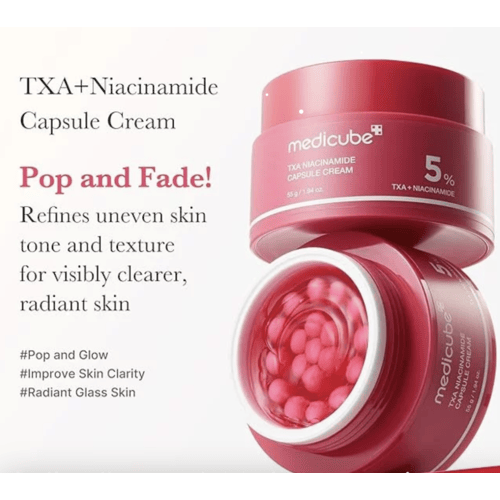
Finding a moisturiser for combination skin that satisfies dry zones without congesting oily ones is the central routine challenge this skin type presents. The Medicube TXA 5% Niacinamide Capsule Cream addresses it through its dual-texture formula where customisable capsule content allows the texture and concentration to be adjusted for different zones and needs.
TXA at 5%, niacinamide at 5%, alpha arbutin, glutathione, ceramides, and hyaluronic acid together deliver brightening, hydration, barrier support, and tone correction in a single moisturiser step. The combination of brightening actives addresses the post-breakout marks and uneven tone that combination skin accumulates on the T-zone, while ceramides and hyaluronic acid satisfy the hydration and barrier needs of the drier zones. The formula is suitable for sensitive and acne-prone skin, making it one of the most practically safe moisturisers for combination skin across all its zones.
Pros:
- Dual-texture customisable formula allows adjustment for different zones of combination skin
- TXA and alpha arbutin brighten post-acne marks and uneven tone in the T-zone
- Ceramides and hyaluronic acid satisfy the hydration and barrier needs of drier zones simultaneously
- Suitable for sensitive and acne-prone skin, covering the most reactive zone concerns of combination skin
Cons:
- Innovative dual-texture format requires some learning before application becomes intuitive
- Multiple brightening actives mean gradual introduction is recommended for first-time users
Building a Routine for Combination Skin
Morning: Anua Heartleaf Cleansing Foam, Medicube PDRN Niacinamide Milky Toner, Arencia Vitamin C Booster Shot, Medicube TXA Niacinamide Capsule Cream, SPF.
Evening: Anua Heartleaf Cleansing Foam, Medicube PDRN Niacinamide Milky Toner, Arencia PDRN Booster Shot or Medicube Niacinamide 15% TXA Serum, Medicube TXA Niacinamide Capsule Cream.
Zone application tip: apply the PDRN Booster Shot with slightly more concentration on the drier cheek areas. Apply the Niacinamide 15% TXA Serum with more focus on the T-zone where post-breakout marks and active congestion are most present.
At Perona Beauty, all six products in this guide are available in store. Visit us at 120 Ogudu Road, Opposite Debonairs Pizza, Ogudu, Lagos, or at 42 Ademolu House, Ita Eko, Abeokuta. Our team will help you build a routine specifically suited to combination skin based on your particular zone pattern and Nigerian climate concerns.
What Understanding Your Skin Type Actually Changes
Recognising combination skin for what it is removes the frustration of routines that almost work but never quite do. It reframes the contradictory behaviour of your skin not as a problem to be fixed but as a structural reality to be accommodated with products and habits that respect both its oily and dry zones equally.
The six products in this guide are selected specifically for their ability to serve multiple zone needs simultaneously, from the balancing cleanse of the Anua Heartleaf Foam to the zone-aware brightening of the Medicube TXA Capsule Cream. Build the routine around your actual skin type, use it consistently, and the contradiction that has been driving your skincare frustration will finally start making sense.
Frequently Asked Questions About Combination Skin
Can combination skin change over time?
Yes. Combination skin shifts with age, hormonal changes, seasonal changes, and changes in environment. Many people find that their skin becomes less oily in their 30s and 40s as sebaceous gland activity naturally declines, transitioning their combination skin toward normal or dry. Reassessing your skin type every few years and adjusting your routine accordingly produces better outcomes than assuming your skin type is permanent.
Is it possible to have combination skin and acne at the same time?
Yes, and it is very common. The oily T-zone of combination skin is particularly prone to blackheads and breakouts because of the high sebum production and pore congestion that accompany oily zones. The post-inflammatory hyperpigmentation that follows breakouts on combination skin adds a brightening concern to an already complex skin management picture, which is why the Medicube Niacinamide 15% TXA Serum and Medicube TXA Capsule Cream are relevant for this skin type specifically.
Should I use different moisturisers on different zones of my combination skin?
It is an effective approach but not always practical. A better starting point is finding a well-balanced moisturiser like the Medicube TXA Niacinamide Capsule Cream that serves both zones adequately, then applying a slightly richer product specifically on the cheeks on dry days if needed. Full multi-product zoning is appropriate for severe combination skin but unnecessary for moderate cases.
How do I know if my combination skin is dehydrated as well?
Dehydrated combination skin shows fine surface lines that appear when the face is gently compressed, a dull complexion despite adequate moisturising, tight feeling even on the oily T-zone immediately after cleansing, and products absorbing unusually quickly. The PDRN Booster Shot is the most directly targeted product in this guide for dehydrated combination skin.