

Dryness and flaking in sensitive skin is one of the most frustrating combinations to deal with in skincare. The skin needs intensive hydration, but many hydrating ingredients trigger reactions. It needs exfoliation to clear the flaking, but most exfoliants cause redness and irritation. It needs a stronger moisture barrier, but the products designed to build it often contain fragrances or actives that make sensitivity worse.
Why Dryness and Flaking in Sensitive Skin Happens
Dryness and flaking in sensitive skin has a specific biological mechanism that separates it from ordinary dryness. Sensitive skin typically has a compromised skin barrier, meaning the stratum corneum, the outermost protective layer of the skin, has reduced integrity. This manifests as lower ceramide content, weakened tight junctions between skin cells, and increased transepidermal water loss (TEWL), the process by which water evaporates from the skin surface faster than it is replenished.
When the barrier is compromised, two things happen simultaneously. The skin loses moisture rapidly, producing the tight, uncomfortable dryness characteristic of dryness and flaking in sensitive skin. And because the barrier is porous rather than intact, external irritants, including ingredients in skincare products, environmental pollution, and allergens, penetrate more easily, triggering the inflammatory responses that make sensitive skin reactive.
The flaking component of dryness and flaking in sensitive skin occurs when dehydrated surface cells lose their cohesion and begin to shed in visible patches rather than invisibly as healthy cell turnover produces. This is a sign that the skin’s natural moisture retention is insufficient to maintain the integrity of the surface cell layer.
Environmental factors accelerate this cycle significantly. In Nigeria, harmattan season creates a period of extreme low ambient humidity that draws moisture from the skin surface rapidly, making dryness and flaking in sensitive skin more pronounced during these months than at other times of year. Air conditioning similarly reduces indoor humidity and accelerates the TEWL that drives dryness and flaking in sensitive skin forward.
The Most Common Mistakes That Worsen Dryness and Flaking in Sensitive Skin
Understanding what makes dryness and flaking in sensitive skin worse is as important as knowing what improves it. Many people with this skin concern are using approaches that provide short-term relief while compounding the underlying barrier damage.
Over-cleansing is the most common mistake. Washing the face more than twice daily strips the skin’s natural lipids, depletes the ceramide content of the barrier, and directly worsens dryness and flaking in sensitive skin. Even well-intentioned extra cleansing after exercise or before bed compounds the barrier compromise that causes the problem.
Physical exfoliation is another frequent culprit. Scrubbing flaking skin with physical exfoliants removes visible flakes satisfyingly but creates micro-tears in an already compromised barrier, triggering more inflammation, more TEWL, and paradoxically more flaking over the following days.
Fragrance in skincare products is the third major aggravator of dryness and flaking in sensitive skin. Fragrance is among the most common contact irritants in skincare, and for a barrier that is already porous and reactive, fragranced products consistently worsen the inflammatory environment that perpetuates dryness and flaking.
Hot water during cleansing strips the skin’s natural lipid layer more aggressively than lukewarm water and significantly worsens dryness and flaking in sensitive skin with each washing.
What Actually Works for Dryness and Flaking in Sensitive Skin
The approach that consistently produces real improvement in dryness and flaking in sensitive skin works on three simultaneous fronts: replenishing the ceramides and lipids that form the moisture barrier, introducing humectant ingredients that draw water into the skin cells and hold it there, and protecting the newly repaired barrier from the UV damage and environmental stress that break it down again.
Ceramides are the lipids that make up approximately 50 percent of the skin barrier’s composition. In skin with dryness and flaking in sensitive skin, ceramide content is measurably lower than in non-sensitive skin. Replenishing ceramides through topical products directly addresses the structural cause of the barrier deficit.
Humectants, particularly hyaluronic acid at multiple molecular weights, address the water content deficit in dehydrated, flaking skin. Applied to damp skin, they draw environmental moisture and the moisture on the skin’s surface into the cells, producing the plumping and softening effect that reduces visible flaking.
Barrier occlusion seals the hydration and ceramides that have been introduced, preventing TEWL from undoing the replenishment. A well-formulated moisturiser with occlusive and emollient ingredients applied as the final active step maintains the hydration level that humectants introduce.
8 Practical Tips That Works
- Cleanse with lukewarm water only. Hot water strips the natural lipids that protect against dryness and flaking in sensitive skin more aggressively than any cleanser.
- Switch to a fragrance-free, ceramide-based cleanser. Fragranced and sulphate-heavy cleansers are among the most direct causes of persistent dryness and flaking in sensitive skin.
- Apply your toner and serum to slightly damp skin. Humectants draw moisture from available water. Applying to damp skin gives them moisture to draw from the surface rather than pulling from deeper skin layers.
- Never skip moisturiser. For dryness and flaking in sensitive skin, missing even one moisturising step allows TEWL to deplete the hydration built by previous steps, setting the barrier repair cycle back.
- Avoid physical scrubs entirely when flaking is active. Chemical exfoliation at low concentrations is safer for flaking sensitive skin, but during active flaking episodes, even gentle acids should be paused until the barrier stabilises.
- Apply SPF every morning without exception. UV damage is one of the primary drivers of barrier breakdown that perpetuates dryness and flaking in sensitive skin. Unprotected daily sun exposure directly worsens the barrier compromise at the root of the problem.
- Layer products from thinnest to thickest. Toner, serum, moisturiser, SPF. This sequence ensures each layer absorbs properly and the occlusive moisturiser seals everything beneath it.
- Introduce new products one at a time with a two-week gap between introductions. Sensitive skin cannot identify what is causing a reaction when multiple new products are introduced simultaneously, which prolongs the trial-and-error cycle of managing dryness and flaking in sensitive skin.
The 5 Best Products for Dryness and Flaking in Sensitive Skin
1. FaceFacts Ceramide Hydrating Gentle Cleanser
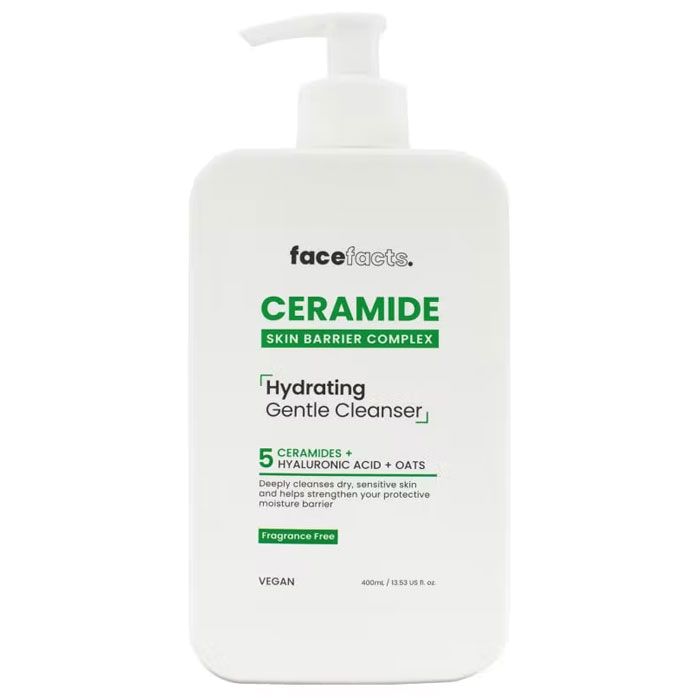
The cleanser is the most important product selection for anyone managing dryness and flaking in sensitive skin because it is the step that either preserves or damages the barrier before anything else in the routine begins. The FaceFacts Ceramide Hydrating Gentle Cleanser (400ml) gets this right by combining ceramides with a fragrance-free, gentle formulation that replenishes the skin’s barrier lipids during cleansing rather than stripping them.
Ceramides in a cleanser serve a specific and meaningful purpose. Standard cleansers, even gentle ones, remove some degree of the skin’s natural ceramide content as part of the cleansing process. A ceramide-infused cleanser partially counteracts this loss by delivering ceramides to the skin while the cleansing occurs, leaving the barrier in better condition post-cleanse than a non-ceramide formula would. For dryness and flaking in sensitive skin, this difference in post-cleanse barrier integrity directly affects how much moisture is retained through the rest of the routine.
The fragrance-free formulation removes the most common contact irritant from the step that should set up the skin for successful hydration.
Pros:
- Ceramides replenish barrier lipids during cleansing, directly addressing dryness and flaking in sensitive skin
- Fragrance-free formula removes the most common contact irritant from the cleansing step
- 400ml size supports consistent daily use without frequent repurchasing
- Gentle, nourishing formulation suitable for twice-daily use on dry and sensitive skin types
Cons:
- Gentle hydrating formula may not fully remove heavy or waterproof makeup without a dedicated first cleanse
- Ceramide content in a wash-off formula provides less sustained barrier support than leave-on products
2. COSRX Full Fit Propolis Synergy Toner
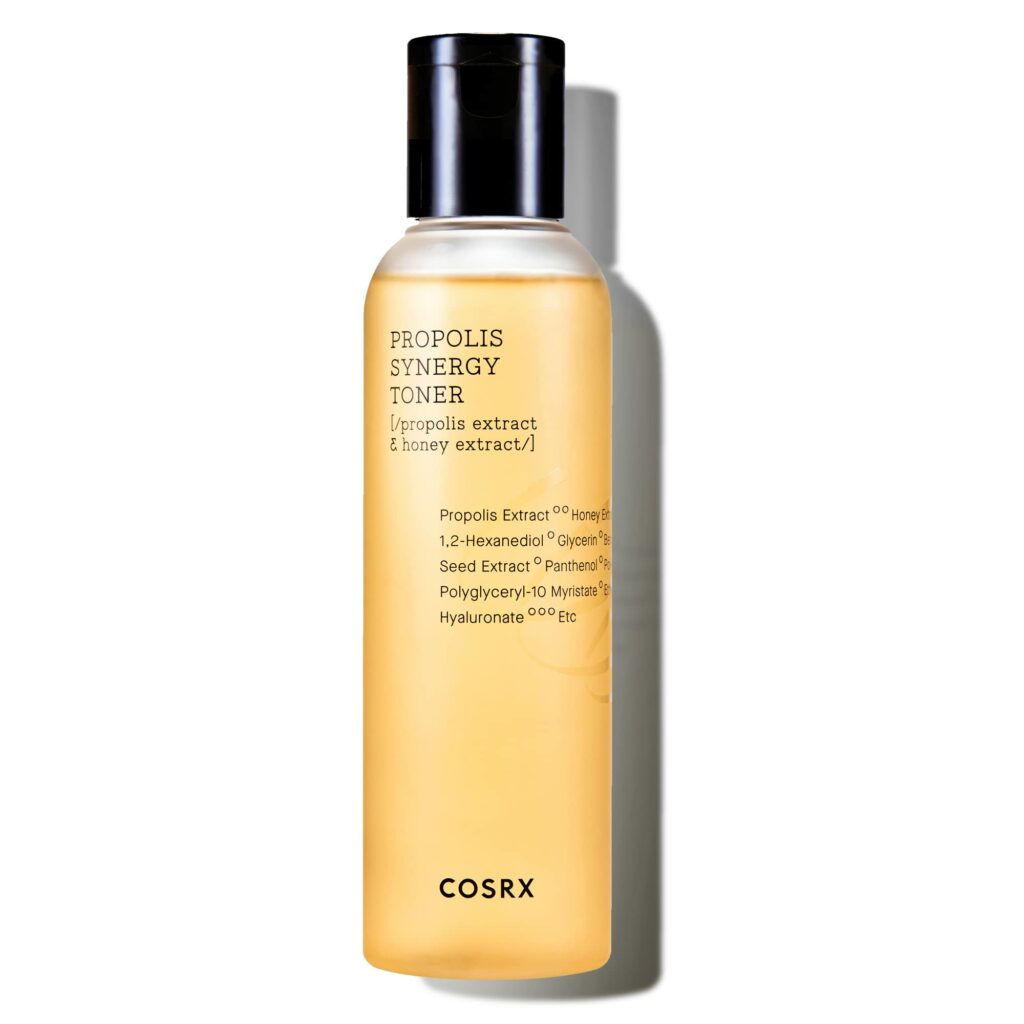
The COSRX Full Fit Propolis Synergy Toner is one of the most appropriate toning steps for dryness and flaking in sensitive skin because propolis, at 72.6% concentration, delivers anti-inflammatory, barrier-strengthening, and deeply hydrating benefits simultaneously. These three properties directly address the three co-occurring problems in dryness and flaking in sensitive skin: inflammation that keeps the skin reactive, insufficient barrier integrity, and inadequate moisture retention.
Propolis is naturally rich in flavonoids and phenolic compounds that reduce the inflammatory signalling responsible for keeping sensitive skin in a reactive state. Honey extract at 10% adds additional humectant and antimicrobial benefits alongside the propolis. Together, they make this toner one of the most genuinely therapeutic first active steps for dryness and flaking in sensitive skin, calming the skin while simultaneously hydrating and strengthening the barrier.
The characteristic amber colour of this toner is a reliable visual marker of its authentic propolis content. Applied after cleansing to slightly damp skin, it sets a calmer, more hydrated foundation for the serum and moisturiser steps that follow.
Pros:
- 72.6% propolis reduces inflammation and strengthens the moisture barrier for sensitive and dry skin
- Anti-inflammatory properties directly calm the reactivity that accompanies dryness and flaking in sensitive skin
- Honey extract provides additional humectant hydration and barrier support
- Deeply hydrating formula creates an ideal base for serum absorption without causing irritation
Cons:
- Slightly viscous texture feels different from standard liquid toners for first-time users
- Amber colour may appear on light-coloured cotton pads during application without being a sign of product spoilage
3. The Ordinary Hyaluronic Acid 2% Plus B5
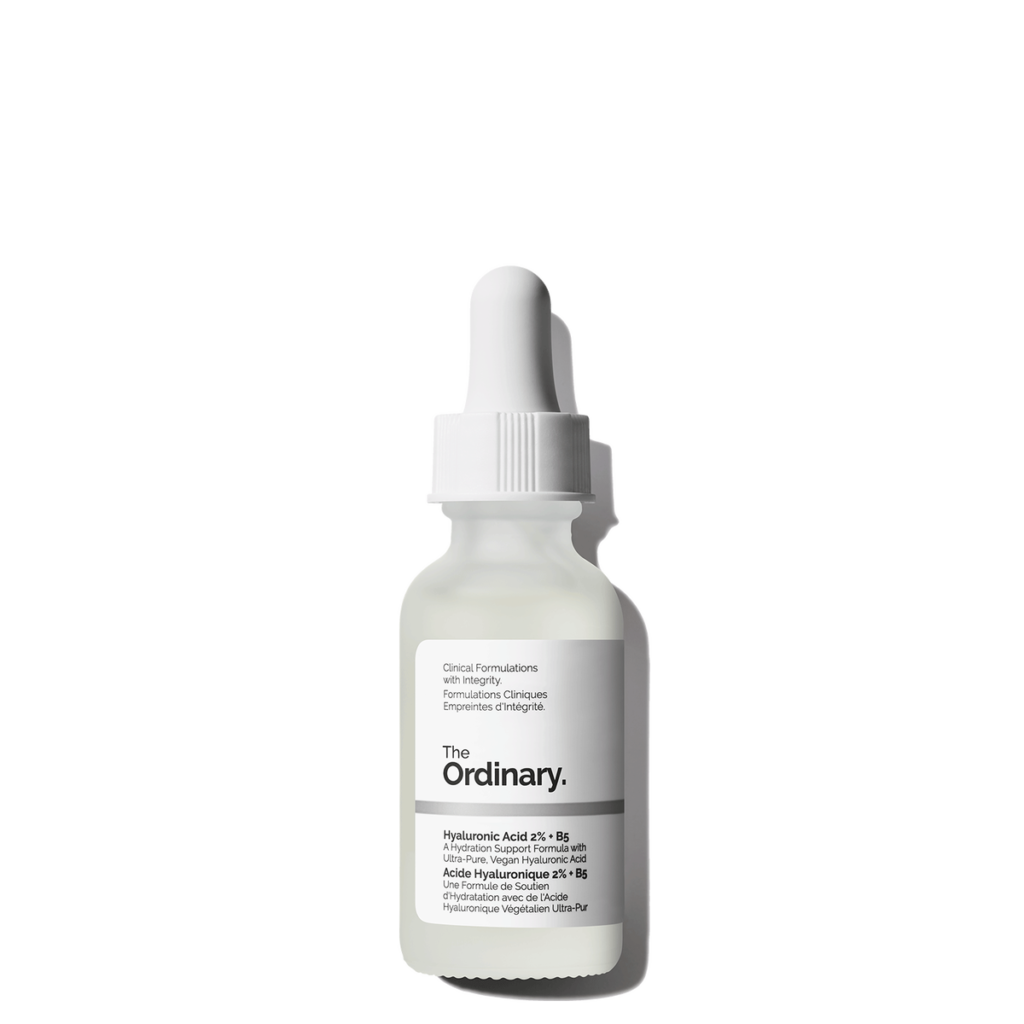
The Ordinary Hyaluronic Acid 2% Plus B5 is one of the most directly targeted serums for the hydration deficit that drives dryness and flaking in sensitive skin. The formula uses hyaluronic acid at multiple molecular weights, addressing water delivery at the skin surface, mid-layer, and deeper epidermis simultaneously, rather than working at only one depth as single-weight HA formulas do.
Vitamin B5 (Panthenol) complements the hyaluronic acid by improving skin barrier function and accelerating the repair of the compromised barrier that is the structural cause of dryness and flaking in sensitive skin. Panthenol is one of the most well-tolerated and effective barrier-repairing ingredients available, and its inclusion in this formula makes it more than a simple hydration serum. It is a hydration and barrier repair treatment in a single step.
The oil-free, fragrance-free formulation ensures that this serum introduces no additional irritation risk to skin already managing dryness and flaking in sensitive skin. Applied to damp skin after toning, it delivers the water-binding activity that plumps dehydrated cells and reduces the visible surface flaking that dehydration produces.
Pros:
- Multiple molecular weight HA delivers hydration at surface, mid, and deep epidermal levels simultaneously
- Vitamin B5 improves barrier function and accelerates repair of the compromised barrier causing dryness and flaking
- Oil-free and fragrance-free formulation adds no irritation risk to sensitive skin
- Visibly reduces surface flaking by replenishing cellular water content with consistent use
Cons:
- Must be applied to damp skin for maximum humectant benefit from the hyaluronic acid
- Requires a follow-up moisturiser to seal in the hydration it delivers
4. CeraVe Moisturizing Cream for Dry to Very Dry Skin
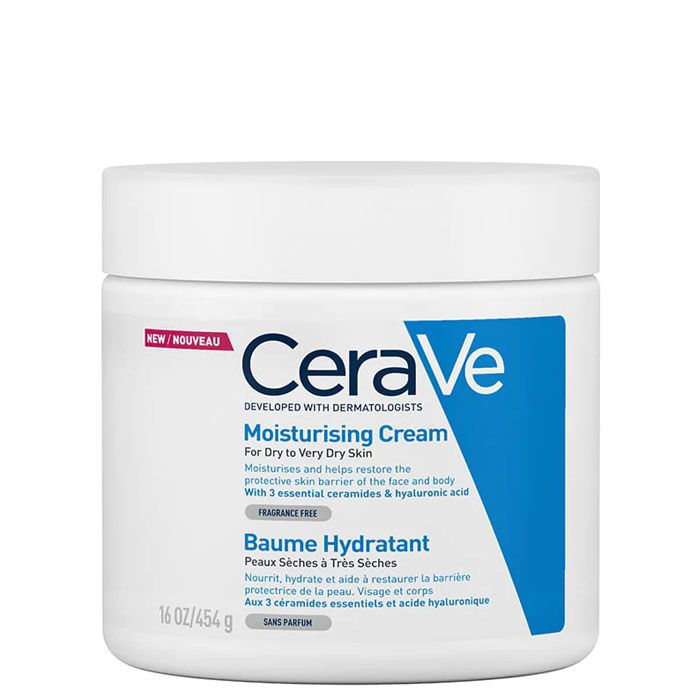
The CeraVe Moisturizing Cream is one of the most dermatologist-recommended products for dryness and flaking in sensitive skin precisely because it addresses the structural ceramide deficit that causes both problems simultaneously. Its formula of three essential ceramides, hyaluronic acid, and MVE (Multivesicular Emulsion) technology delivers ceramides into the skin continuously over time rather than just at the moment of application, providing sustained barrier repair throughout the day.
The three ceramides (1, 3, and 6-II) are the same ceramides that naturally occur in the skin barrier, which is why this cream integrates with the barrier so compatibly. For dryness and flaking in sensitive skin, this biological compatibility means the cream is working with the skin’s existing barrier structure rather than simply coating the surface. Hyaluronic acid within the formula provides humectant hydration, while the rich cream texture provides the emollient and occlusive protection that seals in the hydration introduced by earlier routine steps.
The 16oz size reflects the need for generous, consistent application rather than rationing, which is one of the most common reasons moisturiser effectiveness is compromised on dryness and flaking in sensitive skin.
Pros:
- Three essential ceramides directly replenish the barrier lipid deficit that causes dryness and flaking in sensitive skin
- MVE technology provides continuous ceramide delivery throughout the day rather than a one-time application benefit
- Hyaluronic acid delivers humectant hydration within the moisturiser layer for comprehensive moisture support
- Rich cream texture suits dry to very dry skin without containing fragrances or known irritants
Cons:
- Rich cream texture may feel heavier than preferred for oily or combination skin types in warm weather
- Large 16oz tub format requires hygienic application with a spatula to prevent contamination
5. La Roche-Posay Anthelios UVMUNE 400 Hydrating Cream SPF 50+
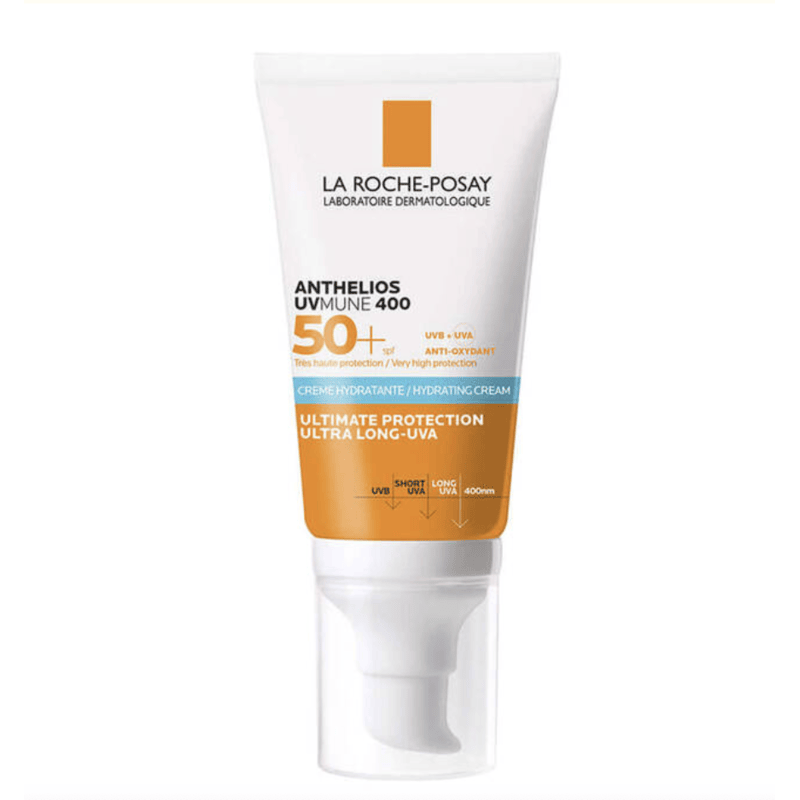
UV damage is one of the most significant and most overlooked drivers of the barrier compromise that produces dryness and flaking in sensitive skin. UV radiation degrades ceramides, breaks down the collagen that supports skin structure, and generates oxidative stress that perpetuates barrier dysfunction. Without daily SPF, every other product in the routine is fighting against the UV damage being accumulated simultaneously.
The La Roche-Posay Anthelios UVMUNE 400 addresses this with protection against UVA, UVB, and ultra-long UVA rays, a category of UV radiation that penetrates more deeply and contributes significantly to the deep barrier and collagen breakdown that worsens dryness and flaking in sensitive skin over time. Its hydrating, non-greasy formula means this comprehensive protection does not introduce the dryness or discomfort that many sunscreens cause on skin already managing dryness and flaking in sensitive skin.
The non-greasy, nourishing formula is specifically important here. A sunscreen that feels comfortable on sensitised, dry skin is one that will actually be applied consistently, and consistency is what makes SPF relevant to the long-term management of dryness and flaking in sensitive skin.
Pros:
- Protects against UVA, UVB, and ultra-long UVA rays to prevent the UV-driven barrier damage that worsens dryness and flaking in sensitive skin
- Hydrating, non-greasy formula is comfortable on dry and sensitised skin for daily use
- Helps prevent dark spots and premature ageing alongside its core UV barrier protection function
- Advanced UV filter technology makes it one of the most comprehensively protective daily sunscreens available
Cons:
- Premium price point reflects advanced UV filter technology and dermatologist-developed formulation
- Cream texture may require a setting powder for very oily skin types wearing foundation
How to Build a Routine for Dryness and Flaking in Sensitive Skin
Morning: Cleanse with FaceFacts Ceramide Gentle Cleanser using lukewarm water. Apply COSRX Propolis Toner to damp skin. Apply The Ordinary HA 2% Plus B5 serum. Apply CeraVe Moisturizing Cream. Finish with La Roche-Posay Anthelios UVMUNE 400 SPF 50+.
Evening: Cleanse with FaceFacts Ceramide Gentle Cleanser. Apply COSRX Propolis Toner. Apply The Ordinary HA 2% Plus B5. Apply CeraVe Moisturizing Cream as the final sealing step.
The evening routine removes the SPF step and allows the barrier repair products to work through the night during the skin’s elevated repair cycle.
At Perona Beauty, all five products featured in this guide are available in store. Visit us at 120 Ogudu Road, Opposite Debonairs Pizza, Ogudu, Lagos, or at 42 Ademolu House, Ita Eko, Abeokuta. Our team will help you build a routine specifically suited to managing dryness and flaking in sensitive skin for your particular skin and climate concerns.
The Path to Calmer, More Hydrated Sensitive Skin
Dryness and flaking in sensitive skin is not a permanent condition. It is the visible result of a barrier in deficit, and a barrier in deficit can be replenished with the right products, the right routine sequence, and the patience to let barrier repair happen over weeks rather than days.
The five products in this guide address every layer of what dryness and flaking in sensitive skin requires: the FaceFacts Ceramide Cleanser protects the barrier from cleansing damage, the COSRX Propolis Toner calms inflammation and builds hydration, The Ordinary HA Plus B5 replenishes cellular water content, CeraVe Moisturizing Cream seals everything in with sustained ceramide delivery, and La Roche-Posay Anthelios UVMUNE 400 prevents UV from dismantling the barrier work your routine is doing every day.
Build the routine, use it consistently, and give your skin the time it needs to do what skin is designed to do when it is given the right support.
Frequently Asked Questions
Why does my skin flake even though I moisturise every day?
Moisturising without addressing the underlying barrier deficit produces incomplete results for dryness and flaking in sensitive skin. If your moisturiser does not contain ceramides or occlusive ingredients, it is hydrating the surface without repairing the barrier through which moisture is escaping. Adding a ceramide-containing moisturiser like the CeraVe Moisturizing Cream and a humectant serum applied to damp skin before it typically resolves persistent flaking that daily moisturising alone has not addressed.
Can I exfoliate flaking skin if it is sensitive?
During an active flaking episode, exfoliation should be paused entirely and barrier repair prioritised. Once the skin has stabilised, very gentle chemical exfoliation with PHAs or low-concentration lactic acid can be introduced slowly. Physical scrubs should be avoided entirely for dryness and flaking in sensitive skin as they cause micro-tears in an already compromised barrier.
How long before I see improvement in dryness and flaking in sensitive skin?
Immediate improvement in comfort is typically felt within the first few days of switching to a barrier-supportive routine. Visible reduction in flaking develops within one to two weeks of consistent use. Significant barrier repair and reduced sensitivity from chronic dryness and flaking in sensitive skin takes four to eight weeks of daily consistent product use to become clearly evident.
Is sensitive skin the same as dry skin?
No. Sensitive skin describes a skin type prone to reactivity, redness, and inflammation. Dry skin describes a skin type with low natural oil production. They frequently overlap, producing dryness and flaking in sensitive skin, but they require different approaches. Dry skin needs oil-replenishing emollients. Sensitive skin needs anti-inflammatory, fragrance-free, barrier-supportive formulations. A good routine for dryness and flaking in sensitive skin addresses both simultaneously.
Does diet affect dryness and flaking in sensitive skin?
Yes, through several mechanisms. Essential fatty acids from foods like salmon, flaxseed, and walnuts are incorporated into the skin’s barrier lipid structure and support ceramide production. Vitamin E and Vitamin C from diet support the antioxidant environment that maintains barrier integrity. Adequate daily water intake supports cellular hydration. None of these replaces topical treatment for dryness and flaking in sensitive skin, but they create an internal environment in which topical treatment works more effectively.