
There are very few skincare ingredients that have been studied as extensively, recommended as consistently, and validated as thoroughly as retinol. Dermatologists across the world consider it one of the most important topical anti-ageing ingredients available without a prescription. Yet despite its reputation, many people either avoid it out of fear of irritation or use it incorrectly and abandon it before seeing results.
Including retinol in skincare routine steps does not need to be complicated or intimidating. This guide explains exactly what retinol is, what it does to the skin, who benefits most from it, how to introduce it correctly, and six products that cover every skin type and concern level.
What Retinol Is and How It Works
Retinol is a derivative of Vitamin A, one of the most essential vitamins for skin cell function. When applied topically, retinol undergoes a two-step conversion process in the skin: first to retinaldehyde, then to retinoic acid, which is the biologically active form that produces the skin changes retinol is known for.
Retinoic acid works by binding to retinoid receptors in skin cells and activating genes responsible for cell turnover, collagen synthesis, and the suppression of melanin production. The result of this receptor-level activity is skin that turns over faster, produces more structural proteins, holds more moisture through improved barrier ceramide content, and shows progressively less evidence of sun damage and ageing with sustained use.
The conversion process from retinol to retinoic acid is what makes retinol gentler than prescription tretinoin, which is already in the retinoic acid form. The gradual conversion means less immediate activity and therefore less initial irritation, making it the most appropriate starting point for anyone introducing retinol in skincare routine for the first time.
What Retinol Actually Does to Your Skin
Accelerates Cell Turnover
The skin naturally sheds and replaces surface cells every 28 to 40 days. This cycle slows with age, meaning older, duller cells sit on the surface longer and the skin takes on a flat, uneven quality. Retinol accelerates this cycle, pushing fresher cells to the surface more quickly and producing a visible improvement in skin radiance, texture, and tone.
Stimulates Collagen and Elastin Production
Collagen and elastin are the structural proteins that keep skin firm, bouncy, and resistant to wrinkling. Their production declines from the mid-20s onwards. Retinol directly stimulates fibroblast activity, the cell process responsible for producing these proteins, progressively increasing the collagen density of the skin with consistent use. This is the mechanism behind retinol’s proven ability to reduce fine lines and improve skin firmness over time.
Fades Hyperpigmentation
Retinol suppresses melanin overproduction and accelerates the shedding of hyperpigmented surface cells, producing visible improvement in dark spots, post-inflammatory marks, and uneven skin tone. For Nigerian skin, where post-inflammatory hyperpigmentation is one of the most prevalent concerns, this is one of the most practically significant benefits of including retinol in skincare routine steps consistently.
Unclogs and Refines Pores
By accelerating cell turnover, retinol prevents the accumulation of dead cells and sebum inside pores that creates the congestion and enlarged appearance that many skin types struggle with. With sustained use, pores appear progressively smaller and the skin surface becomes smoother and more refined.
Strengthens the Skin Barrier
Retinol increases the ceramide content of the skin barrier over time, improving its capacity to retain moisture and protect against environmental irritants. This barrier-strengthening effect is one of the reasons that skin treated consistently with retinol in skincare routine steps tends to become less reactive and more resilient over months of use.
8 Reasons to Include Retinol In Your Skincare Routine Starting Now
- It is the most clinically validated topical anti-ageing ingredient available without a prescription. Decades of peer-reviewed research support its efficacy for collagen stimulation, cell renewal, and fine line reduction.
- It addresses multiple skin concerns simultaneously. Fine lines, uneven texture, dark spots, large pores, and dullness are all addressed through the same retinol mechanism, making it one of the most efficient single ingredients in skincare.
- It works at the cellular level. Unlike surface treatments that temporarily improve the appearance of skin, retinol in skincare routine steps produce structural changes at the receptor level that improve the skin’s actual biology rather than just its appearance.
- It is more effective the earlier you start. Retinol maintains collagen that already exists more easily than it restores collagen that has been lost. Starting in your late 20s or early 30s produces significantly better long-term outcomes than starting at 45.
- It improves the performance of the rest of your routine. Faster cell turnover means better absorption of serums, moisturisers, and treatments applied alongside it. A routine that includes retinol in skincare routine steps is a more efficient routine overall.
- It treats acne and ageing simultaneously. The pore-clearing and cell-turnover acceleration that makes retinol effective against acne is the same mechanism that addresses fine lines and texture, making it one of the few ingredients that serves both skin concerns in one step.
- Modern formulations have made it accessible for sensitive skin. Bakuchiol pairings, liposome encapsulation, and carefully calibrated concentrations mean that retinol in skincare routine steps are now achievable for skin types that would have been excluded by earlier, less sophisticated retinol products.
- The results compound over time. Unlike many skincare actives where benefits plateau after initial improvement, retinol’s collagen-building and cell-renewal benefits continue to develop and accumulate with consistent long-term use.
The Common Mistakes That Make Retinol Feel Like It Is Not Working
The most frequent reason people abandon retinol in skincare routine steps is not that retinol does not work. It is that they use it incorrectly and experience the irritation or apparent lack of results that incorrect use produces.
Using too much too soon is the primary mistake. A pea-sized amount for the entire face is the correct dose. More product does not produce faster results. It produces more irritation.
Using it every night from day one is the second mistake. The skin needs time to build tolerance. Starting two to three evenings per week and building to nightly over four to six weeks produces better long-term results than nightly use from day one that causes the flaking and redness that leads to abandonment.
Not using SPF the following morning is the third mistake. Retinol increases the skin’s photosensitivity by accelerating the removal of surface cells that provide UV protection. Every morning after retinol application requires broad-spectrum SPF to protect the progress being made overnight.
Expecting immediate results is the fourth mistake. Visible improvement in fine lines and texture from retinol in skincare routine steps typically develops over eight to twelve weeks. Collagen changes are structural and gradual by biology.
6 Best Retinol Products for Every Skin Type and Concern
1. Dr Althea Retinol Flat Iron Eye Roller — Best Retinol Eye Treatment With a Built-In Applicator
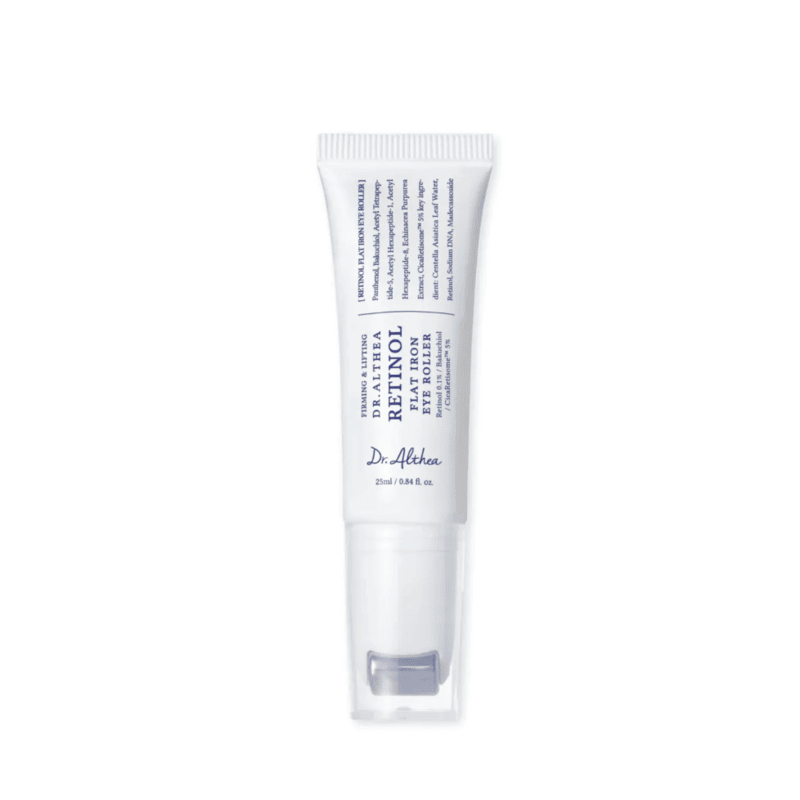
The Dr Althea Retinol Flat Iron Eye Roller is one of the most thoughtfully designed eye treatments on this list because it combines active ingredients with a mechanical advantage. The built-in gua sha roller applicator is not a gimmick. Rolling application improves microcirculation in the delicate under-eye area, reduces puffiness through gentle lymphatic drainage, and enhances absorption of the serum formula into skin that is notoriously difficult to penetrate effectively.
The formula itself uses 5% Cica Retisome, a encapsulated retinol complex enriched with Centella Asiatica and Madecassoside, which delivers the cell renewal and firming benefits of retinol with significantly reduced irritation risk for the thin, sensitive under-eye skin. Hyaluronic acid ensures long-lasting hydration alongside the active lifting and elasticity benefits.
For anyone looking to include retinol in skincare routine steps that specifically address under-eye ageing, this applicator-serum combination delivers both the ingredient activity and the mechanical benefit that eye creams without applicators cannot provide.
Pros:
- Gua sha roller applicator reduces puffiness and enhances absorption through improved microcirculation
- 5% Cica Retisome delivers retinol benefits with reduced irritation for delicate under-eye skin
- Hyaluronic acid provides long-lasting hydration alongside the firming and elasticity benefits
- Centella and Madecassoside soothe and calm the under-eye area during active retinol treatment
Cons:
- Serum format requires a follow-up eye cream for those needing more intensive moisturisation
- Roller applicator requires regular cleaning to maintain hygiene with daily use
2. Some By Mi Retinol Intense Advanced Triple Action Eye Cream — Best Eye Cream for Comprehensive Under-Eye Treatment
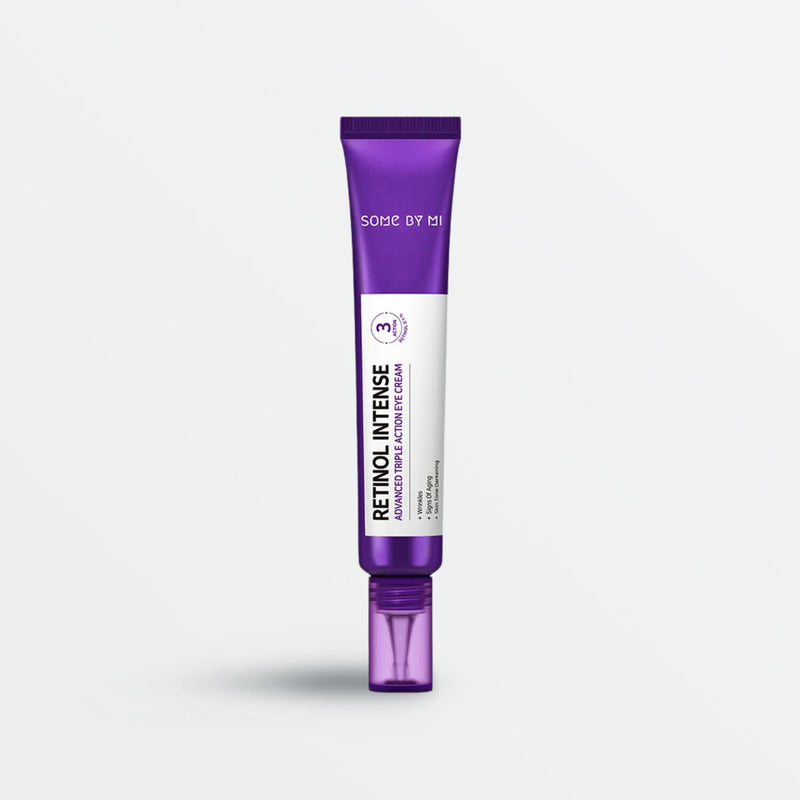
The Some By Mi Retinol Intense Advanced Triple Action Eye Cream is the most complete under-eye treatment on this list, combining retinol with peptides and niacinamide to address the full spectrum of under-eye ageing concerns in a single product. Retinol drives the collagen stimulation and cell renewal that progressively reduces fine lines. Peptides signal additional collagen and elastin synthesis through a complementary pathway. Niacinamide addresses the dark circles and inflammation that accompany under-eye ageing.
The eye-specific formulation is calibrated for the delicate under-eye skin, which is four times thinner than facial skin and significantly more sensitive to the concentrations appropriate for the cheeks or forehead. This is one of the most important considerations when introducing retinol in skincare routine steps around the eyes, and the Some By Mi formulation navigates it correctly.
Pros:
- Retinol, peptides, and niacinamide address fine lines, dark circles, and puffiness simultaneously
- Eye-specific formulation uses appropriate concentration for delicate under-eye skin
- Dual collagen stimulation through retinol and peptides produces more comprehensive results
- Firms, brightens, and smooths with consistent nightly application
Cons:
- Results from retinol’s structural improvement develop over six to eight weeks of consistent use
- Should be introduced gradually for those new to retinol around the eyes
3. Celimax Retinol Shot Tightening Serum — Best Retinol Serum for Pores and Firmness
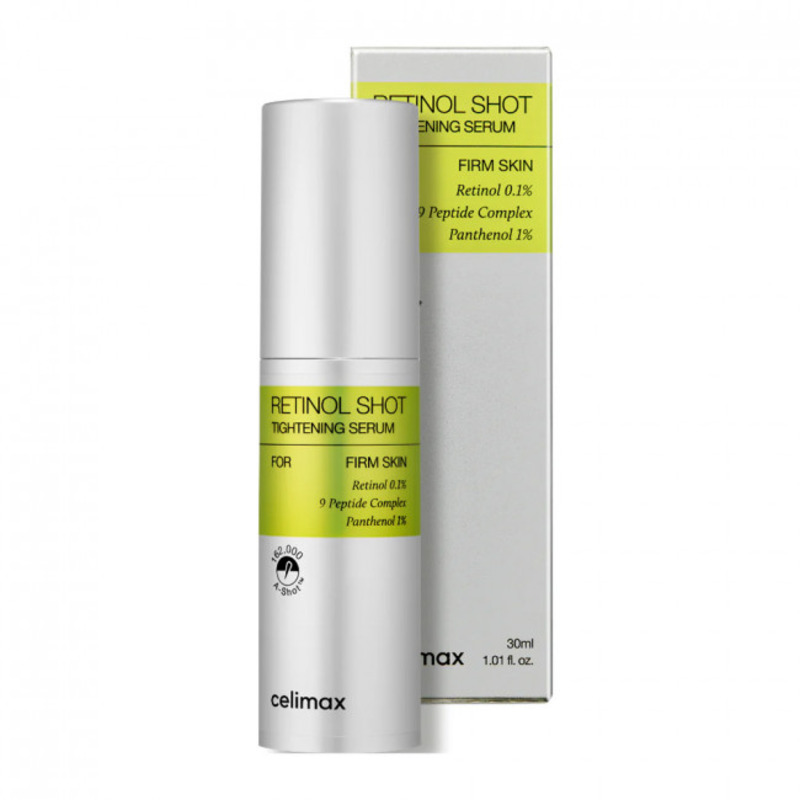
The Celimax Retinol Shot Tightening Serum addresses a concern that many retinol users do not immediately associate with the ingredient: pore refinement. The serum’s 0.1% pure retinol alongside a 9-peptide complex and A-Shot technology, which uses 162,000 fine particles to enhance retinol delivery deep into pores, makes it one of the most pore-focused formulations among retinol serums.
Pure retinol rather than a derivative is a meaningful formulation distinction. It provides more direct activity than retinol esters, which require additional conversion steps before becoming active in the skin. The 9-peptide complex contributes collagen stimulation and barrier support that makes the formula more comprehensive than retinol alone for the skin firmness and tightening goals that the product is named for.
For anyone whose primary motivation for including retinol in skincare routine steps is pore refinement alongside anti-ageing, this serum provides one of the most targeted formulations available.
Pros:
- 0.1% pure retinol delivers direct activity without requiring additional conversion steps
- A-Shot technology with 162,000 particles enhances retinol delivery into pores specifically
- 9-peptide complex supports collagen stimulation and barrier strength alongside retinol
- Addresses pore appearance, firmness, and fine lines comprehensively in a single evening serum
Cons:
- A-Shot particles may cause mild tingling during initial application for new retinol users
- Best suited to those who have some prior retinol experience rather than complete beginners
4. Dr Althea 0.1% Gentle Retinol Serum — Best for Retinol Beginners
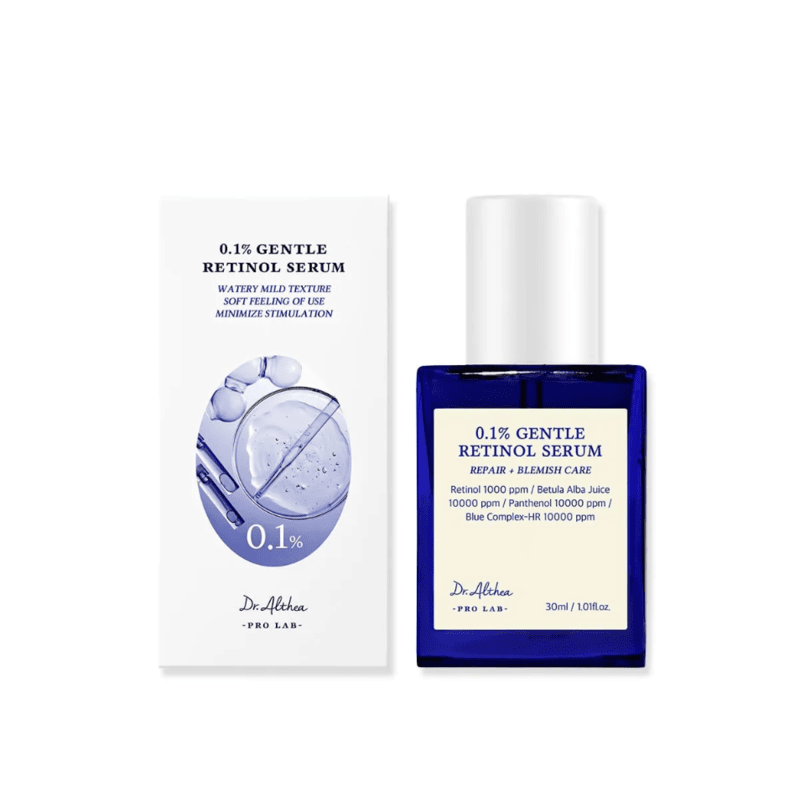
The Dr Althea 0.1% Gentle Retinol Serum is the most appropriate starting point for anyone introducing retinol in skincare routine steps for the first time. Its combination of 0.1% pure retinol with bakuchiol, a plant-derived compound that mirrors retinol’s cell renewal and anti-ageing activity through a different molecular pathway, produces meaningful skin improvement with a significantly reduced irritation profile compared to retinol used alone.
Bakuchiol’s anti-inflammatory and antioxidant properties directly offset the sensitivity response that retinol can cause in skin that has not built tolerance, which is why this combination makes consistent nightly use more achievable than standard retinol products for beginners. Consistent use is precisely what produces the cumulative results that make retinol in skincare routine steps worth maintaining long-term.
The serum also supports pore elasticity through bakuchiol’s specific benefits, addressing both the anti-ageing and pore refinement concerns that retinol is used for simultaneously.
Pros:
- Retinol and bakuchiol combination delivers anti-ageing benefits with reduced irritation risk
- Most appropriate starting point for those new to retinol in any form
- Bakuchiol’s anti-inflammatory properties support tolerance building for consistent nightly use
- Addresses fine lines, texture, and pore elasticity in a beginner-friendly formulation
Cons:
- Gentler formulation produces more gradual results than higher-concentration retinol products
- Those with resilient skin may want to graduate to a stronger retinol formulation after three to six months
5. Palmer’s Skin Therapy Retinol-10 Face Cream — Best Multi-Active Retinol Moisturiser
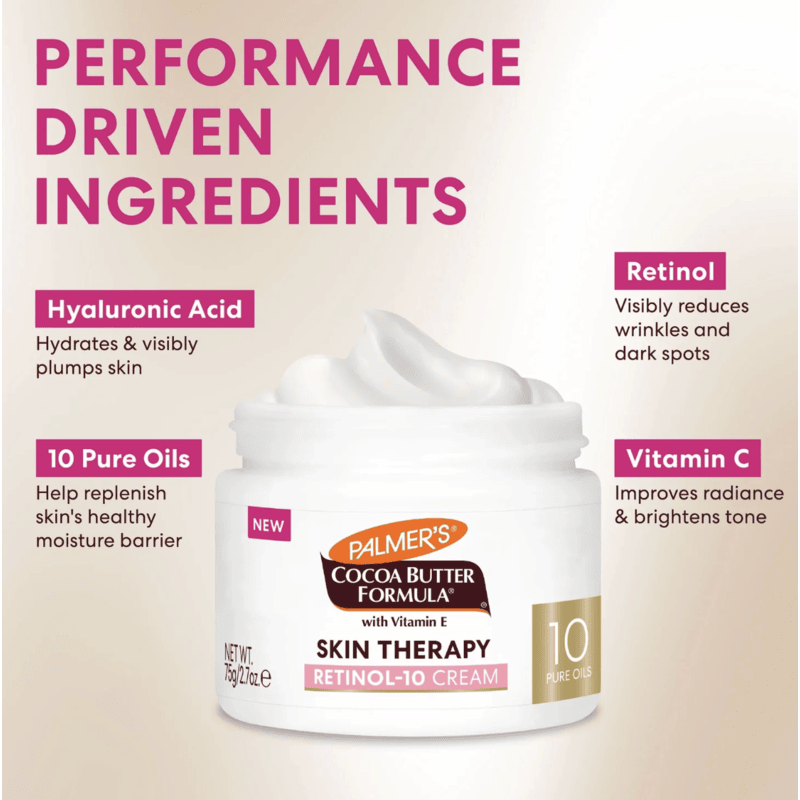
The Palmer’s Skin Therapy Retinol-10 Face Cream is the most ingredient-rich formulation on this list, combining retinol with ten pure oils, Vitamin C, squalene, and hyaluronic acid in a single moisturising step. For anyone who wants to simplify their routine while including retinol in skincare routine steps, this cream provides the active anti-ageing benefits of retinol alongside the antioxidant protection of Vitamin C, the deep hydration of hyaluronic acid, and the barrier nourishment of squalene and botanical oils without requiring separate products for each.
Vitamin C in the same formula as retinol is a notable combination. The antioxidant protection of Vitamin C preserves the collagen that retinol is simultaneously stimulating, creating a protective and regenerative cycle in a single cream. The ten pure oils and hyaluronic acid ensure that the skin remains well-nourished and hydrated throughout the retinol treatment process, reducing the dryness that causes many people to discontinue retinol use.
Pros:
- Retinol, Vitamin C, hyaluronic acid, and squalene deliver comprehensive anti-ageing in one step
- Ten pure oils nourish and support the skin barrier throughout active retinol treatment
- Clinically tested for all skin types with a formulation designed to deliver visible results
- Multi-active formula simplifies the routine without reducing active ingredient coverage
Cons:
- Rich formula may feel heavier than preferred for oily skin types in warm weather
- Combining retinol and Vitamin C in one product limits the ability to use them at different times of day
6. Estelin Retinol and Fullerene Age Defying Cream — Best for Antioxidant-Supported Retinol Treatment
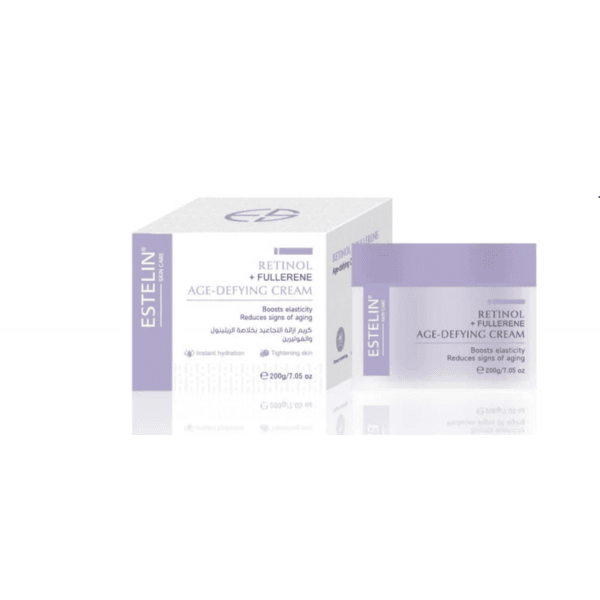
The Estelin Retinol and Fullerene Age Defying Cream introduces an ingredient pairing that distinguishes it from every other product on this list: retinol combined with fullerene. Fullerene is a carbon molecule with antioxidant properties reported to be significantly more powerful than Vitamin C, providing exceptional free radical neutralisation that protects the skin during and around retinol treatment.
Retinol’s cell turnover acceleration temporarily increases the skin’s vulnerability to oxidative damage, which is one of the reasons SPF is essential with retinol use. Fullerene within the formula provides an antioxidant protective layer that works alongside the retinol’s regenerative activity rather than waiting for SPF to do the work the following morning. For skin dealing with significant environmental oxidative stress from urban pollution and sun exposure, this combination makes the retinol in skincare routine application more comprehensively protective alongside its anti-ageing function.
Pros:
- Fullerene antioxidant provides powerful free radical protection during retinol treatment
- Deeply hydrating formula restores moisture while retinol works on structural renewal
- Firms, smooths fine lines, and restores youthful radiance through the combined active approach
- Offers antioxidant protection stronger than Vitamin C alongside active retinol benefits
Cons:
- Fullerene is a less familiar ingredient and its long-term topical research base is smaller than retinol
- Rich cream formula is better suited to evening use and to dry or normal skin types
How to Build a Retinol Routine Correctly
Evening: Cleanse thoroughly. Apply your chosen retinol serum, Dr Althea Gentle Retinol or Celimax Retinol Shot, to clean, dry skin. Apply eye cream, Dr Althea Eye Roller or Some By Mi Eye Cream, using the ring finger with gentle tapping. Follow with your retinol moisturiser, Palmer’s Retinol-10 or Estelin Fullerene Cream, as the sealing step.
Morning: SPF without exception. The morning after every retinol application is when UV protection matters most.
Frequency: Begin two to three evenings per week. After four weeks of no significant irritation, increase to four to five evenings. After eight weeks, move to nightly use if skin tolerates well.
At Perona Beauty, every retinol product featured in this guide is available in store. Visit us at 120 Ogudu Road, Opposite Debonairs Pizza, Ogudu, Lagos, or at 42 Ademolu House, Ita Eko, Abeokuta. Our team will help you identify the right starting point for retinol in skincare routine steps based on your skin type, concern level, and experience with the ingredient.
The Case for Retinol Is Clear
The evidence for including retinol in skincare routine steps is stronger than for almost any other topical skincare ingredient available. Decades of clinical research, consistent dermatologist recommendations, and the reliable visible results that long-term retinol users report make a compelling case that this is not a trend ingredient. It is a foundational one.
The six products on this list cover every entry point: gentle beginners serums, advanced pore-focused formulations, multi-active moisturisers, targeted eye treatments, and antioxidant-protected creams. Choose the one that matches your skin type, concern level, and retinol experience, introduce it gradually, follow with SPF every morning, and allow the biology of retinol to do what forty years of research has consistently shown it capable of doing.
Frequently Asked Questions About Retinol In Skincare Routine
When is the best time to start using retinol?
The late 20s to early 30s is the ideal preventive window for introducing retinol in skincare routine steps. Collagen production begins declining in the mid-20s, and starting retinol before visible ageing signs appear preserves more than it restores. If visible concerns are already present, starting at any age produces meaningful improvement.
Can retinol make dark spots worse initially?
No, but the skin purge that some people experience in the first two to four weeks of introducing retinol in skincare routine steps can bring subsurface congestion to the surface, which may temporarily worsen breakouts. This resolves within four weeks as cell turnover stabilises. Actual worsening of hyperpigmentation from retinol is not common but can occur if retinol use is not followed by daily SPF.
Can I use retinol if I have sensitive skin?
Yes. The Dr Althea 0.1% Gentle Retinol Serum with its bakuchiol combination is specifically formulated for this purpose. Beginning at two evenings per week and using a barrier-supportive moisturiser after application allows sensitive skin to build tolerance over four to six weeks until nightly use becomes comfortable.
How do I know retinol is working?
The initial signs of effective retinol in skincare routine steps include mild tingling during application, a slight increase in skin sensitivity in the first two weeks, and a temporary increase in skin turnover that may produce minor flakiness. After four to six weeks, visible texture improvement and progressive brightening are the key indicators that the retinol is producing the cellular changes it is designed to deliver.