

Sunspots are one of the most common skin concerns for anyone who has spent years in a high-UV environment, and Nigeria’s year-round intense sun exposure makes them particularly prevalent. They appear gradually, often without much notice, until one day you look in the mirror and realise that the flat, brown marks scattered across your cheeks, forehead, and temples have become a defining feature of your complexion. If you want to get rid of sunspots, understanding exactly what they are and what actually removes them determines whether you spend months on approaches that barely move the needle or build a routine that produces genuine, visible improvement.
This guide explains what sunspots are, how they form, which ingredients are proven to get rid of sunspots effectively, and six products that address every layer of the treatment and prevention approach.
What Sunspots Are and Why They Form
Before choosing the right products to get rid of sunspots, understanding what you are actually targeting makes the ingredient selection more purposeful.
Sunspots, also called solar lentigines or age spots, are flat, darkened areas of skin caused by localised overproduction of melanin in response to cumulative UV exposure. They differ from post-inflammatory hyperpigmentation, which follows a specific injury or breakout, in that they develop slowly over years of repeated unprotected sun exposure and appear most frequently on areas that receive the most sunlight: the face, particularly the cheeks and forehead, the shoulders, the backs of the hands, and the décolletage.
The mechanism is straightforward. UV radiation stimulates melanocytes, the pigment-producing cells in the epidermis, to produce melanin as a photoprotective response. In areas that receive repeated UV exposure, some melanocytes become permanently hyperstimulated, producing excess melanin that accumulates in clusters on the skin surface even when not actively in the sun. These melanin clusters are what appears as sunspots.
The most important thing to understand about sunspots is that they continue forming as long as unprotected UV exposure continues. Any strategy to get rid of sunspots that does not include daily SPF is working backwards, fading existing spots while simultaneously creating conditions for new ones.
The Ingredients That Actually Get Rid of Sunspots
Not all brightening ingredients are equal in their ability to get rid of sunspots, and understanding the mechanism behind each helps you match the product to your specific degree of pigmentation.
Vitamin C (L-Ascorbic Acid) is a dual-action ingredient for sunspots. It inhibits tyrosinase, the enzyme that drives melanin synthesis, reducing the overproduction of pigment at the source. Simultaneously, its antioxidant function neutralises the UV-generated free radicals that activate melanocytes in the first place. Applied in the morning before SPF, it addresses sunspot formation from two directions simultaneously.
Alpha Arbutin inhibits tyrosinase through a different mechanism from Vitamin C, binding to the enzyme and blocking its activity without the irritation risk associated with hydroquinone, which works through the same mechanism more aggressively. At 5%, it is one of the most effective ingredients available to get rid of sunspots through melanin inhibition.
Niacinamide does not directly inhibit melanin production but blocks the transfer of melanin from the melanocyte where it is produced to the surface skin cells where it becomes visible as a dark mark. At 10%, this melanosome transfer inhibition produces visible brightening of existing sunspots over consistent use.
Tranexamic Acid (TXA) prevents the UV-triggered communication between keratinocytes and melanocytes that activates melanin overproduction. It is particularly effective for sunspots because it targets the photoactivation step that makes UV-induced pigmentation different from other forms of hyperpigmentation.
Azelaic Acid inhibits tyrosinase and has anti-inflammatory properties that make it one of the most gentle yet effective ingredients to get rid of sunspots on sensitive or reactive skin that cannot tolerate stronger actives.
Glycolic Acid (AHA) accelerates cell turnover, shedding the pigmented surface cells that contain the visible melanin accumulation more quickly than the skin would naturally shed them. It does not inhibit melanin production but speeds the rate at which existing pigmentation clears from the surface.
8 Things to Know Before You Try to Get Rid of Sunspots
- Sunspots respond more slowly to treatment than post-inflammatory hyperpigmentation. The melanin in sunspots has accumulated over years and is often more deeply embedded in the epidermis than post-acne marks. Realistic timelines to get rid of sunspots visibly are three to six months of consistent treatment, not three to six weeks.
- SPF is not optional. It is the most critical step in any sunspot treatment plan. Without daily SPF, every brightening serum you apply is competing against ongoing UV stimulation of the same melanocytes producing new pigmentation daily.
- Combining brightening ingredients accelerates results. Using Vitamin C in the morning and an alpha arbutin or niacinamide serum in the evening addresses the melanin pathway from multiple angles simultaneously and produces faster visible improvement than a single active used alone.
- Gentle exfoliation speeds the visible clearing of sunspots. AHAs like glycolic acid shed the pigmented surface cells that carry the visible melanin, revealing fresher skin beneath and accelerating the visible improvement that melanin inhibitors are producing underneath.
- Darker skin tones need gentler approaches. Aggressive brightening actives can trigger reactive pigmentation in melanin-rich skin, producing new marks in the process of fading existing ones. Gentler options like azelaic acid and alpha arbutin carry lower risk of reactive pigmentation than high-concentration Vitamin C or glycolic acid.
- Sunspots on the face respond better than those on the body. Facial skin turns over faster than body skin, making it more responsive to topical treatment. Body sunspots require higher concentrations and longer timelines to show the same degree of improvement.
- Consistency matters more than intensity. A moderate brightening product used daily for six months will outperform a more potent product used sporadically across the same period. To get rid of sunspots, the routine needs to be sustainable enough to be used every single day.
- Professional treatments accelerate what topical products achieve. Laser treatments, chemical peels, and IPL phototherapy produce faster and more dramatic results for stubborn sunspots. Topical products are the most accessible approach and produce real improvement, but clinical procedures address deeper pigmentation more directly.
The 6 Best Products to Get Rid of Sunspots
1. Skin By Zaron 15% Vitamin C Serum — Best Morning Active to Get Rid of Sunspots
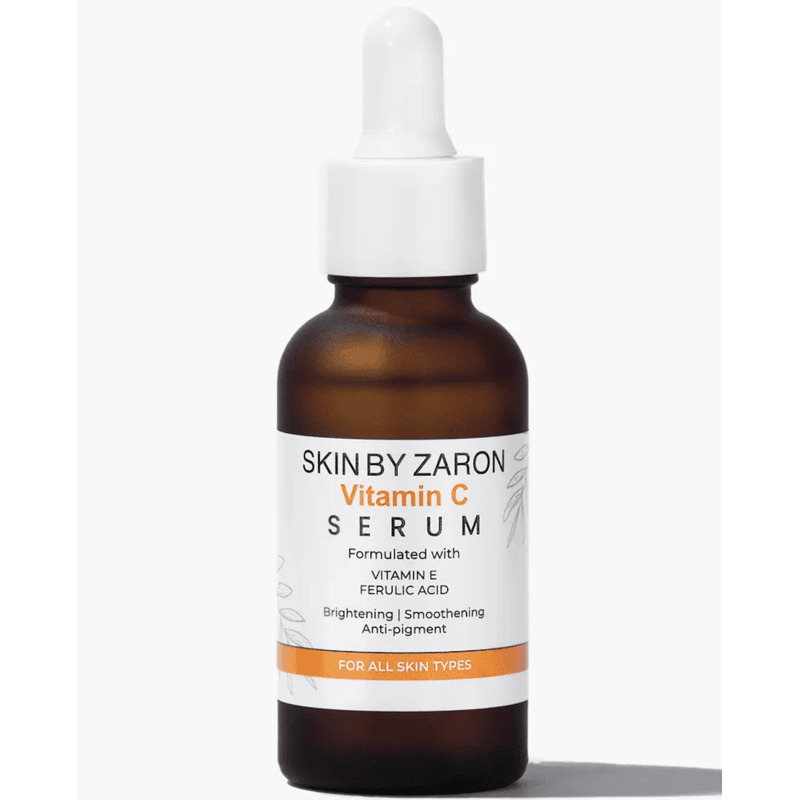
Vitamin C is the most strategically appropriate morning active for anyone trying to get rid of sunspots because its antioxidant function provides real-time protection against the UV-generated free radicals that activate melanocytes during daylight hours. The Skin By Zaron 15% Vitamin C Serum formulates pure L-Ascorbic Acid at a concentration where clinical research consistently demonstrates visible improvement in dark spots, uneven tone, and collagen support.
At 15%, it sits at the concentration where the brightening efficacy of pure Vitamin C is fully active without the excessive irritation risk of higher percentages. For sunspots specifically, the combination of tyrosinase inhibition and antioxidant protection means it addresses both existing spots and the continuing UV stimulation that would otherwise create new ones. Applied every morning before SPF, it creates a protective and corrective layer precisely when it is most needed.
Pros:
- 15% L-Ascorbic Acid inhibits melanin production and provides antioxidant protection simultaneously
- Pure Vitamin C formulation delivers direct tyrosinase inhibition for visible sunspot fading
- Morning application positions the antioxidant function precisely when UV exposure occurs
- Boosts collagen alongside brightening for comprehensive anti-ageing alongside sunspot treatment
Cons:
- Pure Vitamin C requires SPF use immediately after application to prevent photooxidation
- Initial tingling is common for skin new to L-Ascorbic Acid at 15% concentration
2. Cos De Baha Arbutin 5% Plus Licorice Serum — Best Multi-Brightening Serum to Get Rid of Sunspots
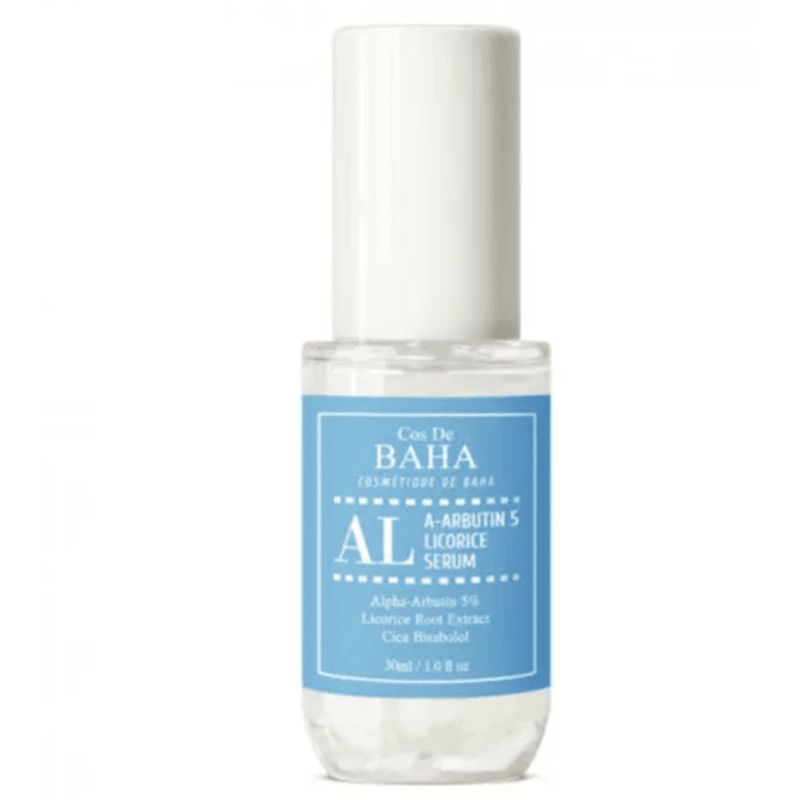
The Cos De Baha Arbutin 5% Plus Licorice Serum is one of the most comprehensively formulated brighhttps://peronabeauty.com/product/cos-de-baha-arbutin-5-licorice-serum-30ml/tening serums available to get rid of sunspots through multiple simultaneous mechanisms. Alpha arbutin at 5% is double the concentration of most comparable products, providing more significant tyrosinase inhibition. Licorice root extract adds its own brightening pathway through glabridin, a compound that inhibits UV-induced pigmentation and has anti-inflammatory properties that reduce the reactive pigmentation risk on darker skin tones.
Ceramide NP strengthens the skin barrier during active brightening treatment, Centella Asiatica reduces inflammation, and hyaluronic acid maintains hydration. This combination makes it one of the most barrier-conscious formulas available to get rid of sunspots, addressing pigmentation without compromising the skin health that makes active ingredient tolerance possible. For skin in Ibadan’s hot and humid climate, the hydration and barrier support are particularly relevant for maintaining consistent daily use.
Pros:
- 5% alpha arbutin delivers significant tyrosinase inhibition for visible sunspot reduction
- Licorice root adds complementary brightening through a separate anti-pigmentation mechanism
- Ceramide NP and Centella Asiatica protect the barrier and reduce inflammation during brightening treatment
- Hyaluronic acid maintains hydration for comfortable daily use in hot and humid conditions
Cons:
- Results require consistent daily use over eight to twelve weeks before sunspots visibly lighten
- Should be layered thoughtfully with other brightening actives to avoid over-formulation
3. Anua Niacinamide 10% Plus TXA 4% Serum — Best Dual-Active Serum for Stubborn Sunspots
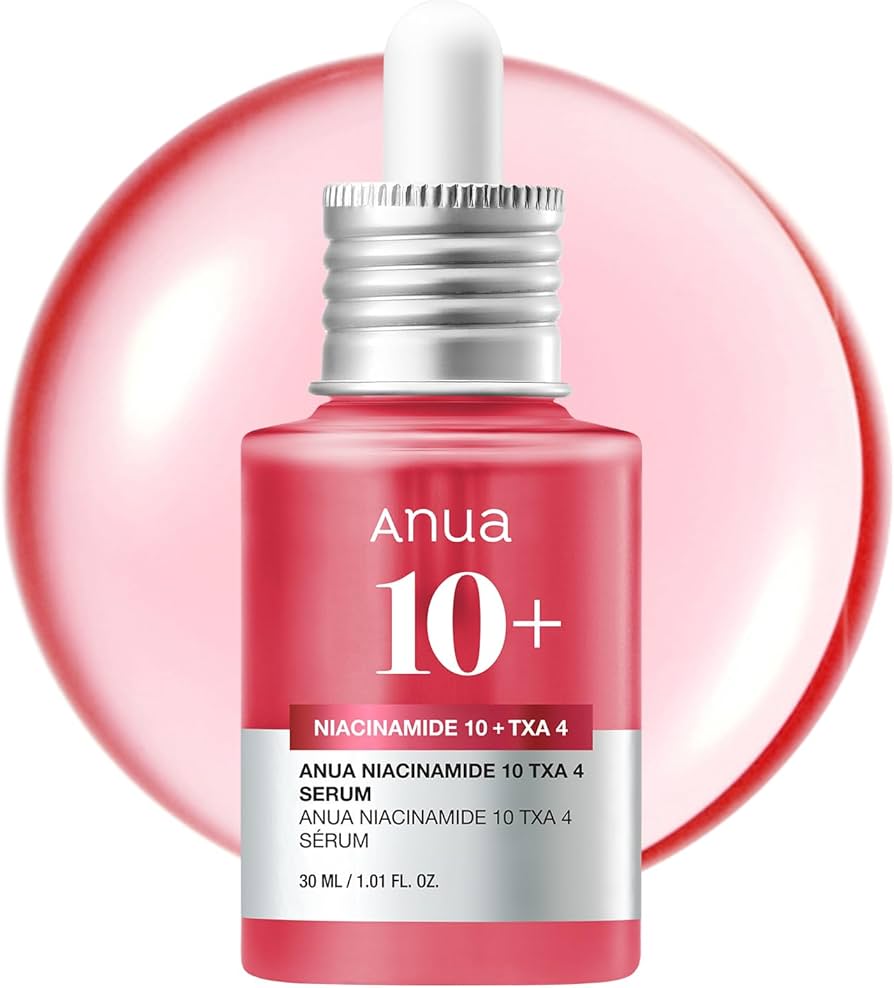
For sunspots that have not responded adequately to single-active brightening products, the Anua Niacinamide 10% Plus TXA 4% Serum brings two separate and complementary melanin-targeting mechanisms together. Niacinamide at 10% blocks melanosome transfer, the step where melanin produced in melanocytes moves to the surface skin cells where it becomes visible as a dark spot. TXA at 4% interrupts the UV-triggered signalling that activates melanocyte overproduction in the first place.
Together, they cover two different points in the pigmentation process simultaneously, producing a more comprehensive approach to get rid of sunspots than either ingredient achieves alone. This dual-pathway approach is particularly effective for stubborn sunspots that have accumulated over years of UV exposure and have embedded melanin at multiple stages of the production and transfer cycle.
Pros:
- Niacinamide and TXA address two separate points in the sunspot formation and visibility pathway
- 10% niacinamide reduces melanosome transfer for visible fading of existing dark spots
- 4% TXA interrupts UV-triggered melanocyte activation to reduce new sunspot formation
- Suitable for all skin types including sensitive skin unable to tolerate stronger brightening actives
Cons:
- Dual-active formula is more complex than simple maintenance sunspot treatment requires
- Results for embedded sunspots take longer to appear than for superficial post-inflammatory marks
4. Naturium Azelaic Topical Acid 10% — Best Gentle Brightening Serum to Get Rid of Sunspots on Sensitive Skin
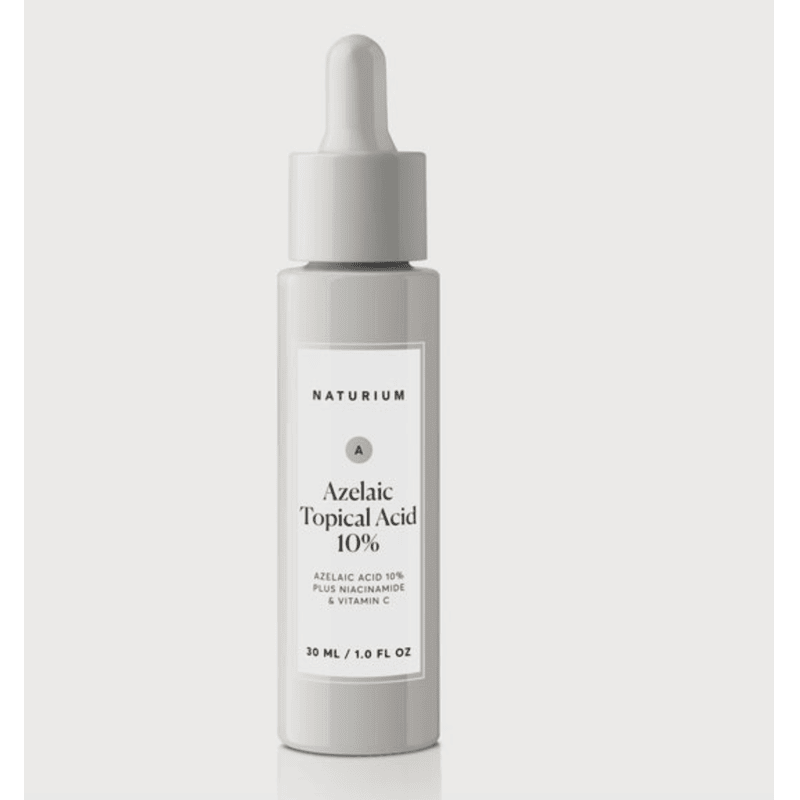
Azelaic acid occupies a unique position among ingredients used to get rid of sunspots because it produces genuine, clinically documented brightening through tyrosinase inhibition while maintaining an irritation profile significantly lower than most comparable brightening actives. The Naturium Azelaic Topical Acid 10% uses a glycinated azelaic acid complex alongside niacinamide and Vitamin C, creating a multi-active brightening formula around the azelaic acid base.
The inclusion of niacinamide and Vitamin C within the same formulation means this serum covers melanin production inhibition through two additional pathways beyond azelaic acid’s own mechanism, making it one of the most comprehensive yet gentle options available to get rid of sunspots on skin that cannot tolerate the more aggressive brightening actives at high concentrations. For acne-prone skin dealing with both active breakouts and sunspots, the anti-inflammatory and sebum-regulating properties of azelaic acid and niacinamide together address both concerns simultaneously.
Pros:
- Glycinated azelaic acid complex delivers brightening through a gentler mechanism than AHAs or high-dose Vitamin C
- Niacinamide and Vitamin C additions extend brightening through three separate mechanisms in one product
- Lower irritation profile makes it appropriate for sensitive and acne-prone skin managing sunspots
- Improves skin texture and reduces redness alongside targeted sunspot treatment
Cons:
- Gentle mechanism produces more gradual brightening than higher-potency alternatives for significant sunspots
- Azelaic acid’s full efficacy develops over eight to twelve weeks of consistent daily use
5. The Ordinary Glycolic Acid 7% Exfoliating Toner — Best Exfoliant to Accelerate Getting Rid of Sunspots
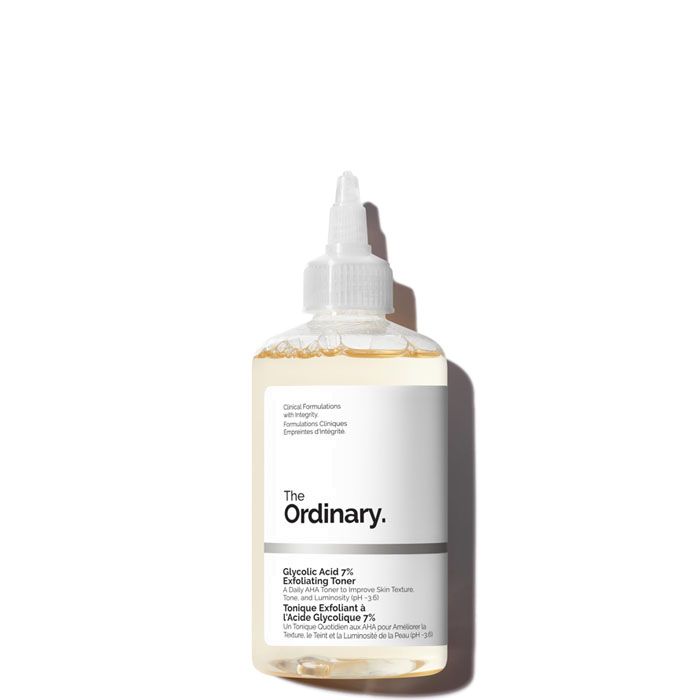
The Ordinary Glycolic Acid 7% Exfoliating Toner contributes to the goal to get rid of sunspots through a different mechanism from the brightening serums above. Rather than inhibiting melanin production, glycolic acid accelerates the shedding of the pigmented surface cells that carry the visible melanin accumulation. By speeding cell turnover, it brings the underlying treatment work of tyrosinase inhibitors to the surface more quickly, producing visible fading faster than brightening serums used without an exfoliant.
At 7%, it provides meaningful exfoliation that improves texture and accelerates pigmentation clearing without the significant UV sensitivity risk of higher concentrations. Tasmanian Pepperberry reduces irritation, Aloe Vera provides soothing hydration, and Ginseng Root delivers antioxidant support that makes this one of the more skin-conscious AHA formulas available. Applied in the evening, it accelerates the visible improvement that the brightening serums used in the morning are building beneath the surface.
Pros:
- 7% glycolic acid accelerates shedding of pigmented surface cells to visibly speed sunspot fading
- Tasmanian Pepperberry and Aloe Vera reduce the irritation that AHA exfoliants typically cause
- Evening application avoids immediate UV exposure after acid use for safer daily inclusion
- Improves overall skin texture and radiance alongside targeted sunspot acceleration
Cons:
- Glycolic acid significantly increases UV sensitivity, making morning SPF non-negotiable after use
- Should be alternated with retinol rather than used on the same evening to avoid over-exfoliation
6. CeraVe Facial Moisturizing Lotion AM SPF 50 — Best Daily SPF to Prevent New Sunspots
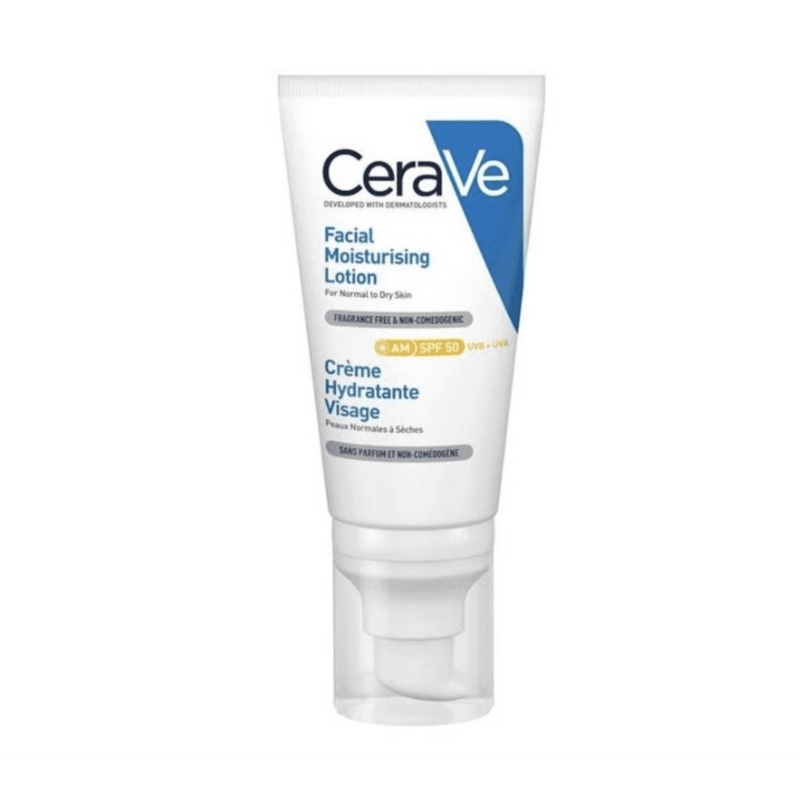
No product on this list matters without this one. The CeraVe Facial Moisturizing Lotion AM SPF 50 is the most important daily product for anyone trying to get rid of sunspots because every sunspot treatment product in the routine is undermined by morning UV exposure on unprotected skin. UV radiation is the primary and direct cause of sunspot formation, and without daily broad-spectrum SPF, brightening treatments are fading existing spots while new ones simultaneously form.
Formulated with ceramides, niacinamide, and hyaluronic acid alongside its SPF 50 broad-spectrum protection, this moisturiser provides UV protection, barrier support, and additional niacinamide activity in a single morning step. The ceramide content supports the skin barrier that brightening actives can temporarily compromise. The niacinamide provides additional melanosome transfer inhibition throughout the day. The lightweight formula is comfortable enough to apply daily without skipping.
Pros:
- SPF 50 broad-spectrum protection prevents the UV stimulation that creates new sunspots daily
- Ceramides and niacinamide provide barrier support and additional brightening alongside UV protection
- Lightweight, non-greasy formula is comfortable for consistent daily morning application
- Prevents the reversal of treatment progress that unprotected UV exposure causes
Cons:
- SPF 50 provides excellent daily protection but should be reapplied every two hours during prolonged outdoor exposure
- 1.75oz size is modest and will need regular repurchasing with consistent daily facial use
The Complete Routine to Get Rid of Sunspots
Morning: Cleanse, apply Skin By Zaron 15% Vitamin C Serum, follow with a targeted brightening serum if needed, apply CeraVe Facial Moisturizing Lotion AM SPF 50 as the final step.
Evening: Cleanse, apply The Ordinary Glycolic Acid 7% Toner on alternate evenings, apply Cos De Baha Arbutin 5% Plus Licorice Serum or Anua Niacinamide 10% Plus TXA 4% on the evenings between glycolic acid use, follow with moisturiser.
For sensitive skin: Replace the glycolic acid with Naturium Azelaic Acid 10% as the primary evening active and use the Cos De Baha Arbutin serum as the brightening layer.
At Perona Beauty, all six products to get rid of sunspots featured in this guide are available in store. Visit us at 120 Ogudu Road, Opposite Debonairs Pizza, Ogudu, Lagos, or at 42 Ademolu House, Ita Eko, Abeokuta. Our team will help you build a complete sunspot treatment routine for your skin type.
Consistent Treatment Is What Gets Rid of Sunspots
The most important truth about the goal to get rid of sunspots is that no single product, regardless of its ingredient profile, produces results without consistent daily use over months. Sunspots represent years of accumulated UV damage. Clearing them requires systematic, sustained intervention at the melanin production, transfer, and surface clearance levels alongside the daily SPF use that prevents new spots from forming while treatment progresses.
The six products in this guide address every level of this approach: Skin By Zaron 15% Vitamin C for morning antioxidant and brightening protection, Cos De Baha Arbutin 5% Plus Licorice for evening tyrosinase inhibition, Anua Niacinamide 10% Plus TXA for dual-pathway melanin management, Naturium Azelaic Acid 10% for sensitive skin brightening, The Ordinary Glycolic Acid 7% for accelerated surface clearing, and CeraVe AM SPF 50 for the UV protection that makes every other product in the routine matter. Build the routine, use it daily, and allow the time that genuine sunspot treatment requires.
Frequently Asked Questions About How to Get Rid of Sunspots
How long does it take to get rid of sunspots with topical products?
Superficial sunspots that are still mostly in the epidermis begin to show visible fading within six to eight weeks of consistent daily treatment with the right brightening actives. More embedded or darker sunspots that have accumulated over years of UV exposure take three to six months to show significant improvement. To get rid of sunspots completely with topical treatment alone requires patience and consistency over a longer timeline than most post-inflammatory marks.
Can sunspots come back after treatment?
Yes, if SPF is not used consistently after treatment. Topical products get rid of sunspots by clearing accumulated melanin and suppressing overactive melanocytes, but the underlying tendency of those melanocytes to overreact to UV remains. Without daily SPF, the same UV stimulation that created the original spots will recreate them, often faster than the first time because the melanocytes are already primed.
Do sunspots go away on their own without treatment?
Superficial sunspots occasionally fade slightly during periods of reduced sun exposure, but they do not resolve completely without active treatment. They remain stable or deepen with continued UV exposure and are not self-resolving in the way that some forms of post-inflammatory hyperpigmentation are. A consistent treatment routine is necessary to get rid of sunspots rather than simply preventing them from worsening.
Is it safe to try to get rid of sunspots on darker skin tones?
Yes, but ingredient selection matters more for deeper skin tones. Aggressive brightening actives at high concentrations can trigger reactive pigmentation in melanin-rich skin, creating new marks while fading existing ones. Alpha arbutin at 5%, azelaic acid, niacinamide, and TXA are the safest and most effective approaches to get rid of sunspots in darker skin tones, as they address the melanin pathway through mechanisms with a lower risk of triggering additional pigmentation.