

Sensitive skin is one of the most misunderstood skin types. It is not simply skin that reacts to new products. It is skin with a compromised or naturally lower-tolerance barrier that responds to triggers, whether ingredients, environmental factors, or lifestyle habits, with redness, stinging, itching, or breakouts that more resilient skin types would handle without incident.
The encouraging reality is that sensitive skin is highly manageable. The tips for sensitive skin in this guide are not about limiting what your skin can do. They are about understanding what it needs so that your routine supports rather than aggravates it. Applied consistently, these strategies reduce reactivity, improve barrier strength, and create the conditions for genuinely healthier skin over time.
Why Sensitive Skin Behaves the Way It Does
Sensitive skin is defined by a lower-tolerance skin barrier. The barrier is the outermost lipid layer of the skin that keeps moisture in and irritants out. When it is healthy, the skin handles environmental exposure, product application, and lifestyle factors without obvious distress. When it is compromised, either by genetic predisposition, harsh product use, UV damage, or environmental stress, irritants penetrate more easily, moisture escapes more readily, and the skin’s immune response is triggered more frequently.
Most tips for sensitive skin are fundamentally about protecting and rebuilding this barrier rather than working around it. A stronger barrier is a less reactive skin, and that is the goal every strategy in this guide is working toward.
10 Tips for Sensitive Skin
1. Simplify Your Routine First
The single most impactful of all tips for sensitive skin is also the least intuitive: use fewer products, not more. Every additional product introduces new ingredients and new potential triggers. Sensitive skin overwhelmed by a complicated routine cannot distinguish which products are helping and which are causing reactions.
Start with three steps: a gentle cleanser, a simple moisturiser, and SPF. Introduce one new product at a time and allow at least two weeks between additions. This gives your skin enough time to respond to each change before the next one is made. The improvement that comes from simplification alone is often dramatic.
2. Patch Test Every Single New Product
Patch testing is one of the most consistently skipped tips for sensitive skin despite being one of the most protective. Apply a small amount of any new product to the inner arm or behind the ear and leave it for 24 to 48 hours before applying it to the face. If no reaction occurs, the product is likely safe for your skin type.
This step is particularly important for products containing active ingredients like retinoids, AHAs, BHAs, and Vitamin C. Even products marketed as suitable for sensitive skin should be patch tested because individual sensitivity patterns vary significantly from person to person.
3. Choose Fragrance-Free Over Everything Else
Fragrance, both synthetic and naturally derived, is the single most common contact allergen in skincare. It appears under dozens of different names on ingredient lists and is present in a significant proportion of products that would otherwise be appropriate for sensitive skin.
Of all the tips for sensitive skin related to ingredient avoidance, eliminating fragrance produces the most consistently positive impact across the widest range of sensitive skin types. Choose fragrance-free rather than unscented. Unscented products may still contain fragrance compounds added to mask the natural smell of other ingredients.
4. Read Ingredient Lists Rather Than Front-of-Pack Claims
Hypoallergenic, dermatologist-tested, and suitable for sensitive skin are marketing descriptions, not regulated standards with specific ingredient requirements. A product carrying these labels can still contain fragrance, alcohol denat, essential oils, or preservatives that reactive skin cannot tolerate.
Reading the actual ingredient list is one of the most practically useful tips for sensitive skin because it puts the decision in your hands. Ingredients to approach with caution include parfum or fragrance, alcohol denat, synthetic dyes, citrus-derived extracts, and high concentrations of essential oils. Learning to identify these takes time but pays back consistently.
5. Cleanse Gently and With Lukewarm Water
Over-cleansing is one of the most common ways sensitive skin is inadvertently worsened. Cleansing twice daily with a surfactant too strong for your skin type strips the barrier with every wash, keeping the skin in a perpetual state of low-level compromise that makes every subsequent product more likely to trigger a reaction.
Among the tips for sensitive skin that produce fast visible improvement is switching to a gentler, sulfate-free cleanser and washing with lukewarm rather than hot water. Hot water accelerates moisture evaporation and strips the barrier significantly more than lukewarm water. If your skin feels tight or uncomfortable within a minute of rinsing off your cleanser, the formula is too aggressive for your skin type.
6. Introduce Active Ingredients Slowly and With a Buffer
Active ingredients like retinoids, AHAs, BHAs, and Vitamin C are not forbidden for sensitive skin. But the approach to introducing them determines whether they transform your routine or set your barrier back by weeks.
The most effective tips for sensitive skin for introducing actives are: start at the lowest available concentration, use it no more than twice per week, apply a light moisturiser before the active to buffer the concentration reaching the skin surface, and wait at least four weeks before increasing frequency. Patience here is not optional. It is the mechanism that allows actives to work on sensitive skin without causing the barrier disruption that makes people abandon them prematurely.
7. Never Skip SPF
UV radiation continuously breaks down the ceramides, lipids, and structural proteins that keep the skin barrier intact. Every day of unprotected sun exposure worsens the barrier compromise that makes sensitive skin react to triggers. Among all tips for sensitive skin, daily SPF use has the highest long-term return. It protects the barrier work every other product in your routine is doing.
Mineral SPF formulations containing zinc oxide or titanium dioxide are generally better tolerated by sensitive skin than chemical UV filters, which can occasionally trigger stinging or redness in reactive skin types.
8. Avoid Touching and Rubbing Your Face
Mechanical irritation is one of the most overlooked triggers for sensitive skin. Rubbing, touching, and pressing the face repeatedly throughout the day introduces bacteria, stretches the skin unnecessarily, and aggravates the barrier in the exact areas that are already reactive. These are among the tips for sensitive skin that cost nothing but require consistent awareness.
When applying skincare, press and pat rather than rub. When drying the face, blot with a clean towel rather than dragging it across the skin. These small technique adjustments reduce unnecessary mechanical stress on a barrier that is already working hard to maintain itself.
9. Keep Your Environment as Skin-Friendly as Possible
Environmental triggers are often underestimated in sensitive skin management. Air conditioning, which dramatically lowers indoor humidity, accelerates transepidermal water loss and dehydrates the barrier. Harmattan season in Nigeria creates similar conditions outdoors. Pollution particles settle on the skin and activate the inflammatory response that worsens reactive episodes.
Practical tips for sensitive skin for managing environmental triggers include using a hydrating mist throughout the day in air-conditioned environments, double cleansing in the evening during periods of high pollution exposure, and sleeping on a clean, fresh pillowcase regularly to reduce the bacterial and product residue contact your skin is exposed to for eight hours every night.
10. Be Consistent Rather Than Experimental
The most damaging habit for sensitive skin is constantly switching products in search of faster results. Every new product is a new set of ingredients and a new potential trigger. Every product swap restarts the adjustment period and makes it impossible to identify what is actually helping.The last and perhaps most important of all tips for sensitive skin is this: find a routine that your skin tolerates well and commit to it for at least three months before evaluating. Sensitive skin improvements are cumulative and slow. Three weeks is not enough time to see what a good routine can do. Three months is. Consistency with the right products produces results that no amount of product-swapping ever will.
Product Recommendations for Sensitive Skin
The products below are selected specifically for their compatibility with sensitive skin, whether through gentle formulation, minimal ingredients, or targeted treatment that does not compromise the barrier.
1. Abib Airy Sunstick Smoothing Bar SPF 50 — Best SPF for Sensitive Skin
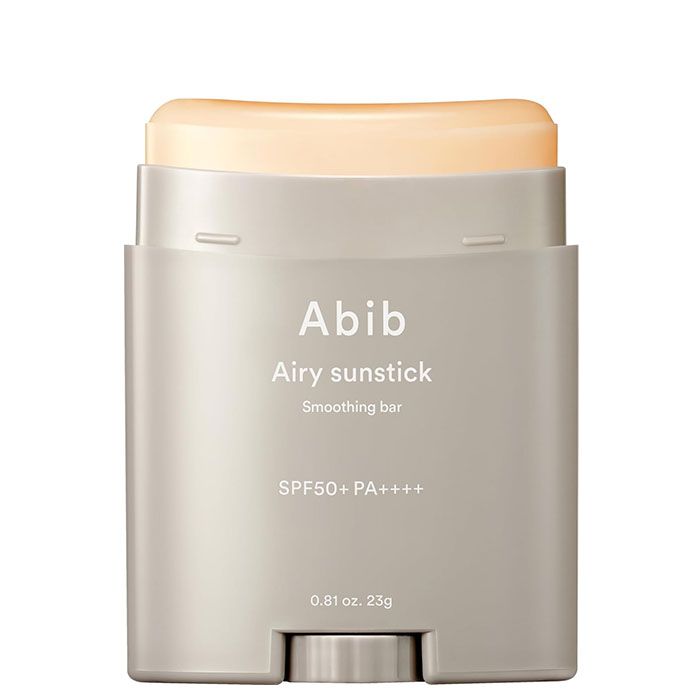
Tip seven makes daily SPF non-negotiable for sensitive skin, and the Abib Airy Sunstick Smoothing Bar SPF 50 is one of the most practical SPF choices for reactive skin types. Its broad-spectrum SPF 50+ formula is lightweight, non-sticky, and applies without rubbing, which reduces the mechanical irritation that liquid SPF formulas can cause on reactive skin. It does not cake or clump over makeup, making midday reapplication genuinely achievable without disturbing the skin underneath.
Pros:
- Broad-spectrum SPF 50+ provides maximum UV protection for barrier-compromised sensitive skin
- Stick application avoids the rubbing that can aggravate reactive and inflamed facial skin
- Lightweight, non-sticky formula is comfortable in Nigeria’s warm and humid conditions
- Does not cake or disrupt makeup on reapplication throughout the day
Cons:
- Stick format may deliver slightly less product per application than liquid SPF formulas
- Water resistance lasts 80 minutes, requiring reapplication after extended water exposure
2. Topicals Faded Brightening and Clearing Gel — Best Targeted Brightening for Sensitive Skin
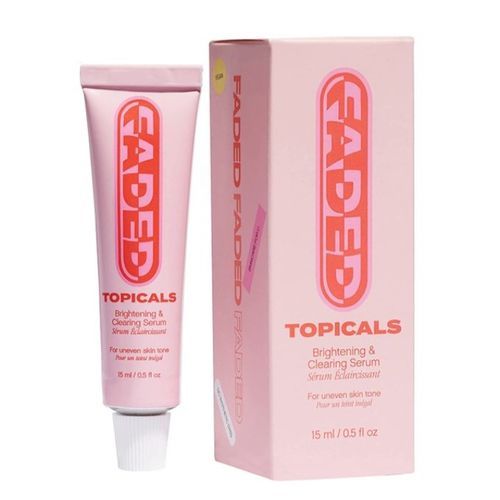
Post-inflammatory hyperpigmentation is a particular challenge for sensitive skin because the same inflammation that causes dark marks is the inflammation sensitive skin experiences more frequently. Most brightening treatments are too aggressive for reactive skin, creating a situation where addressing one concern worsens another.
The Topicals Faded Brightening and Clearing Gel targets dark spots and discolouration in a formulation designed to deliver brightening results while maintaining skin clarity without the irritation that stronger treatments cause. It is best used as a targeted spot treatment rather than a full-face aggressive application, which suits the sensitive skin approach of treating specifically rather than broadly.
Pros:
- Targets dark spots and discolouration with a formula designed to minimise reactive skin irritation
- Gel format absorbs cleanly without adding heaviness to a reactive skin routine
- Suitable as a targeted treatment on specific areas rather than requiring full-face application
- Addresses the hyperpigmentation that frequently accompanies sensitive and reactive skin
Cons:
- Visible results require consistent application over several weeks to become clearly apparent
- Should be introduced gradually with a patch test for very reactive sensitive skin types
3. Arami Glow Oil — Best Body Oil for Sensitive Skin
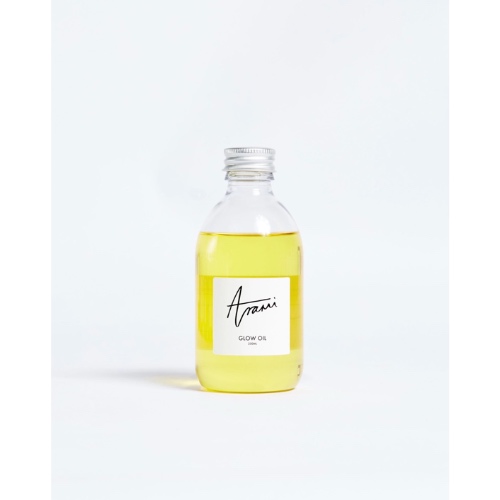
Body skin on sensitive skin types needs the same consideration as facial skin. The Arami Glow Oil is formulated with all-natural ingredients in a lightweight, fast-absorbing base that deeply moisturises without synthetic additives commonly responsible for triggering reactive body skin. Its gentle all-natural formulation makes it one of the most appropriate daily body oil choices for sensitive skin that cannot tolerate fragrance-heavy or chemically complex body care products.
Pros:
- All-natural formulation avoids synthetic additives that commonly trigger sensitive body skin reactions
- Lightweight, fast-absorbing texture does not feel heavy or occlusive on reactive skin
- 500ml size supports the consistent daily use that body skin barrier care requires
- Suitable for all skin types including dry and dull sensitive skin
Cons:
- Natural formulation without targeted actives produces gradual nourishment rather than rapid correction
- Best as a daily maintenance product rather than an intensive repair treatment
4. Garnier Sakura Glow Hyaluron Body Serum Lotion UV — Best Daily Body Lotion for Sensitive Skin
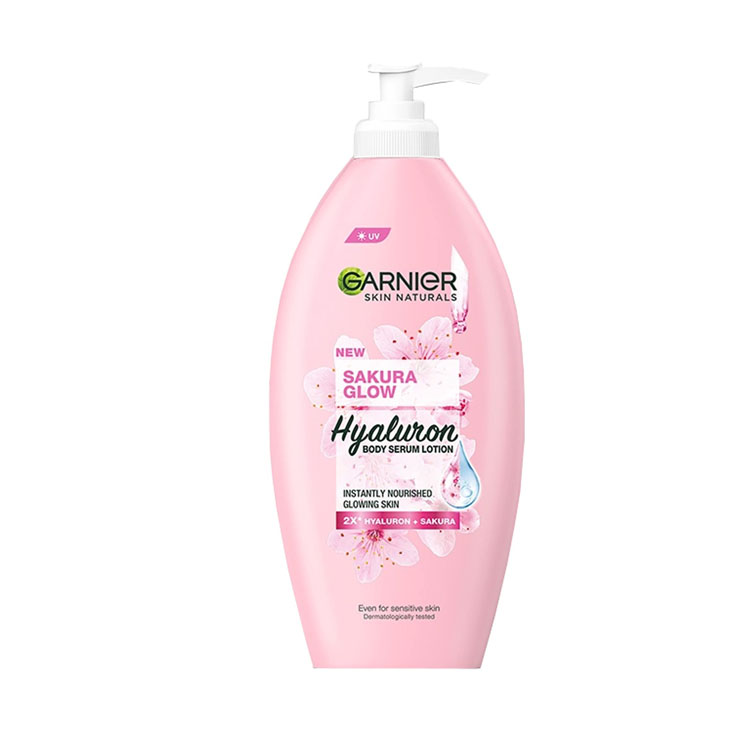
The Garnier Sakura Glow Hyaluron Body Serum Lotion UV provides a milk-based serum texture that absorbs quickly without stickiness and includes UVA/UVB filters for daytime body skin protection. Its combination of Sakura Essence and hyaluronic acid brightens and hydrates without aggressive actives that would aggravate reactive skin. The fast absorption and non-sticky finish make it particularly practical for sensitive skin in Nigeria’s climate.
Pros:
- Milk-serum texture absorbs quickly without stickiness, comfortable for sensitive skin in heat
- Built-in UVA/UVB filters protect body skin from UV-driven barrier damage during the day
- Sakura Essence and hyaluronic acid improve brightness and hydration gently
- Non-sticky finish makes daily consistent use practical in warm conditions
Cons:
- Brightening results require consistent daily use over at least one week before becoming visible
- Should be patch tested before full body application on highly reactive sensitive skin
5. Dr Teal’s Aluminum Free Deodorant Stick Lavender Vanilla — Best Deodorant for Sensitive Skin
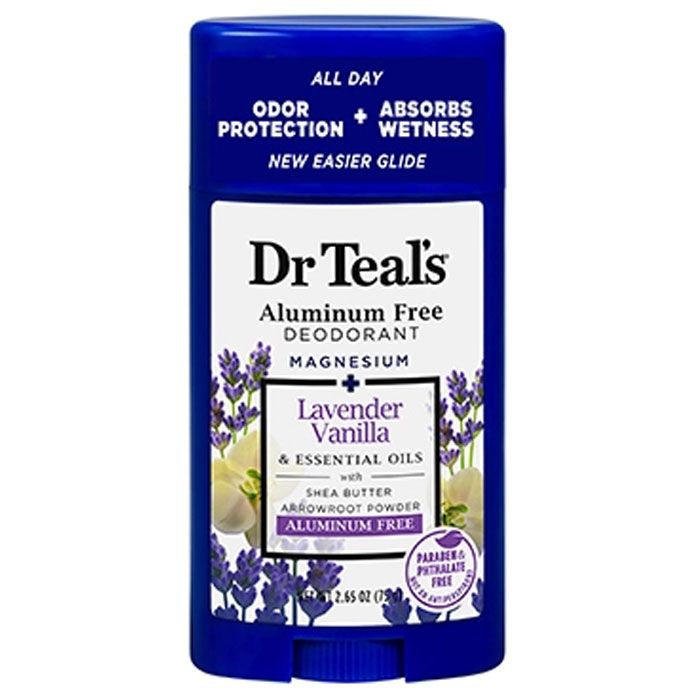
Underarm skin is among the most sensitive areas of the body. Conventional deodorants and antiperspirants containing aluminium compounds, synthetic fragrances, and preservatives frequently cause chronic irritation in people with generally reactive skin. The Dr Teal’s Aluminum Free Deodorant Stick removes these triggers, using magnesium’s natural odour-neutralising properties and essential oils to provide effective daily protection without the chemical load that sensitises underarm skin.
Pros:
- Aluminium-free, paraben-free, and phthalate-free removes the most common underarm irritants
- Magnesium provides effective natural odour control without compromising underarm skin integrity
- Soothes and supports underarm skin rather than simply masking odour
- Practical stick format applies cleanly and easily without product waste
Cons:
- Controls odour rather than wetness, requiring adjustment time for those used to antiperspirants
- Lavender vanilla essential oil scent may not suit those with extreme plant-derived ingredient sensitivity
Building Your Sensitive Skin Routine
Apply the ten tips structurally: simplify first, patch test every addition, eliminate fragrance wherever possible, cleanse gently, introduce actives with a buffer and two-week spacing, and protect with SPF daily without exception. These principles create the framework. The products fill it in.
At Perona Beauty, all five products in this guide are available in store. Visit us at 120 Ogudu Road, Opposite Debonairs Pizza, Ogudu, Lagos, or at 42 Ademolu House, Ita Eko, Abeokuta. Our team will help you identify which products suit your specific sensitive skin concerns and show you how to apply the tips for sensitive skin in this guide to your existing routine.
Sensitive Skin Managed Well Is Healthy Skin
Sensitive skin that is managed correctly becomes one of the more predictable skin types. Its responses are informative rather than inconvenient, telling you clearly what it tolerates and what it does not. Apply these tips for sensitive skin consistently, choose your products thoughtfully, and give your barrier the time it needs to strengthen. The skin you have at the end of six months of correct management will not feel like the skin you started with.
Frequently Asked Questions About Tips for Sensitive Skin
Can sensitive skin become less reactive over time?
Yes. Consistent barrier support, reduced exposure to irritating ingredients, and the tips for sensitive skin applied regularly over months produce a measurable reduction in reactive episodes. Sensitive skin will always tend toward lower tolerance than resilient skin, but its reactivity is absolutely manageable with the right approach.
How do I know which ingredient is causing my reactions?
The single-product introduction method is the most reliable answer. By introducing one product at a time and allowing two weeks of assessment, any reaction can be clearly attributed to the most recently added product. Without this structure, identifying the specific trigger among a complex routine is nearly impossible.
Is natural skincare always safer for sensitive skin?
No. Natural ingredients including essential oils, citrus extracts, and plant-derived fragrances are among the most common triggers for sensitive skin reactions. Natural does not equal gentle. What matters is the specific ingredient profile and whether your skin tolerates it, regardless of origin.
How long before these tips produce visible improvement?
Reactivity reduction becomes noticeable within four to eight weeks of consistently applying these tips for sensitive skin. Significant structural barrier improvement develops over three to six months. Patience with the right approach always outperforms impatience with the wrong one.