
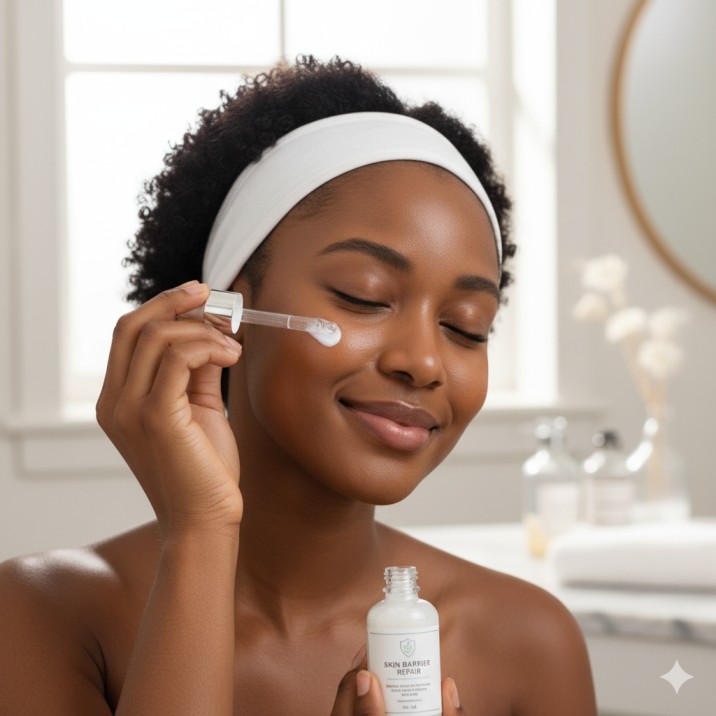
When skin feels tight, reactive, or persistently dry, the issue is rarely hydration alone. In most cases, the skin barrier is compromised. A damaged barrier struggles to retain moisture and becomes vulnerable to irritation, breakouts, and inflammation.
Ceramide moisturisers for barrier repair play a central role in restoring skin stability. This article explains why ceramides matter, why many moisturisers fail to repair the barrier, and which formulations deliver meaningful, lasting support rather than surface-level relief.
Why Ceramides Are Critical for Skin Barrier Repair
Ceramides are lipids naturally present in the skin barrier. They act as binding agents, holding skin cells together and preventing moisture loss.
When ceramide levels drop, the barrier weakens. Water escapes more easily. Irritants penetrate more readily. Skin becomes dry, sensitive, or inflamed.
Ceramide moisturisers for barrier repair work because they replenish what the skin is missing, rather than masking symptoms with temporary hydration.
Why Moisturising Alone Does Not Fix a Damaged Skin Barrier
Many moisturisers hydrate without repairing.
They add water to the skin but fail to replace the lipids needed to keep that moisture in. As a result, skin may feel soft initially, then tight or uncomfortable again within hours.
Ceramide moisturisers for barrier repair differ because they restore structural integrity. They reduce transepidermal water loss and help the skin regain its ability to self-regulate.
This is why barrier repair requires more than lightweight hydration.
How Skin Barrier Damage Develops Over Time
Barrier damage rarely happens overnight. It builds gradually through repeated stress.
Common contributors include:
- Over-exfoliation
- Harsh cleansers
- Inconsistent moisturising
- Environmental exposure
- Chronic inflammation
As the barrier weakens, the skin becomes reactive. Products that once worked may start to sting or cause breakouts. Ceramide moisturisers for barrier repair address this by rebuilding resilience rather than adding more actives.
How Long Do Ceramide Moisturisers Take to Repair the Skin Barrier?
Early comfort improvements often appear within a few days. Meaningful barrier repair usually takes two to four weeks of consistent use.
Ceramide moisturisers for barrier repair work cumulatively. Skin becomes less reactive over time. Moisture retention improves. Redness and irritation reduce as the barrier regains strength.
Who Benefits Most From Ceramide Moisturisers for Barrier Repair
Ceramide-based moisturisers are especially helpful for:
- Sensitive or reactive skin
- Acne-prone skin weakened by treatments
- Dry or dehydrated skin
- Eczema-prone skin
- Skin recovering from overuse of actives
At Perona Beauty, our experience working with compromised skin shows that barrier repair is often the turning point where routines begin to stabilise and results become sustainable.
Ceramide Moisturisers That Support Barrier Recovery
Formulation matters as much as ceramide content. Supporting ingredients determine how well the skin tolerates and responds to repair.
Estelin Ceramide + Centella (Repair) CreamCeramide Moisturisers For Barrier Repair
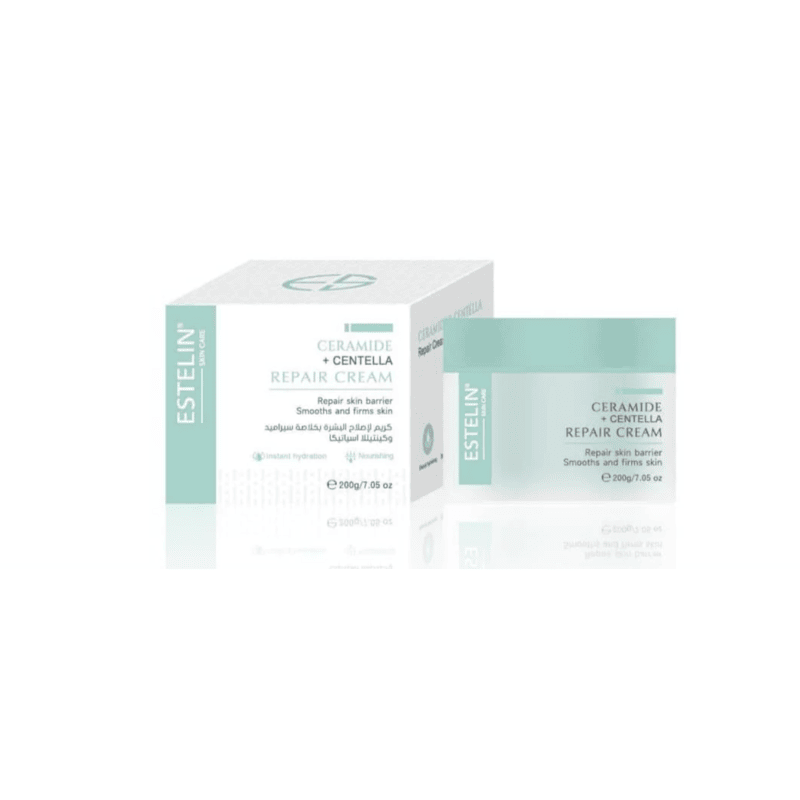
This cream is designed for skin that feels compromised rather than simply dry. Its strength lies in combining barrier lipids with anti-inflammatory plant extracts, making it suitable for periods when skin feels reactive or overworked.
The ceramides help reinforce weakened lipid layers, while Centella Asiatica supports recovery by calming irritation and reducing redness linked to barrier disruption. The texture is creamy but controlled, spreading easily and settling into the skin without leaving a heavy film when applied in moderate amounts.
It performs best as a recovery moisturiser, especially after exfoliation, active treatments, or environmental stress.
Pros
- Strengthens the skin barrier while actively soothing irritation
- Supports long-lasting hydration without relying on occlusive heaviness
- Helps reduce redness linked to barrier weakness
- Suitable for sensitive, dry, and compromised skin
Cons
- May feel too rich for oily skin during the day
- Less ideal under makeup in humid conditions
Face Facts Ceramide Oil Control Moisturising Gel Cream
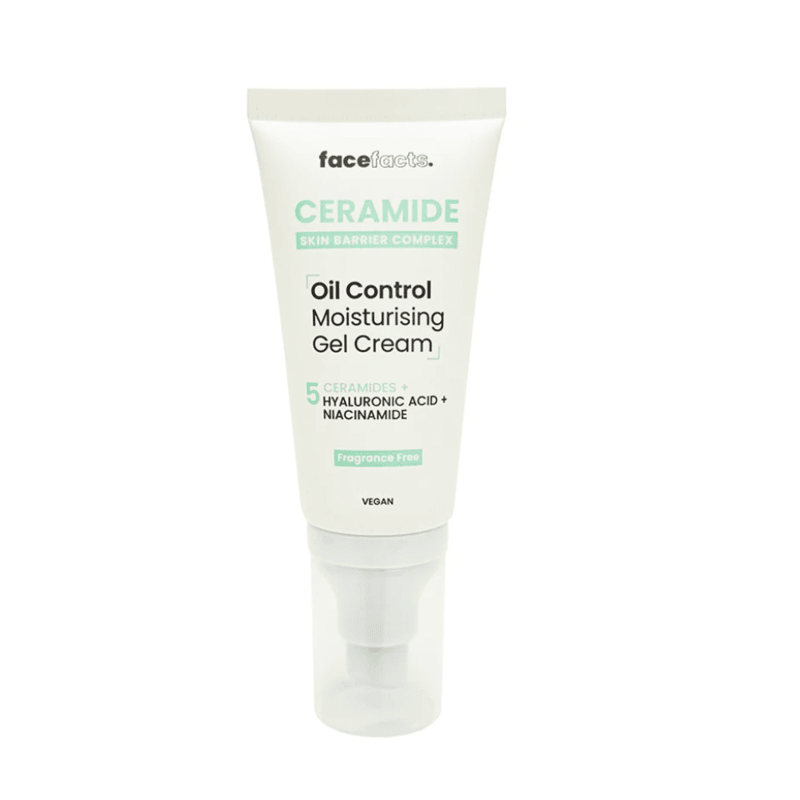
This gel cream is formulated for skin that needs barrier support without additional shine. It balances ceramide repair with oil-control elements, making it better suited for combination to oily skin types.
The texture is lightweight and fast-absorbing, which helps prevent the greasy feel often associated with barrier-repair products. While it does not deliver intensive nourishment, it helps maintain barrier integrity in skin that is prone to excess sebum or congestion.
It works well as a daytime moisturiser or for those who struggle with heavier creams.
Pros
- Lightweight texture suitable for oily and combination skin
- Ceramides support daily barrier maintenance
- Helps regulate excess oil without drying the skin
- Absorbs quickly and layers well with sunscreen
Cons
- Not sufficient for severely compromised barriers
- May require a richer product at night for dry skin
Illiyoon Ceramide Ato Concentrate Cream
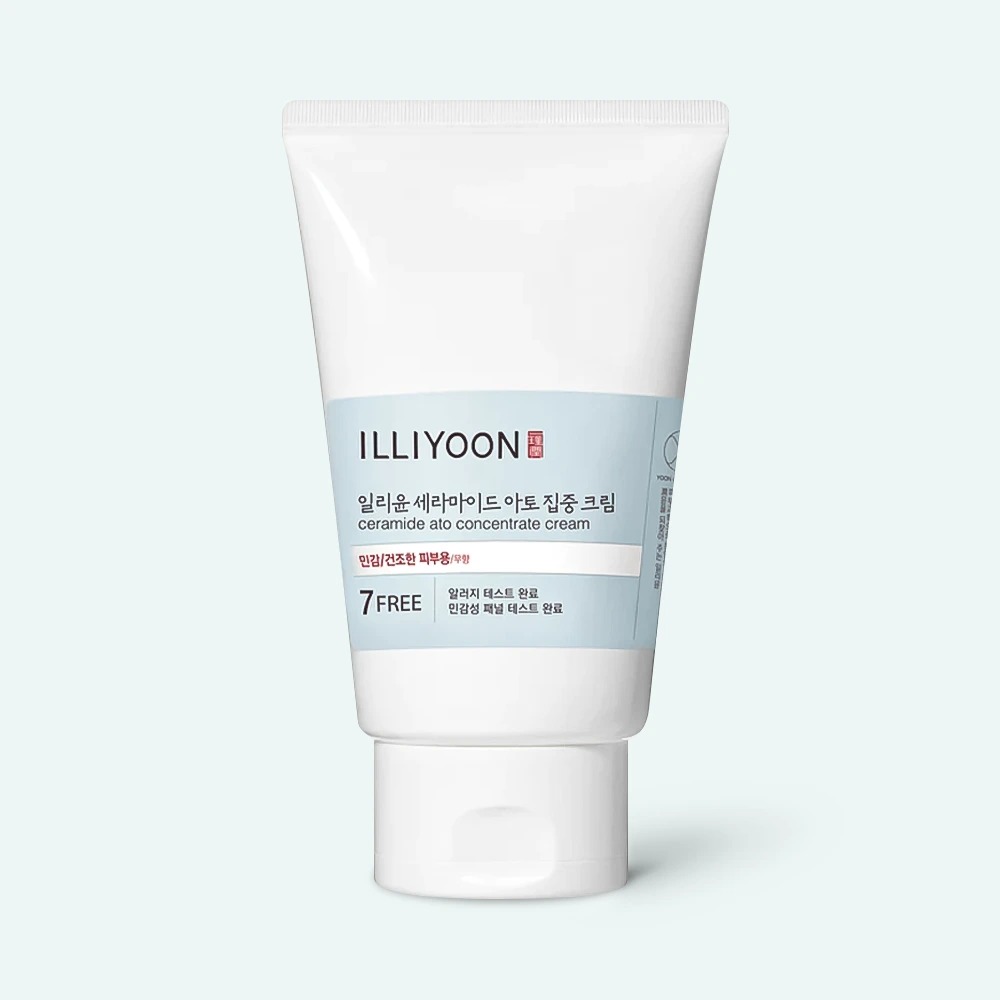
This is a high-comfort, barrier-focused cream designed for long-term repair rather than cosmetic elegance. Its formulation prioritises skin-identical ceramides and occlusives that reduce water loss and support recovery.
The cream has a dense texture that melts into the skin with warmth, forming a protective layer that prevents overnight dehydration. It is particularly effective for skin experiencing chronic dryness, irritation, or sensitivity linked to a weakened barrier.
This product is best suited for evening use or colder climates, where moisture retention becomes more challenging.
Pros
- Delivers intensive barrier repair and moisture retention
- Suitable for sensitive and eczema-prone skin
- Reduces tightness, flaking, and irritation over time
- Fragrance-free and well tolerated
Cons
- Thick texture may feel heavy on oily skin
- Less suitable for daytime use under makeup
FaceFacts Ceramide Moisturising Face Gel Cream
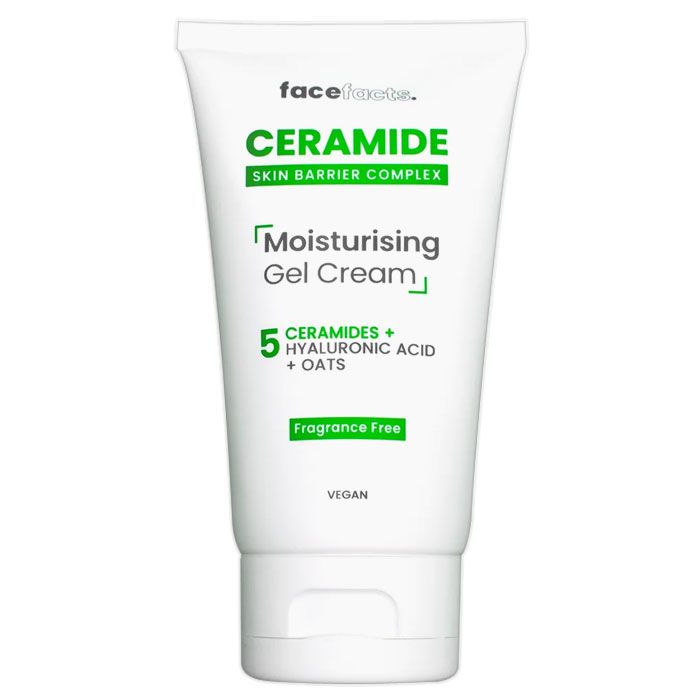
This gel cream offers light barrier support for everyday use. It focuses on maintaining moisture balance rather than repairing severe damage, making it a good option for skin that feels mildly dehydrated or slightly sensitised.
The texture is cooling and weightless, helping the skin feel comfortable without clogging pores. While the ceramide content supports barrier function, the formula works best as a maintenance product rather than a recovery treatment.
It fits well into simple routines and performs reliably under sunscreen or makeup.
Pros
- Lightweight hydration suitable for daily use
- Supports moisture balance with ceramide content
- Non-greasy and comfortable on the skin
- Layers easily with other products
Cons
- Not sufficient for severe barrier damage
- Limited occlusive protection for overnight repair
How to Use Ceramide Moisturisers for Barrier Repair Effectively
Ceramide moisturisers perform best when the routine around them is simplified. Barrier repair depends on reducing stress while reinforcing structure.
Morning Routine
In the morning, focus on protection and moisture retention.
Cleanse with a gentle, non-stripping cleanser. Apply a lightweight hydrating step if needed, then follow with a ceramide moisturiser suited to your skin type. Gel creams work well for oily skin, while richer creams offer more comfort for dry or sensitive skin.
Finish with sunscreen. Even the best ceramide moisturisers for barrier repair struggle to maintain progress without UV protection.
Evening Routine
Evening routines should prioritise recovery.
After cleansing, avoid layering multiple actives. Apply your ceramide moisturiser to slightly damp skin to improve absorption and reduce water loss overnight. Richer ceramide creams often perform considered best at night, when the skin’s repair processes are most active.
Consistency matters more than quantity. Regular use allows ceramide moisturisers for barrier repair to rebuild skin resilience gradually.
Why Ceramide Moisturisers Work Better When Actives Are Reduced
Active ingredients can be valuable, but barrier repair requires restraint.
Overuse of exfoliating acids, retinoids, or strong cleansers disrupts lipid balance. This slows healing and increases sensitivity. Temporarily reducing actives allows ceramide moisturisers for barrier repair to do their job without interference.
Barrier-first routines often restore tolerance, making future treatments more effective.
Common Mistakes That Delay Skin Barrier Repair
One frequent mistake is switching products too often. Barrier repair takes time, and frequent changes prevent the skin from adapting.
Another issue is underestimating hydration. Ceramides repair structure, but water is still needed to support skin function. Pairing ceramide moisturisers for barrier repair with gentle hydration improves results.
Finally, using harsh cleansers undermines progress. Even the most effective ceramide formula cannot compensate for daily stripping.
How Do You Know If Your Skin Barrier Is Healing?
Healing skin shows fewer reactions, improved comfort, and better moisture retention. Redness becomes less frequent. Products absorb more evenly. Tightness reduces.
Ceramide moisturisers for barrier repair support these changes by restoring lipid balance rather than forcing visible transformation.
What Ceramide Moisturisers for Barrier Repair Mean for Long-Term Skin Health
Barrier repair is not cosmetic. It is functional.
Skin that retains moisture, resists irritation, and regulates itself effectively looks clearer, calmer, and healthier over time. Ceramide moisturisers for barrier repair support this foundation by restoring what the skin naturally depends on.
At Perona Beauty, our practitioner-led approach prioritises skin stability over quick fixes. Ceramide-based care aligns with that philosophy because strong skin responds better to every other treatment that follows.
When the barrier is supported, progress lasts. That is what makes ceramide moisturisers a cornerstone of sustainable skincare, not a trend.
Frequently Asked Questions About Ceramide Moisturisers for Barrier Repair
Can ceramide moisturisers repair the skin barrier on their own?
Yes, in many cases. Ceramide moisturisers for barrier repair replenish missing lipids and support natural recovery, especially when irritants are reduced.
How long should ceramide moisturisers be used?
Barrier repair is not a one-time fix. Ceramide moisturisers for barrier repair can be used long term to maintain skin resilience and prevent future damage.
Are ceramide moisturisers suitable for acne-prone skin?
Yes. When formulated correctly, ceramide moisturisers for barrier repair support acne-prone skin by reducing inflammation and improving tolerance to treatments.
Can ceramide moisturisers be layered with other products?
Yes. They layer well with hydrating serums and sunscreen. During barrier repair phases, limiting strong actives improves outcomes.
Do ceramide moisturisers clog pores?
No. Ceramides are skin-identical lipids. Most ceramide moisturisers for barrier repair are designed to support balance rather than congestion.